New Delhi, May 16: The CBSE has made the study of three languages, including at least two native Indian languages, compulsory for Class-9 students beginning July 1, according to a circular issued by the board. The move is part of the Central Board of Secondary Education's (CBSE) alignment of its Scheme of Studies with the National Education Policy (NEP) 2020 and the National Curriculum Framework for School Education (NCF-SE) 2023. According to the circular issued on May 15, students opting for a foreign language may do so only as the third language after studying two native Indian languages, or as an additional fourth language. "With effect from July 1, 2026, for Class IX, the study of three languages (R1, R2, R3) shall be compulsory, with at least two languages being native Indian languages," the circular stated. The CBSE said to keep the focus on learning and reduce any undue pressure on students, no board examination shall be conducted for R3 at the Class-10 level. "All assessments for R3 shall be entirely school-based and internal. The performance of students in R3 will be duly reflected in the CBSE certificate. It is clarified that no student will be barred from appearing in the Class X Board Examinations due to R3. Sample question papers, rubrics for internal assessment will be shared by the Board shortly," it added. The board also asked schools to update their R3 language offerings for Classes 6 to 9 on the OASIS portal by June 30. Schools facing a shortage of qualified native Indian language teachers may use interim measures, such as inter-school resource sharing, virtual or hybrid teaching support, engagement of retired language teachers and qualified postgraduates, the circular said. The CBSE further said relaxations would be provided to the Children With Special Needs (CwSN) in accordance with the Rights of Persons with Disabilities Act, 2016, while foreign students returning to India may get case-by-case exemptions from the requirement of studying two native Indian languages.

Director, Registrar hail national recognition as boost to Institute’s research ecosystem Srinagar, May 14: In a major boost to its research profile, the National Institute of Technology Srinagar has secured national recognition after its M-Tech scholar, Womika Khan, was awarded the prestigious IndiaAI Fellowship for 2025–26. Womika, a Computer Science and Engineering student, earned the fellowship for her research on “Trustworthy AI: Investigating and Mitigating Bias in Large Language Models,” conducted under the supervision of Dr. Tawseef Ayoub Shaikh. The work focuses on addressing bias in artificial intelligence systems, an area gaining urgency as AI tools are increasingly deployed in real-world decision-making. Dr Tawseef described the selection as a competitive national-level achievement, underlining the growing footprint of NIT Srinagar in advanced technology research. In his message, Director NIT Srinagar, Prof. Binod Kumar Kanaujia, termed the achievement a milestone for the institution. “We are focused on strengthening a robust research and innovation ecosystem. Such accomplishments reinforce our position in emerging domains like artificial intelligence and motivate other students to pursue high-impact research,” he added. Institute Registrar, Prof. Atikur Rehman, said that the fellowship reflects the institute’s academic depth. “This recognition is a testament to the quality of research being carried out at NIT Srinagar. It highlights the commitment of our scholars and faculty to address complex, real-world challenges through innovation,” he said. Head of the CSE Department, Dr. Shaima Qureshi, also lauded the achievement, calling it a significant step toward building responsible AI systems. “Research in trustworthy AI, particularly in mitigating bias in large language models, is essential to ensure fairness, transparency, and accountability in AI-driven technologies. This accomplishment reflects the department’s focus on meaningful and socially relevant innovation,” she said. The IndiaAI Fellowship aims to nurture talent in artificial intelligence and strengthen India’s capabilities in next-generation technologies.
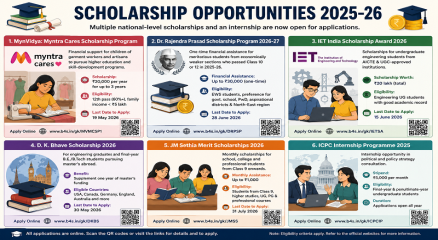
Srinagar, May 14: Several national-level scholarship and internship programmes aimed at supporting meritorious and economically weaker students have opened applications for the academic session, offering financial aid, stipends and educational assistance to students from school to postgraduate levels. Among the major schemes announced is the MynVidya: Myntra Cares Scholarship Program, which targets children of garment workers and artisans pursuing higher education in recognised universities and skill-development programmes. Selected students will receive an annual scholarship of ₹20,000 for up to three years. Applicants must have secured at least 60 per cent marks in Class 12 and belong to families earning below ₹5 lakh annually. The last date for applications is May 19. Another prominent scheme, the Dr. Rajendra Prasad Scholarship Program 2026-27, offers one-time financial assistance of up to ₹30,000 to students from economically weaker backgrounds who passed Class 10 or 12 during the 2025-26 academic session. Preference will be given to students from government schools, persons with disabilities and candidates from aspirational districts and the North-East region. Applications close on June 28. Engineering students have also been invited to apply for multiple programmes. The IET India Scholarship Award 2026 will provide scholarships worth ₹20 lakh to undergraduate engineering students from AICTE and UGC-approved institutions who have maintained strong academic records. The deadline for applications is June 15. The D. K. Bhave Scholarship 2026, offered by Savitribai Phule Pune University, is open to engineering graduates and final-year B.E. and B.Tech students seeking admission to master's programmes abroad. The scholarship will supplement one year of master’s-level funding for selected candidates admitted to accredited universities in countries including the United States, Canada, Germany, England and Australia. Applications will close on May 30. For school and college students, the JM Sethia Merit Scholarships 2026 will provide monthly assistance of up to ₹1,000 to students from Class 9 onwards, including those enrolled in professional and postgraduate courses. The programme is open to students who have passed qualifying examinations in the current academic year with the required percentage. The application process will remain open until July 31. Meanwhile, the ICPC Internship Programme 2025 has invited applications from final-year and penultimate-year undergraduate students interested in political and policy strategy consultation. Selected interns will receive a monthly stipend of ₹5,000 along with certificates of appreciation. Applications for the internship programme will remain open throughout the year. All programmes are accepting online applications, while detailed eligibility criteria and application procedures are available through the respective scholarship portals.
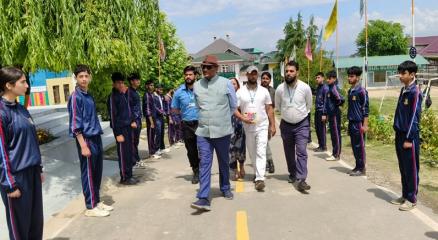
Baramulla, May 11: Delhi Public School (DPS) Baramulla Monday organised an anti-drug rally under the aegis of the Nasha Mukt Bharat Abhiyan. The rally witnessed enthusiastic participation from students, staff members, officials, and the general public, reflecting a collective commitment towards building a drug-free society. The rally was conducted under the supervision and guidance of the Chairman DPS and the dedicated efforts of the Principal DPS Baramulla, Dr Shashwata Shiva, The Principal emphasised the crucial role of educational institutions in shaping responsible citizens and spreading awareness against substance abuse. He also highlighted the importance of youth empowerment, moral values, and community participation in eradicating the menace of drugs from society. The rally was conducted inside DPS campus, with participants carrying impactful placards, raising awareness slogans, and taking a pledge to stand united against drug abuse. "The event served as a powerful message of social responsibility, discipline, and national commitment by the young Dipsites of DPS Baramulla," the school handout reads.
Srinagar, May 9: The Private Schools Association of Jammu & Kashmir (PSAJK) has clarified its position regarding the recent statement made by former PSAJK President G. N. War concerning students of Government schools and their alleged involvement in the growing drug menace. In a statement issued here, PSAJK has stated that the remarks made by G N Var are purely his personal views and have no connection whatsoever with the official stand or policy of the Association. "It is important to clarify that G N Var has already resigned and retired from PSAJK and presently holds no position, authority, or representation within the association," the statement reads. "The stand of PSAJK on this sensitive issue is very clear and responsible." PSAJK said every student, whether studying in a Government school or a Private school, "is our own child, and no institution or section of society should be singled out or blamed." PSAJK statement reads that drug abuse was a collective social challenge which requires unity, awareness, cooperation, and serious efforts from parents, teachers, educational institutions, civil society, and the Government. "PSAJK believes that safeguarding our younger generation from the deadly menace of drugs is a shared responsibility of all stakeholders," it reads. PSAJK said that instead of creating divisions, society must work together to guide, counsel, and protect our children for a safer and brighter future.
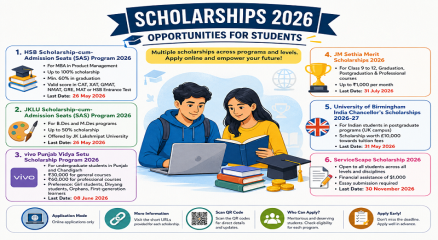
Srinagar, May 7: Several national and international scholarship programmes offering financial assistance, tuition fee waivers and admission support for students pursuing higher education have opened applications for the 2026 academic session. The scholarships are aimed at supporting meritorious and economically weaker students across different educational streams. Among the major schemes announced is the “HSB Scholarship-cum-Admission Seats (SAS) Program 2026”, which offers admission along with scholarships of up to 100 percent for students seeking admission in MBA in Product Management courses. The programme is open to graduates securing at least 60 percent marks and possessing valid entrance test scores including CAT, XAT, GMAT, NMAT, GRE or MAT. The last date for application is May 26, 2026. Another major initiative, the “JKLU Scholarship-cum-Admission Seats (SAS) Program 2026”, has invited applications from students pursuing Bachelor of Design (B.Des) and Master of Design (M.Des) programmes. Selected candidates can avail scholarships of up to 50 percent on tuition fees. The programme is being offered by JK Lakshmipat University and applications will close on May 26, 2026. The “vivo Punjab Vidya Setu Scholarship Program 2026”, launched as a CSR initiative by Vigour Mobile India Pvt Ltd, is aimed at undergraduate students from economically weaker sections in Punjab and Chandigarh. Under the scheme, students enrolled in government or government-aided colleges can receive scholarships of Rs 30,000 for general graduation courses and Rs 60,000 for professional courses. Preference will be given to girl students, differently-abled students, orphans and first-generation learners. The deadline for applications is June 8, 2026. Meanwhile, the “JM Sethia Merit Scholarships 2026” has also opened applications for students studying in Classes 9 to 12, graduation, postgraduation and professional courses. Eligible students can receive a monthly scholarship of up to Rs 1,000. Applications under the scheme will remain open till July 31, 2026. For students aspiring to study abroad, the “University of Birmingham India Chancellor’s Scholarships 2026-27” is offering scholarships worth £10,000 towards tuition fees for Indian students admitted to postgraduate programmes at the University of Birmingham’s UK campus. The last date for application is May 31, 2026. Additionally, the “ServiceScape Scholarship 2026” is inviting applications from students across all academic levels and disciplines. The scholarship provides financial assistance of $1,000 to selected candidates. Applicants are required to submit an essay as part of the selection process. The last date to apply is November 30, 2026. Most of the scholarship programmes have online application facilities and are focused on promoting academic excellence while reducing financial barriers for deserving students.

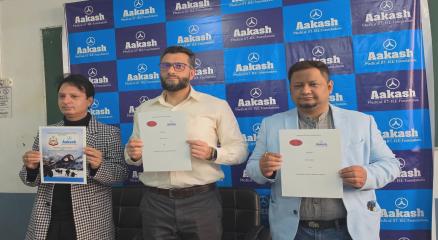
Srinagar, May 1: Aakash Educational Services Limited (AESL), a leading test preparatory services provider in India, has signed multiple Memorandums of Understanding (MoUs) with the Indian Army and key paramilitary forces, including the Border Security Force (BSF), Central Reserve Police Force (CRPF) and Indo-Tibetan Border Police (ITBP), to enhance educational access and welfare support for personnel and their families. As per the official handout, the agreements aim to provide structured scholarships, academic mentoring, career guidance and nationwide coaching access to serving personnel, veterans, gallantry awardees, disabled members of the forces, and families of martyrs. Under the initiative, AESL will extend financial assistance to remove barriers in accessing quality education, particularly for students aspiring to pursue competitive careers such as engineering and medical entrance examinations. The programmes will offer academic resources at minimal or no cost, depending on eligibility. Managing Director and CEO of AESL, Chandra Sekhar Garisa Reddy said the initiative is aimed at supporting defence families in achieving educational success. “Anyone who has committed themselves to serving their country should have every available opportunity for their family to grow and succeed. Through these partnerships, we hope to expand access to quality academic resources,” he said. According to the details of the MoUs, extensive fee waivers and scholarships have been structured across all forces. For families of personnel who lost their lives in service, AESL will provide near-total fee waivers, with only registration or admission charges applicable in most cases. Full tuition fee waivers have also been extended to wards of personnel with significant disabilities and gallantry award recipients. For serving and retired personnel, partial tuition fee waivers ranging from 20 percent to 50 percent have been formulated, subject to conditions and after adjustment of other scholarships. Additional concessions have been tailored separately for BSF, CRPF and ITBP personnel, including higher waivers for disability cases and special provisions for orphans and boarded-out personnel. "The scholarship schemes will run alongside AESL’s existing merit-based programmes and will be applicable across its pan-India network of centres," the handout reads. In addition to financial support, AESL will provide academic mentoring, career counselling, and access to national-level scholarship and talent identification examinations, including the ANTHE programme. "The initiative also includes provision for both virtual and offline academic support, as well as access to AESL centres and defence school facilities for assessments," it reads. Officials said the programmes are designed as multi-year engagements, ranging from three to five years, to ensure sustained academic support and continuity for beneficiaries. AESL, which has been operating for over three decades, currently runs more than 415 centres across the country and caters to over four lakh students, offering preparation for medical, engineering and other competitive examinations.
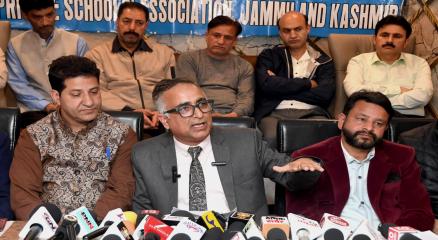
Sets up 9-member committee to probe internal irregularities Srinagar, Apr 29: The Private Schools Association Jammu and Kashmir (PSAJK) on Tuesday called for strict enforcement of student safety guidelines, greater transparency in school administration. Addressing media persons in Srinagar, president PSAJK Nazrul Islam Baba called for accountability mechanism in schools. "We have also , constituted a nine-member internal enquiry committee to investigate alleged irregularities within the association," Baba said. PSAJK president said the association has adopted a “shared vision” to reform and strengthen the education ecosystem in the region. He stressed the need for strict implementation of provisions under the POSH Act and POCSO Act across all educational institutions. "Safety and dignity of students and staff must remain non-negotiable," he said. Baba also underscored the importance of transparency and institutional audits, calling for a robust system to ensure accountability. “Responsibilities must not only be assigned but also measured and reviewed at every level of administration and management,” he said. He highlighted the role of parents and emphasized stronger coordination between schools and parent associations. "Collaborative efforts are key to improving educational outcomes," he said. The PSAJK president expressed support for the Centre’s Nasha Mukt Bharat Abhiyan, saying the association is committed to working with authorities to raise awareness against substance abuse among youth. He also proposed large-scale awareness seminars and outreach programmes involving students, parents, and educators. Advocating pedagogical reforms, Baba called for upgradation of activity-based learning in classrooms, moving beyond rote methods to focus on skill development, critical thinking, and experiential learning. About the constitution of the international committee, PSAJK president said inquiry committee was constituted following the complaints regarding the alleged unconstitutional continuation or assumption of office by certain former office bearers beyond their prescribed tenure, as well as failure by some individuals to submit financial accounts to the head office by the March 31, 2026 deadline. "The committee has been mandated to examine the legality of such continuations, audit financial records, investigate non-compliance with institutional directives, and fix responsibility for any constitutional or financial violations," he said. PSAJK warned that individuals found continuing in unauthorised positions or obstructing the enquiry would face strict disciplinary and legal action. “Any failure to cooperate may lead to escalation of the matter to law enforcement agencies,” he added. He said the committee will conduct a time-bound probe, and its findings will be acted upon decisively to restore institutional discipline and credibility, it added. "We are committs to constitutional governance and transparency. We maintains zero tolerance towards misuse of position or institutional resources," he said.
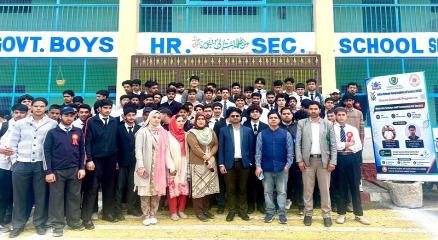
Experts deliver lectures on LEDs, solar cells Srinagar, April 27: In a significant initiative to promote scientific temperament and innovation among young learners, the Indian National Young Academy of Science, in collaboration with National Institute of Technology (NIT) Srinagar Monday organized a Science Outreach Programme on “Materials Science and Technology for Society” at Government Boys Higher Secondary School, Soura. The programme, held under INYAS’s nationwide outreach initiative, aimed at encouraging creative thinking and fostering curiosity among school students. Over 100 students and faculty members participated in the event. Dr. Vijay Kumar, Member INYAS and Assistant Professor, Department of Physics, NIT Srinagar, delivered an engaging lecture titled “How Materials Glow: The Science Behind LEDs and Light,” explaining fundamental concepts of material science in an accessible manner. Another session was conducted by Dr. Mohd Zubair Ansari, who spoke on recent advancements in solar cell research and emerging trends in material science, highlighting the role of innovation in sustainable technologies. The programme was coordinated by Dr. Vijay Kumar and Dr. Mohd Zubair Ansari, while local arrangements were managed by senior lecturer Mohammad Ibbrahim of BHSS Soura. On the occasion, Dr. Vijay Kumar said that outreach programs are essential for inspiring students to pursue careers in science and technology. He noted that INYAS remains committed to reaching out to students, particularly in remote areas, to nurture scientific curiosity and innovation. Director NIT Srinagar, Prof. Binod Kumar Kanaujia, in his message, said that initiatives like these play a crucial role in bridging the gap between higher education institutions and school-level learning. He stressed that early exposure to scientific research and practical knowledge helps in shaping future innovators and problem-solvers. Registrar NIT Srinagar, Dr. Atikur Rehman, also lauded the programme, stating that such outreach activities strengthen the foundation of scientific education at the grassroots level. He added that NIT Srinagar will continue to support and collaborate on programmes that promote academic excellence and innovation among youth.
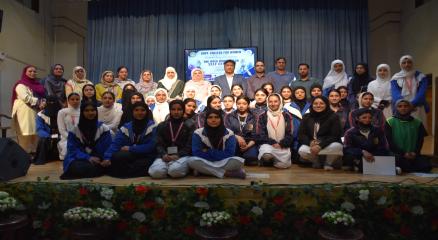
Srinagar, Apr 27: The one-week workshop on self-defence held at Government College for Women, M A Road, Srinagar concluded on Monday. The workshop was organised by the college’s Women’s Study Centre and the Department of Physical Education in collaboration with the J&K Sports Council as part of the MoU signed between the two in March earlier this year. The workshop began on April 20 in which 50 participating students were taught more than 20 specific techniques, ranging from escaping wrist grabs and chokeholds to defending against hair-grabs. Speaking at the valedictory ceremony, Divisional Sports Officer (Kashmir), Nusrat Gazala, who was the Chief Guest on the occasion, stressed on the importance of self defence. In her address at the occasion, Principal, Prof. (Dr.) Yasmeen Farooq said, “We don’t see this as a one-time event, but as the beginning of a sustained journey. We are committed to making this program a permanent feature of our college.” Senior faculty member, Prof. Majida Maqbool also spoke on the occasion and thanked the Sports Council team for their support in conducting the workshop, particularly the Lead Trainer, Mr. Shafqat Shafi. The valedictory programme was moderated by Dr. Malik Roshan Ara. “Participants moved from being passive observers to being alert and self-reliant individuals with a spirit of resilience that will serve the students far beyond the sports hall,” Dr. Roshan said. Listing the outcomes of the workshop, Dr. Suhail Ahmad said it not only enhanced the physical preparedness of participants but also brought noticeable improvement in their confidence and situational awareness while developing a sense of discipline, teamwork and mental resilience. Meanwhile, Director Colleges, Prof. (Dr.) Sheikh Ajaz Bashir visited the college to inaugurate the newly furbished laboratories of Department of Zoology, Department of Education and Department of Water Management. He also interacted with the faculty and students on the occasion.
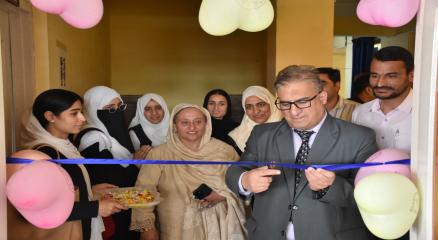
Srinagar, April 27: Director Colleges, Prof. (Dr.) Sheikh Ajaz Bashir Monday emphasized the importance of well-equipped laboratories in fostering scientific temper, research orientation, and experiential learning among students. He was speaking during the inauguration of the newly refurbished laboratories of the Department of Zoology, Department of Education, and Department of Water Management at Government College for Women (GCW) M A Road, Srinagar. During the visit, the Director Colleges interacted with faculty members and students, appreciating the efforts undertaken by the institution to strengthen academic infrastructure and enhance practical learning facilities. He emphasized the importance of well-equipped laboratories in fostering scientific temper, research orientation, and experiential learning among students. Principal, Prof. (Dr.) Yasmeen Farooq highlighted the ongoing academic and administrative initiatives of the college. Director Colleges also held engaging interaction sessions, advising students and faculty members to make collective concerted efforts for overall betterment of higher education.
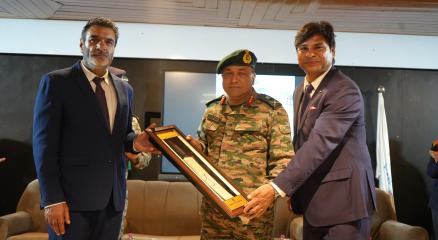
Srinagar, Apr 21: Doon School Srinagar Tuesday hosted its annual Investiture Ceremony-2026 in a resplendent display of tradition, discipline, and youthful aspiration. The event served as the formal induction of the newly elected Student Council and was distinguished by the presence of high ranking military top brass, special guests, and the senior leadership of the school. As per the school handout, the proceedings commenced with a grand ceremonial reception at the campus gates. GOC 31 Sub Area Major General Abhijeet Mitra was the chief guest at the occasion while Colonel Rajeev Bhooshan was the guest of Honour at the occasion and Abrar Khan Tareen was invited as the special guest. All the dignitaries were ushered in to the rhythmic cadence of the school band. The Chief Guest and the Guest of Honour were escorted to the dais by the Chairman Showkat Hussain Khan and the School Principal besides the incoming student prefects. Chairman Doon School Srinagar, Showkat Hussain Khan delivered an evocative address and reaffirmed the commitment of the institution to sculpting character and visionary leadership. Chairman and the Principal formally felicitated the Chief Guest and the Guest of Honour by presenting tokens of appreciation in recognition of their distinguished service to the nation. The zenith of the event was the solemn Oath Taking Ceremony. Amidst an aura of gravity, the Principal administered the pledge to the new Head Boy Hassan and new Head Girl Mufti Fajr. In a symbolic vesting of authority, Major General Abhijeet Mitra and Chairman Showkat Hussain Khan performed the pinning of badges and sashes, officially charging the young leaders with their new responsibilities. In their maiden addresses, the newly minted Head Girl and Head Boy pledged to uphold the legacy of the school with integrity. Addressing the gathering, Major General Abhijeet Mitra delivered a stirring speech on the virtues of discipline and selfless service, exhorting the council to "lead with a blend of courage and empathy." The formal atmosphere was periodically lightened by the school’s cultural troupes, featuring a soulful rendition of the contemporary hit "Believer" followed by a traditional Kashmiri folk performance that celebrated the region’s rich heritage. The ceremony culminated with the resounding notes of the School Anthem and a formal Vote of Thanks, marking a new chapter for the student leadership.


Srinagar, Apr 21: Jammu and Kashmir Police has booked a professor of University of Kashmir, a Srinagar resident, for alleged rape, cheating and criminal intimidation, with the complainant accusing him of prolonged exploitation under the pretext of marriage. A senior police officer told news agency JKNS that the accused has been arrested, after an FIR was registered against him on the basis of the victim’s complaint. Police have registered the case under relevant provisions of the Bharatiya Nyaya Sanhita and initiated an investigation to probe all allegations and establish the full extent of the offence. Meanwhile, University of Kashmir in an official notification issued by the administration, teaching section, a copy of which lies with JKNS reads, "Whereas, Sajad Mohammed Khan, Scientist-C, Department of Computer Science, has been arrested in connection with the FIR No 11 of 2026 lodged at Women's Police station Rambagh." "Now, therefore, in terms of Rule 31 of the Jammu and Kashmir Civil Services (Classification, Control and Appeal) Rules, 1956, and in view of his detention in custody, Mr Sajad Mohammed Khan, Scientist-C, Department of Computer Science, is hereby placed under suspension with immediate effect," it reads.
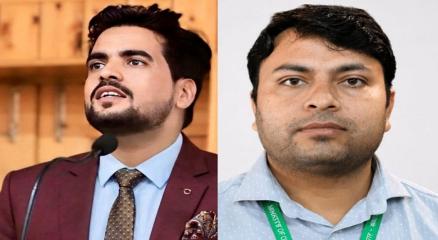
Dir, Registrar highlight impact, eco-friendly system set to transform roads Srinagar, April 20: In a major advancement in sustainable infrastructure engineering, the National Institute of Technology Srinagar has been granted a patent by the Patent Office, Government of India, for a novel material system titled “Zinc-Coordinated Porphyrin-Integrated Geocomposite Systems for Sustainable Pavement Engineering.” The patent has been awarded to a research team led by Dr. Vivek (Assistant Professor, Civil Engineering) and Dr. Ravi Kumar (Assistant Professor, Department of Chemistry), along with collaborators including PhD scholar Dr. Waseem Arif, Attaullah Kaleem, Kizafa Aftab, and Manzoor Hussain. The innovation marks a significant step forward in the development of high-performance, eco-friendly road construction technologies. The patented technology introduces a new class of functional geocomposite materials by integrating zinc-coordinated porphyrin structures into pavement systems. It is specifically designed to enhance both mechanical strength and environmental performance of road infrastructure, particularly under challenging climatic conditions such as those found in cold regions like Jammu and Kashmir. According to the team, the developed material system demonstrates improved resistance to rutting and fatigue cracking, two of the most common causes of pavement failure. By modifying the internal structure of pavement layers at the molecular and composite levels, the innovation enables improved load distribution, enhanced durability, and longer road service life. In his message, Director NIT Srinagar, Prof. Binod Kumar Kanaujia, extended congratulations to Dr. Vivek, Dr. Ravi Kumar, and the research team. He said the grant of this patent reflects the institute’s strong focus on high-impact research and innovation. This breakthrough demonstrates how advanced material science can address real-world infrastructure challenges while promoting sustainability, Prof. Kanaujia said. Institute’s Registrar, Prof. Atikur Rehman, termed the development a landmark achievement. “This accomplishment highlights the dedication and interdisciplinary collaboration of our researchers. It also reinforces our commitment to fostering innovation and intellectual property development,” he added. Dean Research and Consultancy (R&C), Prof. Roohie Naaz Mir, emphasized the wider implications of the innovation. “This patented system has strong potential for application in modern pavement engineering, especially in regions requiring durable and climate-resilient infrastructure. It is a step toward translating academic research into practical solutions,” she added. HOD Civil Engineering Department Prof.J. A. Bhat and HOD Chemistry Prof. Kowsar Majid congratulated Dr Vivek, Dr Ravi Kumar, and the team for securing the patent. They termed it as a proud moment for the Institute.
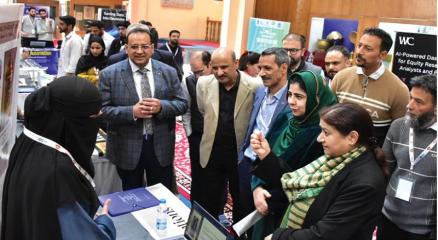
IDE bootcamp to shape next-gen entrepreneurs begins at KU Srinagar April 20: The University of Kashmir (KU) on Monday began Edition 3, Phase II of a five-day Innovation, Design & Entrepreneurship (IDE) Bootcamp at the Main Campus. The bootcamp is being hosted by the Centre for Innovation, Incubation & Entrepreneurship (CIIE), Institute of Technology (IoT), Zakura Campus, in collaboration with the Ministry of Education’s Innovation Cell, AICTE, Wadhwani Foundation, and SBI Foundation. The event is being conducted simultaneously with 13 institutions across the country. The bootcamp aims to develop problem-solving abilities among participants and guide them through the process of turning ideas into workable solutions, with a focus on innovation, entrepreneurship, and real-world application. Speaking at the inaugural session, Vice-Chancellor, KU, Prof. Nilofer Khan, said platforms like these help students move beyond theory and engage with ideas that have practical relevance. "It is important to nurture innovation at the institutional level and support young minds in exploring entrepreneurial pathways,” she said. Commissioner Secretary for Food, Civil Supplies & Consumer Affairs Saurabh Bhagat in his address said that such initiatives are important for building a culture of innovation and encouraging youth to contribute to economic and social development through entrepreneurship. Director, Outreach & Extension, SKUAST-K, Prof. Raihana Habib, highlighted the importance of collaborative platforms that bring together academia, industry, and policy stakeholders to support innovation-driven growth. Earlier, in his welcome address, Dean & Director, IoT Zakura Campus, KU, Prof. Mohammad Tariq Banday, said that the bootcamp provides a structured space for participants to engage with design thinking, develop business models, and refine their startup ideas through guided mentorship. The five-day long bootcamp includes sessions on design thinking, business model development, startup pitching, industry interaction, and hands-on workshops led by experts from different domains. Around 250 students, startup teams, faculty mentors, experts, and officials from institutions across the country are participating in the camp. A startup exhibition was also held on the sidelines of the event, featuring participation from nearly 30 institutions across the country and showcasing innovative solutions and prototypes. The proceedings of the event were conducted by Malik Younis Ahmad, faculty at IoT Zakura Campus KU, while the vote of thanks was proposed by Qazi Junaid, faculty at IoT Zakura Campus KU.
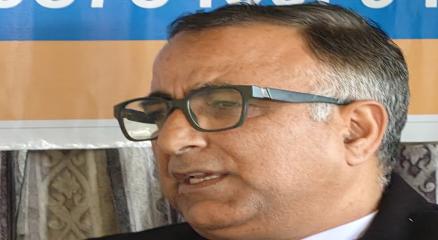
Srinagar, Apr 19: The Private Schools’ Association Jammu & Kashmir (PSAJK) Sunday expressed concern over the "unnecessary debate" surrounding the hiring preferences of private educational institutions, particularly in relation to the appointment of residential Principals from specific regions. In a statement issued here, PSAJK reiterated that academic autonomy was a fundamental pillar of any educational institution. "The prerogative to define recruitment criteria—based on institutional vision, discipline requirements, residential obligations, or administrative efficiency—rightfully rests with the management of the institution," the handout reads. It said the decision to appoint a residential Principal, irrespective of geographic origin, should not be misconstrued as a reflection on the competence, capability, or employability of local talent. "J&K has a rich pool of highly qualified and experienced educators who continue to contribute immensely to the academic ecosystem," the statement reads. It further reads that institutional requirements may vary, and flexibility in hiring remains essential for maintaining standards and achieving desired outcomes. "PSAJK believes that isolated recruitment decisions should not be politicized or amplified unnecessarily, especially when they fall within the legitimate domain of institutional governance," the statement reads. "Such discussions divert attention from more pressing challenges facing the education sector, including quality enhancement, infrastructure development, teacher training, and student well-being," it reads. PSAJK has urged all stakeholders to respect the professional autonomy of educational institutions and to engage constructively on issues that collectively uplift the standards of education across the region.
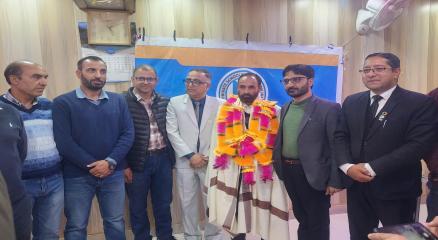
Kulgam, April 18: The Private Schools’ Association Jammu and Kashmir (PSAJK) Saturday conducted elections for its Kulgam chapter, wherein Altaf Ahmad Malik, Chairman of Heart Light Educational Institution, Yaripora,l was unanimously elected as the District President. The election process was carried out under the supervision of the Election Commission led by Advocate Nadeem Qadiri, along with a team comprising founding members Majid Bhat, Tariq Bali, and District President Srinagar Tahir Wagay, who served as observers to ensure transparency and fairness. Speaking at the occasion, PSAJK President Baba Nazrul Islam reiterated the association’s commitment to streamlining its functioning with greater accountability and transparency. He emphasized the need for collective responsibility in strengthening the organization and addressing the challenges faced by educational institutions. The event also witnessed participation from members of the Bar and civil society, who attended as observers, reflecting wider community engagement in the democratic process of the association. Former District President Khursheed Ahmad expressed confidence in the newly elected leadership and stressed the importance of collaborative learning among school leaders to enhance educational standards in the district. Farooq Ahmad Naik, while reviewing the performance of the head office, expressed optimism that the introduction of an ERP system would help in better coordination and consolidation of activities, particularly benefiting schools in rural districts. During the proceedings, it was also unanimously resolved that PSAJK will undertake a significant environmental initiative by pledging to plant 10,000 saplings on the occasion of Earth Day, with each district contributing actively to the campaign. The election marks a new chapter for PSAJK Kulgam, with renewed focus on unity, transparency, and progressive educational reforms.
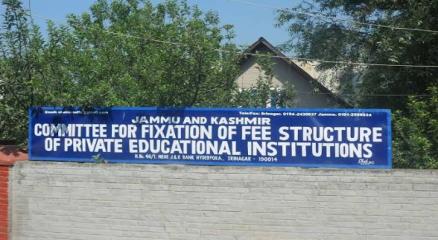
'Some individuals are falsely claiming to represent parents associations, which is unlawful and contrary to prescribed rules' Srinagar, Apr 17: In a latest development, the Fee Fixation and Regulation Committee (FFRC), J&K, has issued strict directions to all private schools to mandatorily allow constitution of Parents Associations in the schools. The latest circular instructions in this regard have been issued by chairman FFRC. "The parents association must be constituted in accordance with the provisions laid down under Rule-7 of the J&K School Education Fixation and Regulation of Fee) Rules, 2010," the fresh circular reads. The FFRC has however warned against the functioning of unauthorised parent bodies of the private schools. "The rules provide a structured mechanism to ensure transparency and accountability in private schools," the circular reads. Committee has made it mandatory for all the schools to form a parents association in a prescribed manner. "It has come to its notice that certain individuals, groups, unions and federations claiming to represent parents are operating outside the statutory framework," FFRC circular reads. The committee has termed such entities as unauthorised saying suc bodies have no legal validity and shall not be recognised by any school or authority in matters related to fee regulation or school administration. "Each parents association must be constituted strictly at the individual school level and should comprise only the parents or guardians of students currently enrolled in that institution," the circular reads. The Committee has further emphasised that no external or collective body formed outside Rule-7 will be entertained. The circular further reads that the duly constituted parents association will serve as the formal platform for engagement between school management and parents, particularly on issues related to fee fixation, grievances and other academic or administrative matters. Chairman FFRC has further asked the management of all the private schools to immediately constitute or reconstitute their parents associations and submit details to the committee without delay. "Schools must maintain proper records of the formation and proceedings of these associations and ensure full cooperation in their functioning," the circular reads. Parents and guardians have been advised to associate only with the recognised parents association of their respective schools and refrain from engaging with any unauthorised external bodies. FFRC has also warned that any deviation from the directions will invite action under the provisions of the J&K School Education Rules, 2010. "Some individuals are falsely claiming to represent parents associations, which is unlawful and contrary to the prescribed rules," the circular reads. Chairman FFRC in a circular has cautioned that continued violations will lead to legal action without further notice. "A complaint in this regard has already been referred to the appropriate investigating agency for necessary action," the circular reads. As per the circular, the fresh instructions "will come into force with immediate effect."
Srinagar, Apr 17: The Fee Fixation and Regulation Committee (FFRC) has directed private schools to refrain from compelling parents to purchase textbooks of private publishers. The fresh circular in this regard has been issued by Chairman FFRC Justice (retd) Sunil Hali. "It has come to the notice of this Committee that some private schools are compelling parents to purchase books from private publishers," the circular reads. Chairman FFRC said that complaints were being received wherein parents are being compelled to purchase books costing around Rs 3500. "It is further alleged that schools are putting pressure on parents to purchase books from private publishers," FFRC circular reads. He said there "appears to be a nexus between private schools and publishers", leading to monetary benefits for the private schools. "It is alleged that the schools are indulging in profiteering by compelling parents to purchase books from private publishers," the circular reads. The circular reads that as per the directions of the affiliating bodies, namely CBSE and JK Board, only NCERT books were part of the curriculum prescribed by these bodies. "Private schools have no right to compel parents to purchase books from private publishers at exorbitant costs," it reads. FFRC has instructed private schools to conform to the directions issued by the affiliating bodies, which clearly provide that only NCERT books are to be prescribed. "This additional burden placed on parents is unwarranted and illegal, and it tantamount to profiteering, which is specifically barred by statute," it reads. FFRC chairman has directed the private schools to follow the directions of the affiliating bodies, which prescribe only NCERT books. "Parents should not be forced to purchase books from private publishers at exorbitant costs," it reads. The FFRC has warned schools of strict action in case the circular instructions were not followed by the schools. "In case these directions are not complied with, it will be considered a violation of the committee's order and may lead to de-recognition of the schools for indulging in such practices," it reads. The private schools have been asked to submit their compliance report to the committee on this regard. "Every school must submit its compliance report confirming that it is complying with the directions of the committee," the circular reads.
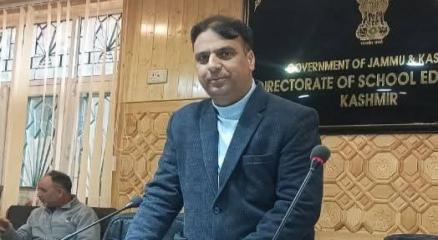
Srinagar, Apr 17: Amid the ongoing strike by cooks and a reported shortage of LPG across Kashmir, the Jammu and Kashmir Teachers Forum has expressed serious concern over the approach adopted by certain Zonal Education Officers (ZEOs), accusing them of unfairly targeting teachers over the disruption in the Mid-Day Meal (MDM) scheme. In a statement issued here, Provincial president JKTF Javed Ahmad Bhat said that ZEOs, during recent school visits, have been seeking explanations from school heads for the non-preparation of MDM, despite the situation being beyond their control. "Such practice is unfortunate and unjustified. The absence of cooks and non-availability of LPG has made it impossible for schools to run the scheme smoothly," he said. He said holding teachers and school heads accountable under such circumstances was neither fair nor logical. "The teaching community has continued to demonstrate dedication and responsibility even in challenging conditions," Bhat in a statement said. JKaTF further alleged that in some instances, teachers have been directed to prepare meals themselves using firewood. "Such move impractical and unreasonable and such directives fall outside the professional responsibilities of teachers and undermine the dignity of the profession," he said. Highlighting systemic issues, JKTF provincial president said that ensuring the availability of LPG and addressing logistical bottlenecks in the MDM scheme lies within the administrative domain, not with the teaching staff. "JKTF urges the authorities to ensure timely supply of LPG and streamline arrangements so that schools can function without disruption," he said. He said that despite constraints, many school heads and teachers have been making sincere efforts to keep the MDM system operational. "At times teachers spend from their own salaries due to delays in fund disbursement," he said. Bhat said that instead of issuing explanations, there is a need to acknowledge efforts of teachers and extend the necessary support to them. JKTF appealed to the concerned officers to adopt a more empathetic and constructive approach, stressing that better coordination between field officials and school staff is essential for the smooth functioning of educational institutions. "We hope that corrective measures would be taken at the earliest in the larger interest of the education system," the JKTF statement reads.
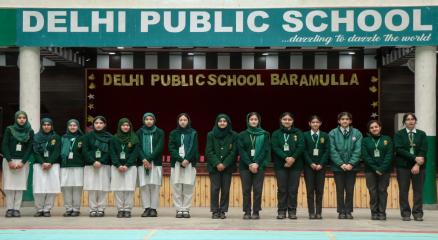
'Our institution has consistently upheld respect for all faiths and traditions. We apologetically regret for unwanted confusion, within DPS Baramulla family' Baramulla, Apr 12: The management of Delhi Public School (DPS) Baramulla on Saturday said the incident that took place at the campus was a “misunderstanding” which was “selectively interpreted” and misrepresented in the public domain. In an official statement issued here, the school management said that the content being circulated regarding the alleged incident does not reflect the true facts and has been presented out of context, leading to “unwanted confusion” within the school community. The management has expressed regret over the situation and appealed to stakeholders, including parents, educationists and civil society members, to maintain calm and exercise restraint. “We deeply and apologetically regret for this unwanted confusion, if any, within our DPS Baramulla family,” the official statement reads. The management, however, alleged that certain elements with “vested interests” were attempting to give the issue a communal colour. "Our institution has consistently upheld respect for all faiths and traditions. The ethos of school is rooted in dignity, mutual respect and inclusive educational practices," the statement reads. Referring to the incident, the school described it as an “isolated situation” that occurred earlier in the day and led to avoidable confusion at the premises. "Emotionally sensitive matters require clarity and balanced understanding rather than speculation," the statement reads. The management further highlighted the role of parents in the institution’s growth and said that continued support from the parent community has enabled the school to maintain strong ethical and academic standards. The management of DPS Baramulla has reiterated its commitment to transparency and the well-being of students while urging parents and the wider community to act "responsibly while engaging with information and to help preserve the sanctity of educational spaces." “We request everyone to exercise discretion and support an environment that strengthens unity, mutual respect and educational purpose,” the statement reads.
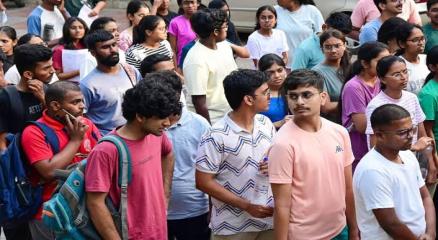
New Delhi, May 12: A massive protest organised by the National Students' Union of India (NSUI) broke out near the Shastri Bhawan on Tuesday, against the alleged paper leak in NEET-UG this year. The exam was held on May 3, following which allegations of paper leak surfaced, triggering investigations by the Rajasthan Special Operations Group (SOG) and central agencies. Earlier, the National Testing Agency (NTA) announced the cancellation of NEET-UG 2026, and said the examination will be re-conducted on dates to be notified separately. In a statement, the NTA said the decision was taken with the approval of the Government of India in the interest of maintaining transparency and preserving trust in the national examination system.
Srinagar, Jan 8: Contractual faculty members working in government degree colleges of Jammu and Kashmir Higher Education Department (HED) have expressed strong resentment over what they term as a glaring disparity in salaries, demanding revision of their pay in line with University Grants Commission (UGC) norms and regularisation of their services. The faculty, many of whom hold PhDs and are qualified through NET, SET and JRF, said they have been denied UGC-recommended pay scales despite discharging academic responsibilities equivalent to their regular counterparts. “Hundreds of highly qualified scholars have been pushed into silent suffering. For years, we have been assured that our pay revision is under consideration, but nothing has materialised so far,” said Dr Ishfaq Gowhar, a contractual faculty member. Earlier, Director Colleges J&K had acknowledged the legitimacy of the faculty’s demand, stating that while the issue was genuine, its implementation involved significant financial implications due to the large number of contractual appointments. “We are aware that they deserve salary enhancement, but the number of contractual faculty is huge and it has financial implications,” he earlier said. Dr Gowhar pointed out that contractual lecturers, who form the backbone of the higher education system, continue to work on a fixed monthly honorarium of Rs 28,000, which has remained unchanged for nearly a decade. “The irony is that a Class IV employee with a Class 10 qualification draws a salary exceeding Rs 50,000, while doctorate-holding teachers engaged in teaching, mentoring and academic research are paid a fraction of that,” he said. He added that institutions such as SKUAST-K, University of Kashmir and Islamic University of Science and Technology (IUST) have implemented revised UGC pay scales, but the Higher Education Department has failed to extend similar treatment to its contractual faculty. Dr Gowhar said the demand for “equal work, equal pay” gets prominently featured in election campaigns, raising hopes among contractual teachers. “Promises were made and slogans echoed during elections, but once the process ended, our voices were reduced to silence. Even meeting officials now feels impossible,” he said. He said contractual faculty were not seeking privileges but dignity, fairness and recognition for their service. The faculty appealed to the Jammu and Kashmir Lieutenant Governor Manoj Sinha, Chief Minister Omar Abdullah and the Education Minister to intervene and take concrete steps towards addressing their long-pending demands. “This issue is not merely about salaries. It is about survival, justice and dignity in the classrooms of Jammu and Kashmir,” he said.
Jammu, Jan 18: Minister for Food, Civil Supplies & Consumer Affairs, Transport, Youth Services & Sports, Information Technology, ARI & Trainings, Satish Sharma Sunday said that the remarkable achievements of Jammu and Kashmir’s youth are a powerful testament to what can be accomplished through fair opportunities, modern infrastructure and unwavering government support. Addressing the gathering during the SRIJAN initiative conference, the Minister stated that the success of young athletes clearly demonstrates that with the right ecosystem in place, the UT youth are capable of overcoming every challenge and competing confidently at national and international platforms. Highlighting the core focus areas of the SRIJAN programme, Satish Sharma said "the initiative is playing a transformative role in strengthening the sports landscape of the Union Territory by expanding grassroots sports infrastructure across Jammu, Kashmir and other regions. This is being done by ensuring transparent, merit-based selections free from any bias; integrating sports with education and skill development; promoting greater participation of girls and enhancing inclusivity and establishing sports as a dignified and sustainable career option with viable livelihood opportunities, he said0. He reaffirmed the government’s firm commitment and said that sustained efforts were underway to create international-standard sports facilities, including modern cricket stadiums in Jammu and Srinagar. He also highlighted the strengthening of Khelo India Centres, promotion of traditional sports such as Dangal and enhanced collaboration with the Union Ministry to transform Jammu & Kashmir into a national sports hub. “As Sports Minister, I assure our athletes that the government stands firmly with them. Our focus is not only on infrastructure creation but also on nurturing talent, discipline and confidence among the youth,” he said. The Minister lauded the determination, resilience and dedication of young sportspersons, describing them as the living legacy of the SRIJAN mission. He urged them to continue training with passion, remain disciplined and dream fearlessly, assuring them of full institutional support at every step of their journey. Satish Sharma expressed hope that the conference would serve as the foundation of a new era where every talented child, from the mountains of Kashmir to the plains of Jammu, is provided an equal opportunity to shine on the global stage. He concluded by reiterating the government’s resolve to make sports a powerful vehicle for youth empowerment, social inclusion and regional pride in Jammu and Kashmir. Director General, Youth Services and Sports, Anuradha Gupta and prominent persons from different fields and states along with senior officers of the Youth Services and Sports Department, were also present on the occasion.
Arshid Ahmad Malikmalik121arshid@gmail.comThe serene valley of Pahalgam known for its breathtaking landscapes,was shaken to its core by a brutal and inhuman attack that claimed innocent lives and left the nation in shock.On 22 April 2025 afternoon,a group of terrorists in Pahalgam,J&K leaving 26 tourists dead and many more injured.The attack was widely condemned by people across the country with many leaders and citizens expressing their outrage and grief.Even just after the attack the people from every nook and corner of Kashmir mourned and strongly condemned this brutal and inhuman act and we saw candlelight protests from different places of Kashmir in solidarity with the victim families who lost their loved ones in this Coward Act.Besides, we saw some heartwarming stories of Kashmiris helping tourists during this horrific attack.Some Kashmiri Youth took the initiative to help tourists, providing them with medical care and transportation to safe areas.Their actions showed that even in times of crisis,there are individuals who prioritize humanity over adversity.Likewise, Aadil Hussain Shah a pony rider and a sole breadwinner in his home lost his life while attempting to protect tourists by tackling gun men.Another example of bravery was demonstrated by a Kashmiri shawl vendor, Sajad Ahmad Bhat who risked his life to help injured tourists.He carried some to safety on his back and provided water to those in need.Moreover,taxi drivers and hotel owners offered free rides and services to tourists, guiding them to safety.These acts highlights Kashmiri community's commitment to humanity, hospitality and unity even in the face of adversity.These acts of kindness serve as a powerful counter-narrative to the misconception that Kashmiris support to condone violence.Instead, they highlight the community's resilience, empathy and dedication to peace.In the aftermath of this excruciating attack, certain media outlets of our nation,often referred to as "Godi Media" left no stone unturned to sensationalize the stories to grab the attention.They often spread misinformation and promote biased narratives leading to polarization and erosion of trust in the media.In the wake of this attack "Godi Media" claimed that the terrorists selectively targeted Hindus after checking their names.However,the list of victims revealed that 15 out of 26 killed were Muslims, debunking this false narrative.By spreading this unverified claims,these TV Channels aimed to fuel communal tensions and polarization, which could lead to further violence and hatred.This behaviour aligns with a disturbing trend where sections of the media amplify divisive narratives to serve political agendas.Although the tourists who were here and witnessed this attack themselves praised local Kashmiris for their heroic approach in helping them to save their lives.Moreover, the tourists in different parts of the valley are claiming that they are safe and secure.They wanted to convey the message to other parts of India that there is nothing like that which godi media is trying to show through different news channels.They are just spreading misinformation leading to communal violence in the nation.On the next day of this attack,one of the TV Channel of godi media, ABP news anchor Chitra Tripathi faced protests at Ghantaghar Lal chowk after locals said that she was trying to spread fake news about the attack.The protestors including tourism groups,lawyers and civil society members criticized the media particularly for its emphasis on communal issues rather than holding the government accountable.The protests saw slogans condemning terrorism and advocating for Hindu-Muslim unity.The protestors also expressed frustration over the media's selective reporting and the censorship of local voices.From common people to the leaders of the Government in Kashmir, everyone slammed "Godi Media" and hold their anchors responsible for communal disharmony in the nation.With their biased and inflammatory coverage, Kashmiris living across India especially students have been heckled,harrased and faced threats by far-right Hindu groups or even their classmates.From Uttarakhand, Punjab, to Uttar Pradesh, landlords are pushing Kashmiri tenants out; and shopkeepers are refusing to trade with them.Several Kashmiri students are sleeping at airports as they try to make their way home.However,It's essential to hold such media outlets accountable for their actions and promote responsible journalism that prioritizes fact-checking, balance, and accuracy.By doing so, we can work towards creating a more informed and compassionate society where communal harmony and peace are valued.The author has done masters in Political Science from University of Kashmir and is currently a Socio-Political Activist and Chairperson of Liberal Youth Club Soibugh.
Srinagar, Jan 12: The Jammu and Kashmir Board of School Education (JKBOSE) will declare the result of class 10th and 12th examination on January 14 of, 2026 (Wednesday), minister for education Sakina Itoo said on Monday. Minister for education Sakina Itoo said the government has decided to declare the result of both the classes-10th and 12th on the same day. "We understand that students have been waiting for the results. So we decided that result of both the classes will be declared on Wednesday (January 16 of 2926)," Sakina Itoo said. She said the meeting of the Result Declaration Committee (RDC) will be convened by the Secretary JKBOE along with the members-Director School Education (DSE) Kashmir and Jammu division besides the joint secretaries as well. "We will give the administrative approval to the result instead of getting approved by the chairman," she said. The announcement comes amid the delay in appointment of chairman JKBOSE as the position is lying vacant for the last one year. "After declaration of the results, we will also appoint the permanent chairman for JKBOSE as well," education minister said. An official from JKBOSE said the class 1oth result will be declared on Wednesday morning followed by the declaration of result of class 12th students in late afternoon on the same day. As per the official figures, 94783 students- 68804 from Kashmir and 25,224 students from winter zone areas of Jammu division besides 660 students from Kargil and 95 from Leh district registered for the class 10th JKBOSE examination this year. Also, the examination for class 11th and 12th students was scheduled from November 19 and November 8 of 2025 respectively. Approximately, 81622 students – 64001 from Jammu and 17621 from winter zone areas of Jammu have registered for class 11th examination while 70117 students—56423 from Kashmir and 13694 from winter zone areas of Jammu have registered for class 12th examination.