Calls for strict adherence to norms while framing new courses
KS News Desk
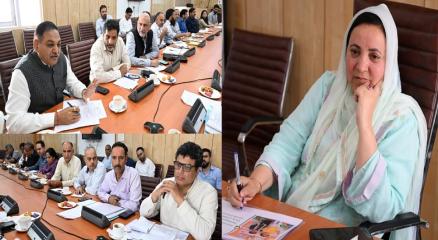
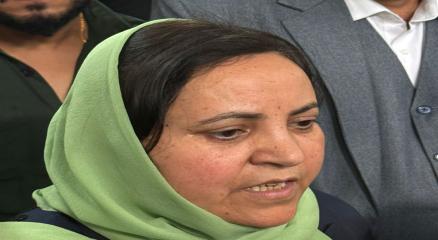
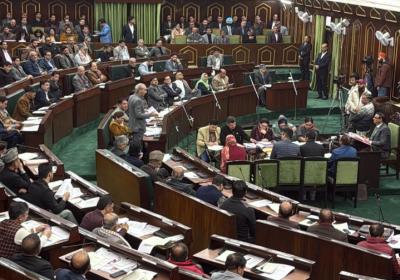
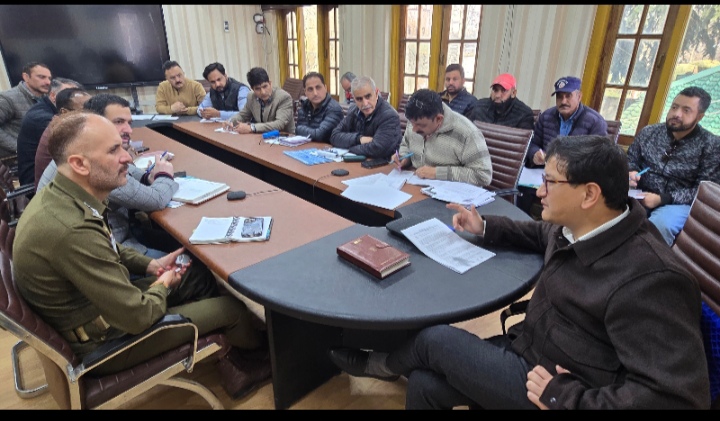
Srinagar, Mar 18: The University of Kashmir (KU) on Tuesday convened the 56th meeting of its Academic Council under the chairpersonship of Vice-Chancellor KU Prof. Nilofer Khan.
The meeting deliberated on key academic matters, including the introspection of program choices offered at the Universitys satellite campuses, keeping in view market demand, intake capacity, and admission trends.
Addressing the meeting comprising top university officers, deans of the schools, heads of various departments/satellite campuses, and several college principals, Prof. Nilofer Khan stressed on the need to ensure that academic standards and benchmarks are not allowed to be lowered at any cost and that introduction of new courses proposed is done strictly in accordance with the set norms and guidelines.
While proposing to have more courses introduced at the college or university level, we must keep in mind the relevance of such courses in the present times as well as times ahead in the larger interest of the student community, she said.
Prof. Nilofer Khan underscored the need for a thorough review of existing courses and the introduction of new programmes that align with societal relevance, industry demands, and employability.
She emphasized that the University must ensure its academic offerings remain dynamic and responsive to evolving educational and professional landscapes.
Such timely reviews can go a long way in ensuring better academic standards at the UG, PG levels across our campuses and at the affiliated colleges of the university, the Vice-Chancellor said.
The Academic Council also assessed the academic feasibility of introducing various subjects and courses at the undergraduate level in the affiliated colleges of the University.
Additionally, the council approved the syllabi of various five-year integrated courses and endorsed the introduction of new programs in Cybersecurity and Digital Forensics, Artificial Intelligence and Data Science, as well as Nursing and Paramedical Sciences at the Kupwara Campus.
The discussions centered on aligning academic programmes with the changing aspirations of students and the workforce requirements of the region in tune with NEP-2020.
The Vice-Chancellor reiterated the Universitys commitment to fostering academic excellence and ensuring that students are equipped with skills and knowledge that enhance their career prospects.
She urged all stakeholders to work collaboratively in strengthening the institutions academic framework.
Dean Academic Affairs KU Prof. Shariefuddin Pirzada put the agenda of the meeting open for debate and discussion and said that the agenda items endorsed by the Academic Council shall be put before the competent bodies for further ratification/approvals.
The Academic Council, among others, was attended by Dean Research KU Prof. Mohammad Sultan Bhat, Dean College Development Council KU Prof. Khurshid A Butt, Principal GMC Srinagar and Dean Faculty of Medicine KU, Dr. (Prof.) Iffat Hassan Shah and Controller Examinations KU Dr. Majid Zaman Baba.
Registrar KU, Prof Naseer Iqbal proposed a formal vote of thanks on the occasion.
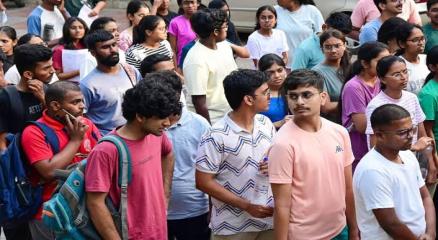
New Delhi, May 12: A massive protest organised by the National Students' Union of India (NSUI) broke out near the Shastri Bhawan on Tuesday, against the alleged paper leak in NEET-UG this year. The exam was held on May 3, following which allegations of paper leak surfaced, triggering investigations by the Rajasthan Special Operations Group (SOG) and central agencies. Earlier, the National Testing Agency (NTA) announced the cancellation of NEET-UG 2026, and said the examination will be re-conducted on dates to be notified separately. In a statement, the NTA said the decision was taken with the approval of the Government of India in the interest of maintaining transparency and preserving trust in the national examination system.
Srinagar, Jan 8: Contractual faculty members working in government degree colleges of Jammu and Kashmir Higher Education Department (HED) have expressed strong resentment over what they term as a glaring disparity in salaries, demanding revision of their pay in line with University Grants Commission (UGC) norms and regularisation of their services. The faculty, many of whom hold PhDs and are qualified through NET, SET and JRF, said they have been denied UGC-recommended pay scales despite discharging academic responsibilities equivalent to their regular counterparts. “Hundreds of highly qualified scholars have been pushed into silent suffering. For years, we have been assured that our pay revision is under consideration, but nothing has materialised so far,” said Dr Ishfaq Gowhar, a contractual faculty member. Earlier, Director Colleges J&K had acknowledged the legitimacy of the faculty’s demand, stating that while the issue was genuine, its implementation involved significant financial implications due to the large number of contractual appointments. “We are aware that they deserve salary enhancement, but the number of contractual faculty is huge and it has financial implications,” he earlier said. Dr Gowhar pointed out that contractual lecturers, who form the backbone of the higher education system, continue to work on a fixed monthly honorarium of Rs 28,000, which has remained unchanged for nearly a decade. “The irony is that a Class IV employee with a Class 10 qualification draws a salary exceeding Rs 50,000, while doctorate-holding teachers engaged in teaching, mentoring and academic research are paid a fraction of that,” he said. He added that institutions such as SKUAST-K, University of Kashmir and Islamic University of Science and Technology (IUST) have implemented revised UGC pay scales, but the Higher Education Department has failed to extend similar treatment to its contractual faculty. Dr Gowhar said the demand for “equal work, equal pay” gets prominently featured in election campaigns, raising hopes among contractual teachers. “Promises were made and slogans echoed during elections, but once the process ended, our voices were reduced to silence. Even meeting officials now feels impossible,” he said. He said contractual faculty were not seeking privileges but dignity, fairness and recognition for their service. The faculty appealed to the Jammu and Kashmir Lieutenant Governor Manoj Sinha, Chief Minister Omar Abdullah and the Education Minister to intervene and take concrete steps towards addressing their long-pending demands. “This issue is not merely about salaries. It is about survival, justice and dignity in the classrooms of Jammu and Kashmir,” he said.
Jammu, Jan 18: Minister for Food, Civil Supplies & Consumer Affairs, Transport, Youth Services & Sports, Information Technology, ARI & Trainings, Satish Sharma Sunday said that the remarkable achievements of Jammu and Kashmir’s youth are a powerful testament to what can be accomplished through fair opportunities, modern infrastructure and unwavering government support. Addressing the gathering during the SRIJAN initiative conference, the Minister stated that the success of young athletes clearly demonstrates that with the right ecosystem in place, the UT youth are capable of overcoming every challenge and competing confidently at national and international platforms. Highlighting the core focus areas of the SRIJAN programme, Satish Sharma said "the initiative is playing a transformative role in strengthening the sports landscape of the Union Territory by expanding grassroots sports infrastructure across Jammu, Kashmir and other regions. This is being done by ensuring transparent, merit-based selections free from any bias; integrating sports with education and skill development; promoting greater participation of girls and enhancing inclusivity and establishing sports as a dignified and sustainable career option with viable livelihood opportunities, he said0. He reaffirmed the government’s firm commitment and said that sustained efforts were underway to create international-standard sports facilities, including modern cricket stadiums in Jammu and Srinagar. He also highlighted the strengthening of Khelo India Centres, promotion of traditional sports such as Dangal and enhanced collaboration with the Union Ministry to transform Jammu & Kashmir into a national sports hub. “As Sports Minister, I assure our athletes that the government stands firmly with them. Our focus is not only on infrastructure creation but also on nurturing talent, discipline and confidence among the youth,” he said. The Minister lauded the determination, resilience and dedication of young sportspersons, describing them as the living legacy of the SRIJAN mission. He urged them to continue training with passion, remain disciplined and dream fearlessly, assuring them of full institutional support at every step of their journey. Satish Sharma expressed hope that the conference would serve as the foundation of a new era where every talented child, from the mountains of Kashmir to the plains of Jammu, is provided an equal opportunity to shine on the global stage. He concluded by reiterating the government’s resolve to make sports a powerful vehicle for youth empowerment, social inclusion and regional pride in Jammu and Kashmir. Director General, Youth Services and Sports, Anuradha Gupta and prominent persons from different fields and states along with senior officers of the Youth Services and Sports Department, were also present on the occasion.
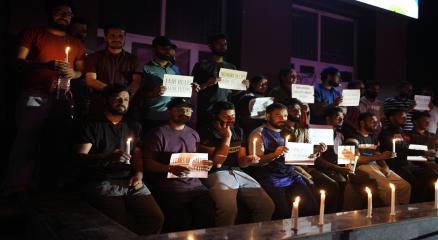
Arshid Ahmad Malikmalik121arshid@gmail.comThe serene valley of Pahalgam known for its breathtaking landscapes,was shaken to its core by a brutal and inhuman attack that claimed innocent lives and left the nation in shock.On 22 April 2025 afternoon,a group of terrorists in Pahalgam,J&K leaving 26 tourists dead and many more injured.The attack was widely condemned by people across the country with many leaders and citizens expressing their outrage and grief.Even just after the attack the people from every nook and corner of Kashmir mourned and strongly condemned this brutal and inhuman act and we saw candlelight protests from different places of Kashmir in solidarity with the victim families who lost their loved ones in this Coward Act.Besides, we saw some heartwarming stories of Kashmiris helping tourists during this horrific attack.Some Kashmiri Youth took the initiative to help tourists, providing them with medical care and transportation to safe areas.Their actions showed that even in times of crisis,there are individuals who prioritize humanity over adversity.Likewise, Aadil Hussain Shah a pony rider and a sole breadwinner in his home lost his life while attempting to protect tourists by tackling gun men.Another example of bravery was demonstrated by a Kashmiri shawl vendor, Sajad Ahmad Bhat who risked his life to help injured tourists.He carried some to safety on his back and provided water to those in need.Moreover,taxi drivers and hotel owners offered free rides and services to tourists, guiding them to safety.These acts highlights Kashmiri community's commitment to humanity, hospitality and unity even in the face of adversity.These acts of kindness serve as a powerful counter-narrative to the misconception that Kashmiris support to condone violence.Instead, they highlight the community's resilience, empathy and dedication to peace.In the aftermath of this excruciating attack, certain media outlets of our nation,often referred to as "Godi Media" left no stone unturned to sensationalize the stories to grab the attention.They often spread misinformation and promote biased narratives leading to polarization and erosion of trust in the media.In the wake of this attack "Godi Media" claimed that the terrorists selectively targeted Hindus after checking their names.However,the list of victims revealed that 15 out of 26 killed were Muslims, debunking this false narrative.By spreading this unverified claims,these TV Channels aimed to fuel communal tensions and polarization, which could lead to further violence and hatred.This behaviour aligns with a disturbing trend where sections of the media amplify divisive narratives to serve political agendas.Although the tourists who were here and witnessed this attack themselves praised local Kashmiris for their heroic approach in helping them to save their lives.Moreover, the tourists in different parts of the valley are claiming that they are safe and secure.They wanted to convey the message to other parts of India that there is nothing like that which godi media is trying to show through different news channels.They are just spreading misinformation leading to communal violence in the nation.On the next day of this attack,one of the TV Channel of godi media, ABP news anchor Chitra Tripathi faced protests at Ghantaghar Lal chowk after locals said that she was trying to spread fake news about the attack.The protestors including tourism groups,lawyers and civil society members criticized the media particularly for its emphasis on communal issues rather than holding the government accountable.The protests saw slogans condemning terrorism and advocating for Hindu-Muslim unity.The protestors also expressed frustration over the media's selective reporting and the censorship of local voices.From common people to the leaders of the Government in Kashmir, everyone slammed "Godi Media" and hold their anchors responsible for communal disharmony in the nation.With their biased and inflammatory coverage, Kashmiris living across India especially students have been heckled,harrased and faced threats by far-right Hindu groups or even their classmates.From Uttarakhand, Punjab, to Uttar Pradesh, landlords are pushing Kashmiri tenants out; and shopkeepers are refusing to trade with them.Several Kashmiri students are sleeping at airports as they try to make their way home.However,It's essential to hold such media outlets accountable for their actions and promote responsible journalism that prioritizes fact-checking, balance, and accuracy.By doing so, we can work towards creating a more informed and compassionate society where communal harmony and peace are valued.The author has done masters in Political Science from University of Kashmir and is currently a Socio-Political Activist and Chairperson of Liberal Youth Club Soibugh.
Srinagar, Jan 12: The Jammu and Kashmir Board of School Education (JKBOSE) will declare the result of class 10th and 12th examination on January 14 of, 2026 (Wednesday), minister for education Sakina Itoo said on Monday. Minister for education Sakina Itoo said the government has decided to declare the result of both the classes-10th and 12th on the same day. "We understand that students have been waiting for the results. So we decided that result of both the classes will be declared on Wednesday (January 16 of 2926)," Sakina Itoo said. She said the meeting of the Result Declaration Committee (RDC) will be convened by the Secretary JKBOE along with the members-Director School Education (DSE) Kashmir and Jammu division besides the joint secretaries as well. "We will give the administrative approval to the result instead of getting approved by the chairman," she said. The announcement comes amid the delay in appointment of chairman JKBOSE as the position is lying vacant for the last one year. "After declaration of the results, we will also appoint the permanent chairman for JKBOSE as well," education minister said. An official from JKBOSE said the class 1oth result will be declared on Wednesday morning followed by the declaration of result of class 12th students in late afternoon on the same day. As per the official figures, 94783 students- 68804 from Kashmir and 25,224 students from winter zone areas of Jammu division besides 660 students from Kargil and 95 from Leh district registered for the class 10th JKBOSE examination this year. Also, the examination for class 11th and 12th students was scheduled from November 19 and November 8 of 2025 respectively. Approximately, 81622 students – 64001 from Jammu and 17621 from winter zone areas of Jammu have registered for class 11th examination while 70117 students—56423 from Kashmir and 13694 from winter zone areas of Jammu have registered for class 12th examination.


New Delhi, May 16: The CBSE has made the study of three languages, including at least two native Indian languages, compulsory for Class-9 students beginning July 1, according to a circular issued by the board. The move is part of the Central Board of Secondary Education's (CBSE) alignment of its Scheme of Studies with the National Education Policy (NEP) 2020 and the National Curriculum Framework for School Education (NCF-SE) 2023. According to the circular issued on May 15, students opting for a foreign language may do so only as the third language after studying two native Indian languages, or as an additional fourth language. "With effect from July 1, 2026, for Class IX, the study of three languages (R1, R2, R3) shall be compulsory, with at least two languages being native Indian languages," the circular stated. The CBSE said to keep the focus on learning and reduce any undue pressure on students, no board examination shall be conducted for R3 at the Class-10 level. "All assessments for R3 shall be entirely school-based and internal. The performance of students in R3 will be duly reflected in the CBSE certificate. It is clarified that no student will be barred from appearing in the Class X Board Examinations due to R3. Sample question papers, rubrics for internal assessment will be shared by the Board shortly," it added. The board also asked schools to update their R3 language offerings for Classes 6 to 9 on the OASIS portal by June 30. Schools facing a shortage of qualified native Indian language teachers may use interim measures, such as inter-school resource sharing, virtual or hybrid teaching support, engagement of retired language teachers and qualified postgraduates, the circular said. The CBSE further said relaxations would be provided to the Children With Special Needs (CwSN) in accordance with the Rights of Persons with Disabilities Act, 2016, while foreign students returning to India may get case-by-case exemptions from the requirement of studying two native Indian languages.

Srinagar, May 9: The Private Schools Association of Jammu & Kashmir (PSAJK) has clarified its position regarding the recent statement made by former PSAJK President G. N. War concerning students of Government schools and their alleged involvement in the growing drug menace. In a statement issued here, PSAJK has stated that the remarks made by G N Var are purely his personal views and have no connection whatsoever with the official stand or policy of the Association. "It is important to clarify that G N Var has already resigned and retired from PSAJK and presently holds no position, authority, or representation within the association," the statement reads. "The stand of PSAJK on this sensitive issue is very clear and responsible." PSAJK said every student, whether studying in a Government school or a Private school, "is our own child, and no institution or section of society should be singled out or blamed." PSAJK statement reads that drug abuse was a collective social challenge which requires unity, awareness, cooperation, and serious efforts from parents, teachers, educational institutions, civil society, and the Government. "PSAJK believes that safeguarding our younger generation from the deadly menace of drugs is a shared responsibility of all stakeholders," it reads. PSAJK said that instead of creating divisions, society must work together to guide, counsel, and protect our children for a safer and brighter future.
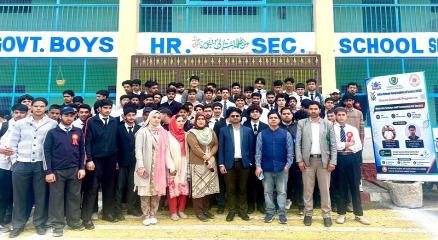
Experts deliver lectures on LEDs, solar cells Srinagar, April 27: In a significant initiative to promote scientific temperament and innovation among young learners, the Indian National Young Academy of Science, in collaboration with National Institute of Technology (NIT) Srinagar Monday organized a Science Outreach Programme on “Materials Science and Technology for Society” at Government Boys Higher Secondary School, Soura. The programme, held under INYAS’s nationwide outreach initiative, aimed at encouraging creative thinking and fostering curiosity among school students. Over 100 students and faculty members participated in the event. Dr. Vijay Kumar, Member INYAS and Assistant Professor, Department of Physics, NIT Srinagar, delivered an engaging lecture titled “How Materials Glow: The Science Behind LEDs and Light,” explaining fundamental concepts of material science in an accessible manner. Another session was conducted by Dr. Mohd Zubair Ansari, who spoke on recent advancements in solar cell research and emerging trends in material science, highlighting the role of innovation in sustainable technologies. The programme was coordinated by Dr. Vijay Kumar and Dr. Mohd Zubair Ansari, while local arrangements were managed by senior lecturer Mohammad Ibbrahim of BHSS Soura. On the occasion, Dr. Vijay Kumar said that outreach programs are essential for inspiring students to pursue careers in science and technology. He noted that INYAS remains committed to reaching out to students, particularly in remote areas, to nurture scientific curiosity and innovation. Director NIT Srinagar, Prof. Binod Kumar Kanaujia, in his message, said that initiatives like these play a crucial role in bridging the gap between higher education institutions and school-level learning. He stressed that early exposure to scientific research and practical knowledge helps in shaping future innovators and problem-solvers. Registrar NIT Srinagar, Dr. Atikur Rehman, also lauded the programme, stating that such outreach activities strengthen the foundation of scientific education at the grassroots level. He added that NIT Srinagar will continue to support and collaborate on programmes that promote academic excellence and innovation among youth.