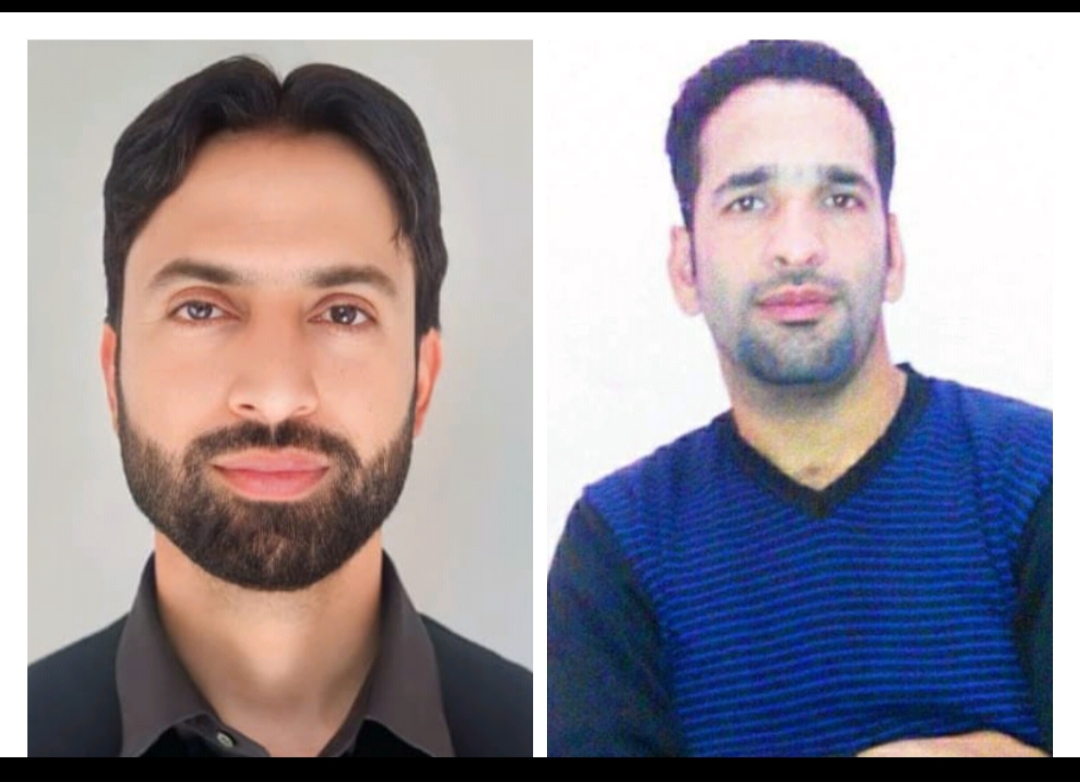
By Bilal Azad and Dr Aftab Jan
In today s world, life has become fast, modern, and full of technology. With the help of machines, everything is just one click away. We can buy things online, study from home, talk to anyone across the world, and order food without stepping outside.
While this digital life has brought comfort, it has also made our bodies lazy and inactive.
We are sitting more than ever at home, at school, at work, and even during free time.
Most people, including children, teenagers, and adults, now spend hours every day looking at screens whether it is mobile phones, laptops, or televisions.
Because of this, our physical movement is reducing day by day, and our bodies are slowly getting weaker.In the past, life was full of physical activity.
People walked long distances, worked with their hands, played outdoors, and did most things manually.
Their bodies were strong, hearts were healthy, and minds were fresh. But now, machines do everything for us.
Cars replace walking, lifts replace stairs, and even simple chores are done by devices.
Sadly, this has made physical fitness a forgotten part of daily life, and we are seeing the bad results: more people are falling sick, getting tired quickly, gaining weight, and feeling mentally stressed or depressed.
Fitness is not just about having a muscular body or going to the gym. Real fitness means being able to do your daily work with ease, without feeling tired or sick.
It means having energy, strong bones, a healthy heart, good sleep, a calm mind, and the ability to fight diseases.
When a person is fit, they feel light, active, and happy.
But when a person becomes lazy and unfit, they feel heavy, slow, and often fall sick.
Today, even young children are suffering from problems like obesity (too much weight), weak eyesight, back and neck pain, and lack of sleep.
Teenagers and young adults are facing stress, anxiety, and depression because their bodies are inactive and their minds are overused with screen time and digital noise.
One of the most dangerous effects of this lifestyle is that people think being sick is normal.
They believe that back pain, tiredness, stress, or even sugar (diabetes) is just part of life.
But this is not true.
These problems are often the result of ignoring our physical health.
The human body is made to move. If it does not move, it becomes stiff, tired, and full of diseases.
Regular movement, like walking, running, cycling, playing games, doing yoga, or even simple stretching, keeps the muscles strong, bones healthy, heart active, and brain fresh.
Exercise also helps release natural chemicals in the brain like serotonin and endorphins, which make us feel happy and relaxed.
Children need physical fitness not just for their bodies but also for their minds. Playing games improves their focus, discipline, teamwork, and memory.
Sadly, today s children are growing up in small rooms, with screens in their hands and junk food on their plates.
They need fresh air, outdoor games, sunlight, and physical activity to grow well.
Physical Education (PE) in schools should be given the same importance as Maths or Science. No child should be judged only by marks fitness and health should be part of learning too.
Adults are also badly affected by inactive lifestyles.
Office workers sit for 8 to 10 hours a day, eat quickly, skip exercise, and spend evenings watching TV or scrolling on phones.
This routine is slowly killing the body from inside. People suffer from heart attacks, cholesterol, weak muscles, poor sleep, and joint pain because of this silent damage. But even small changes can bring big improvements.
Walking for 30 minutes a day, taking stairs instead of lifts, stretching during work breaks, and avoiding junk food can save your body from future pain.
We must also talk about food. Our modern diet is full of harmful things sugary drinks, chips, burgers, packaged snacks, and fried food. These fill our bodies with fat but give no real strength.
If we do not opt for xercise and keep eating such food, we gain weight and become weak inside.
Healthy food like fruits, vegetables, home-cooked meals, and water is necessary for real fitness.
Sleep is also a big part of physical health. Staying up late on phones or watching screens until midnight weakens the brain and body.
Going to bed early and waking up fresh is a beautiful habit that supports total wellness.
During the COVID-19 pandemic, the whole world saw how important physical fitness and immunity are. People who were fit and active recovered faster and suffered less. Those who were weak or had health problems suffered more.
That time was a big lesson: money, phones, and cars could not save us but health could.
Fitness is not something extra. It is the most important part of life. Without health, nothing else feels good not wealth, not success, not beauty.
Our religion, Islam, also guides us to take care of our bodies. The Prophet Muhammad (?) was physically strong, active, and full of discipline.
He walked often, encouraged sports like running, archery, and horse riding, and taught moderation in food and sleep.
He said, A strong believer is better and more beloved to Allah than a weak one.
Hazrat Ali (RA) beautifully said, Health is a crown on the heads of the healthy that only the sick can see.
This means we only realize how valuable our health is after we lose it.
Our body is a trust (Amanah) from Allah, and keeping it healthy is an act of gratitude and worship.
In the end, we must remember: fitness is not about looking good, it is about living well. In this modern world of screens, noise, and stress, our body is crying for help.
It needs movement, fresh air, natural food, and peaceful sleep. Don t wait for disease to teach you the value of health.
Start now. Move your body every day. Walk, play, stretch, breathe deeply.
Eat less junk, drink more water. Sleep on time, rise with energy. Thank Allah for your body and take care of it before it s too late. Because at the end of the day, no comfort is greater than a healthy body, and no wealth is richer than good health.
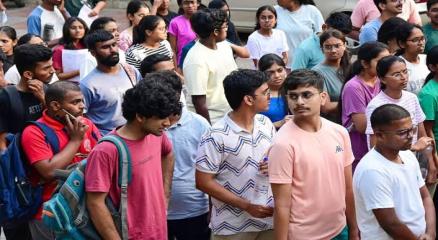
New Delhi, May 12: A massive protest organised by the National Students' Union of India (NSUI) broke out near the Shastri Bhawan on Tuesday, against the alleged paper leak in NEET-UG this year. The exam was held on May 3, following which allegations of paper leak surfaced, triggering investigations by the Rajasthan Special Operations Group (SOG) and central agencies. Earlier, the National Testing Agency (NTA) announced the cancellation of NEET-UG 2026, and said the examination will be re-conducted on dates to be notified separately. In a statement, the NTA said the decision was taken with the approval of the Government of India in the interest of maintaining transparency and preserving trust in the national examination system.
Srinagar, Jan 8: Contractual faculty members working in government degree colleges of Jammu and Kashmir Higher Education Department (HED) have expressed strong resentment over what they term as a glaring disparity in salaries, demanding revision of their pay in line with University Grants Commission (UGC) norms and regularisation of their services. The faculty, many of whom hold PhDs and are qualified through NET, SET and JRF, said they have been denied UGC-recommended pay scales despite discharging academic responsibilities equivalent to their regular counterparts. “Hundreds of highly qualified scholars have been pushed into silent suffering. For years, we have been assured that our pay revision is under consideration, but nothing has materialised so far,” said Dr Ishfaq Gowhar, a contractual faculty member. Earlier, Director Colleges J&K had acknowledged the legitimacy of the faculty’s demand, stating that while the issue was genuine, its implementation involved significant financial implications due to the large number of contractual appointments. “We are aware that they deserve salary enhancement, but the number of contractual faculty is huge and it has financial implications,” he earlier said. Dr Gowhar pointed out that contractual lecturers, who form the backbone of the higher education system, continue to work on a fixed monthly honorarium of Rs 28,000, which has remained unchanged for nearly a decade. “The irony is that a Class IV employee with a Class 10 qualification draws a salary exceeding Rs 50,000, while doctorate-holding teachers engaged in teaching, mentoring and academic research are paid a fraction of that,” he said. He added that institutions such as SKUAST-K, University of Kashmir and Islamic University of Science and Technology (IUST) have implemented revised UGC pay scales, but the Higher Education Department has failed to extend similar treatment to its contractual faculty. Dr Gowhar said the demand for “equal work, equal pay” gets prominently featured in election campaigns, raising hopes among contractual teachers. “Promises were made and slogans echoed during elections, but once the process ended, our voices were reduced to silence. Even meeting officials now feels impossible,” he said. He said contractual faculty were not seeking privileges but dignity, fairness and recognition for their service. The faculty appealed to the Jammu and Kashmir Lieutenant Governor Manoj Sinha, Chief Minister Omar Abdullah and the Education Minister to intervene and take concrete steps towards addressing their long-pending demands. “This issue is not merely about salaries. It is about survival, justice and dignity in the classrooms of Jammu and Kashmir,” he said.
Jammu, Jan 18: Minister for Food, Civil Supplies & Consumer Affairs, Transport, Youth Services & Sports, Information Technology, ARI & Trainings, Satish Sharma Sunday said that the remarkable achievements of Jammu and Kashmir’s youth are a powerful testament to what can be accomplished through fair opportunities, modern infrastructure and unwavering government support. Addressing the gathering during the SRIJAN initiative conference, the Minister stated that the success of young athletes clearly demonstrates that with the right ecosystem in place, the UT youth are capable of overcoming every challenge and competing confidently at national and international platforms. Highlighting the core focus areas of the SRIJAN programme, Satish Sharma said "the initiative is playing a transformative role in strengthening the sports landscape of the Union Territory by expanding grassroots sports infrastructure across Jammu, Kashmir and other regions. This is being done by ensuring transparent, merit-based selections free from any bias; integrating sports with education and skill development; promoting greater participation of girls and enhancing inclusivity and establishing sports as a dignified and sustainable career option with viable livelihood opportunities, he said0. He reaffirmed the government’s firm commitment and said that sustained efforts were underway to create international-standard sports facilities, including modern cricket stadiums in Jammu and Srinagar. He also highlighted the strengthening of Khelo India Centres, promotion of traditional sports such as Dangal and enhanced collaboration with the Union Ministry to transform Jammu & Kashmir into a national sports hub. “As Sports Minister, I assure our athletes that the government stands firmly with them. Our focus is not only on infrastructure creation but also on nurturing talent, discipline and confidence among the youth,” he said. The Minister lauded the determination, resilience and dedication of young sportspersons, describing them as the living legacy of the SRIJAN mission. He urged them to continue training with passion, remain disciplined and dream fearlessly, assuring them of full institutional support at every step of their journey. Satish Sharma expressed hope that the conference would serve as the foundation of a new era where every talented child, from the mountains of Kashmir to the plains of Jammu, is provided an equal opportunity to shine on the global stage. He concluded by reiterating the government’s resolve to make sports a powerful vehicle for youth empowerment, social inclusion and regional pride in Jammu and Kashmir. Director General, Youth Services and Sports, Anuradha Gupta and prominent persons from different fields and states along with senior officers of the Youth Services and Sports Department, were also present on the occasion.
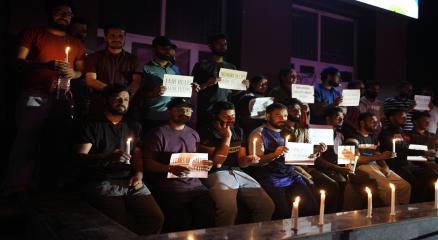
Arshid Ahmad Malikmalik121arshid@gmail.comThe serene valley of Pahalgam known for its breathtaking landscapes,was shaken to its core by a brutal and inhuman attack that claimed innocent lives and left the nation in shock.On 22 April 2025 afternoon,a group of terrorists in Pahalgam,J&K leaving 26 tourists dead and many more injured.The attack was widely condemned by people across the country with many leaders and citizens expressing their outrage and grief.Even just after the attack the people from every nook and corner of Kashmir mourned and strongly condemned this brutal and inhuman act and we saw candlelight protests from different places of Kashmir in solidarity with the victim families who lost their loved ones in this Coward Act.Besides, we saw some heartwarming stories of Kashmiris helping tourists during this horrific attack.Some Kashmiri Youth took the initiative to help tourists, providing them with medical care and transportation to safe areas.Their actions showed that even in times of crisis,there are individuals who prioritize humanity over adversity.Likewise, Aadil Hussain Shah a pony rider and a sole breadwinner in his home lost his life while attempting to protect tourists by tackling gun men.Another example of bravery was demonstrated by a Kashmiri shawl vendor, Sajad Ahmad Bhat who risked his life to help injured tourists.He carried some to safety on his back and provided water to those in need.Moreover,taxi drivers and hotel owners offered free rides and services to tourists, guiding them to safety.These acts highlights Kashmiri community's commitment to humanity, hospitality and unity even in the face of adversity.These acts of kindness serve as a powerful counter-narrative to the misconception that Kashmiris support to condone violence.Instead, they highlight the community's resilience, empathy and dedication to peace.In the aftermath of this excruciating attack, certain media outlets of our nation,often referred to as "Godi Media" left no stone unturned to sensationalize the stories to grab the attention.They often spread misinformation and promote biased narratives leading to polarization and erosion of trust in the media.In the wake of this attack "Godi Media" claimed that the terrorists selectively targeted Hindus after checking their names.However,the list of victims revealed that 15 out of 26 killed were Muslims, debunking this false narrative.By spreading this unverified claims,these TV Channels aimed to fuel communal tensions and polarization, which could lead to further violence and hatred.This behaviour aligns with a disturbing trend where sections of the media amplify divisive narratives to serve political agendas.Although the tourists who were here and witnessed this attack themselves praised local Kashmiris for their heroic approach in helping them to save their lives.Moreover, the tourists in different parts of the valley are claiming that they are safe and secure.They wanted to convey the message to other parts of India that there is nothing like that which godi media is trying to show through different news channels.They are just spreading misinformation leading to communal violence in the nation.On the next day of this attack,one of the TV Channel of godi media, ABP news anchor Chitra Tripathi faced protests at Ghantaghar Lal chowk after locals said that she was trying to spread fake news about the attack.The protestors including tourism groups,lawyers and civil society members criticized the media particularly for its emphasis on communal issues rather than holding the government accountable.The protests saw slogans condemning terrorism and advocating for Hindu-Muslim unity.The protestors also expressed frustration over the media's selective reporting and the censorship of local voices.From common people to the leaders of the Government in Kashmir, everyone slammed "Godi Media" and hold their anchors responsible for communal disharmony in the nation.With their biased and inflammatory coverage, Kashmiris living across India especially students have been heckled,harrased and faced threats by far-right Hindu groups or even their classmates.From Uttarakhand, Punjab, to Uttar Pradesh, landlords are pushing Kashmiri tenants out; and shopkeepers are refusing to trade with them.Several Kashmiri students are sleeping at airports as they try to make their way home.However,It's essential to hold such media outlets accountable for their actions and promote responsible journalism that prioritizes fact-checking, balance, and accuracy.By doing so, we can work towards creating a more informed and compassionate society where communal harmony and peace are valued.The author has done masters in Political Science from University of Kashmir and is currently a Socio-Political Activist and Chairperson of Liberal Youth Club Soibugh.
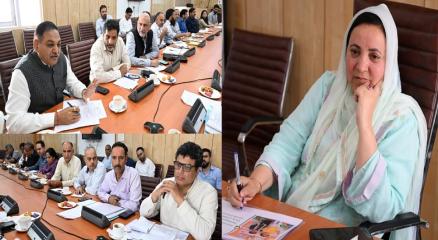
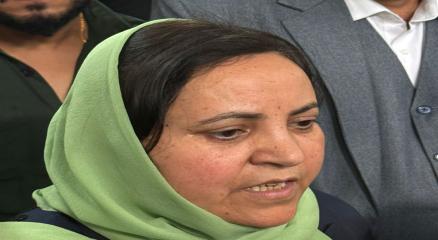
Srinagar, Jan 12: The Jammu and Kashmir Board of School Education (JKBOSE) will declare the result of class 10th and 12th examination on January 14 of, 2026 (Wednesday), minister for education Sakina Itoo said on Monday. Minister for education Sakina Itoo said the government has decided to declare the result of both the classes-10th and 12th on the same day. "We understand that students have been waiting for the results. So we decided that result of both the classes will be declared on Wednesday (January 16 of 2926)," Sakina Itoo said. She said the meeting of the Result Declaration Committee (RDC) will be convened by the Secretary JKBOE along with the members-Director School Education (DSE) Kashmir and Jammu division besides the joint secretaries as well. "We will give the administrative approval to the result instead of getting approved by the chairman," she said. The announcement comes amid the delay in appointment of chairman JKBOSE as the position is lying vacant for the last one year. "After declaration of the results, we will also appoint the permanent chairman for JKBOSE as well," education minister said. An official from JKBOSE said the class 1oth result will be declared on Wednesday morning followed by the declaration of result of class 12th students in late afternoon on the same day. As per the official figures, 94783 students- 68804 from Kashmir and 25,224 students from winter zone areas of Jammu division besides 660 students from Kargil and 95 from Leh district registered for the class 10th JKBOSE examination this year. Also, the examination for class 11th and 12th students was scheduled from November 19 and November 8 of 2025 respectively. Approximately, 81622 students – 64001 from Jammu and 17621 from winter zone areas of Jammu have registered for class 11th examination while 70117 students—56423 from Kashmir and 13694 from winter zone areas of Jammu have registered for class 12th examination.


Bhat Hilal AhmadA policy framework backed by transparent Matrix only can withstand judicial interventions while maintaining social harmony.G D sharma report should be released for public scrutiny.True interpretation of rule of prudence be made.A revisit of Rule 17 is must for ensuring appropriate seat balance.Rationalisation of reservations is directly proportional to meritocracy and ensuring a just society.Jammu and Kashmir with a young demographic profile has one of the highest proportions of general category population in the country estimated arround 60 to 70 percent but lowest open merit quota which roughly stands between 30 to 40 percent.States across the country with comparatively lesser general category population continue to maintain 50 percent reservation for open merit share.A shift from policy decisions and demographic legal principles has resulted in a structural framework which significantly differs from the national norms.It is when courts across India have always emphasised that reservation policies must rest on contemporary quantifiable evidence.Though government maintains that the present reservation framework follows Reservation Act 2004 and its rules according to 2005 that should be read with new notification SO-176 of March 2024.But lot of reservations and concerns have emerged about the proportionality , transparancy and opportunity of merit where certain newly introduced reservations are found drawing benifit patterns on the basis of regions and geography.In its verdict on November 16 ( 1992 ) Supreme Court in Indra Sawhney verses union of India case held that reservations should not ordinary exceed beyond 50 percent except in the exceptional and extraordinary circumstances.However in 2022 in Janhit Abhiyan case court while upholding the ten percent reservation for economically weaker sections observed that fifty percent ceiling is not a compulsory limit but a rule of prudence.Taking a flexible and wider interpretation of this directive parliament in February 2024 ammended 2005 reservation rules and reservation percentages were altered by introducing EWS at 10 percent and increasing it to 20 percent for ST , 28 percent for OBC while RBA saw reductions.This was largely based on publicly available socio economic survey and not on an updated sensus or data.Consequently LG administration announced new quotas like Paharis , paddari , koli , Gadda brahmin and other casts.Social welfare department quickly followed by distributing new proportions which led to decrease of open merit quota.As per new policy 61% seats of government jobs and professional admissions are reserved and only 39 are for open merit share.This clearly shows that open merit candidates are slowly pushed out of the system though government stands by its constitutional interpretation by saying that it goes well with constitutional guidelines and court rules.In just last two years 8.21 lack reservation certificates were issued in J & K in which 6.78 lakh ( 82% ) were issued in jammu and only 1.45 lakh certificates were issued in kashmir.For scheduled cast only more than 69000 certificates were issued in jammu while it remained only 474 for Kashmir which is just 0.64 percent.Accordingly for ST 5.25 lakh certificates were issued for jammu while it remained 76656 for Kashmir.Out of 21386 , 18963 EWS certificates were issued for jammu and only 2431 certificates were issued for kashmir division.Similarly for ALC jammu is ahead with 85% and it is for RBA only where kashmir is ahead with 31804 certificates while jammu has 15550 certificates.While looking at the shares in the second line bureaucracy JKAS , JKAS ( accounts ) and JKPS the numbers itself tell the story of last three years.In 2023 only 39 selections were made for open merit in JKAS as compared to 50 selections made for reserved categories like Sc , ST and Ews.In 2024 open merit selections were 50 while 43 selections were made for reserved categories.In 2025 , 24 selections were made for open merit while the numbers remained almost equal in all the three civil services.In JK Accounts service 29 , 27 and 15 selections were made from open merit in 2023 , 2024 and 2025 while it remained 26 , 25 and 09 for reserved categories in 2023 , 2024 and 2025 respectively.Though the numbers does not go against any legal quota but it questions fairness and representation.In March 2020 J&K government constituted GD Sharma comission to examine backwardness and rationalise reservations for different categories and the report is yet to come in the public domain.The current reservation structural framework stands at ten percent for EWS, ten percent for RBA , 8 percent for SC , 8 percent of OBC , 10 percent for ST-1 10 percent for ST-2 and 4 percent for ALC/IB which makes a mighty total of 60 percent for the reserved categories.The rest 40 percent are shared by general category and horizontal reservations.An element of the centre of the debate is Rule -17 which allows reserved categories to initially take open merit seats and letter shift back to their respective categories.When this happens the seat already occupied does not automatically return to the open merit pool thereby further reducing the share available to open category competition.Not only so the horizontal reservations which cover women , ex servicemen , sports , and persons with special abilities appear to be applied largely on open merit quota rather than proportionally across all categories.This again makes general category to bear the brunt of disproportionate share of adjustments which was otherwise expected to be distributed evenly.In December 2024 a cabinet sub committee was constituted to consult all stakeholders for reviewing and revisiting the existing policy to reshape a much acceptable reservation policy.The report was approved by the council of ministers in the cabinet and sent for its final approval to honourable LG.If sources are to be believed the cabinet has reportedly slashed reservation of EWS by 7 percent and RBA by 3 percent while managing a much needed ten percent quota for general category subjected to approval from the LG administration.If the same trend follows in filling the vacancies it will be very hard for the merit to survive and that will lead to an absolute brain drain.Moreover , the absence of an updated data and matrix question the basis of the changes and modification.The question is not about reservation but the way of its dis-proportionate distribution.G D sharma lead committee report should be made public for its scrutiny.It is high time to go for a data driven neutral and transparent re-examination which is based on updated statistics.Recalibration rather than an overhaul of the structural framework will do the job.Open merit share must reflect demographic proportion.Distribution of horizontal reservations should be made across all categories rather than concentrating them fully on general category.The much controversial Rule 17 should be revisited and probably done away with to ensure a proper seat balance.This will lead to a structural framework which will be purely based on fairness and transparency and grounded on the principles of proportionality and opportunity thus maintaining a fine balance between merit and constitutional limits.That will give rise to an equitable and a rationalised reservation system which will be effective and acceptable to all sections of the society.Bhat Hilal Ahmad ( Biotech ) is a writer who comes up with a comprehensive analysis on Educational, Social and Political developments.

Mohammad NoumaanA parent always wants their child to rise, to do something great in life; something which can earn them a good reputation. There is a time in everyone's life that is Teenage, in the phase of life a child starts developing different habits and positive thoughts, teens go through many changes over this period.During this time a child longs for parental trust and support, but sadly this is where things go wrong, parents get lost in thoughts like "What if my child got involved in something bad" or "What if my child makes mistakes".And to stop the teen from exploring the evils of the society which are often tempting, because teenage is the time when curiosity among youth is at its peak. So to tackle this a parent has two options: first it can doubt the child unnecessarily, killing the young and ambitious mind, or most of the parents overthink about the child, listen to what opinions do their relatives have regarding their own child.Moreover, parents can talk to the child, show trust upon him/her or check what the child is actually involved in. Teenagers need trust, not suspicion; guidance, not restrictions. A little support can turn curiosity into creativity and doubt into confidence. Meanwhile, during teenage a teen starts to explore hobbies and passions, teens starts doing things which excite them, some get involved into bad company, bad habits or maybe the social evils, disrupting their life and reputation, but many others start to discover what truly excites them, some like playing cricket or any other sport, some take part in gaming, singing or something else.But over the changing times some children are drawn towards working online, or learning skills which they actually enjoy, like some of the new-generation teens like doing cinematography, some like doing photography at a very young age, some like doing freelancing, not to make money but to get exposure, to learn something new and more practical, some like creating content, not to get fame or money but to try something out of the box,but there is the problem. This is the point where most of the parents fail, suppose when their teen says "I am going to play cricket!" Parents often reply positively, when the teen says "I am playing a video game" the parent allows without any second though, but when a child asks for a phone to learn cinematography, parents hesitates and think "what if this phone derailed my child from his studies", but they really forget that what if this phone was the gateway to their child's passion, what if that's the child's actual path! When a teen says "I am working for a client online", instead of doubting or over thinking, parents can simply ask the child; "Son, can you show me what did you made for the client?" "Can you make a cinematic video of our kitchen?"By showing this simple interest a child gets deeply motivated, it shows the teen that their dreams really matter, which results in making them more ambitious and confident.A parent should always support a child, it should always listen to the child especially during the teenage years, and they should always try to understand what their child is aiming for. If you see a child in the society doing something wrong, don't imprint the same on your child. Instead educate them about the pros and cons of every path and keep guiding them with love, trust and clarity. Why stick to traditional career paths just because that s what has always been done? The world is changing and so should our thinking. Every child is built differently, if you give the same task to 10 different children you will get 10 different outcomes, because every child learns, understands, and acts in their own unique way.So a parent must let their child learn and understand things at their own pace. You cannot force a child to learn something that they don t like.Today's parents often give wings to their children to fly but they forget to give them an open sky! A child can be a cinematographer, a cricketer, an entrepreneur or whatever they are passionate about. We as a society must learn to accept and celebrate such talents. Have we ever thought for how long are we going to stick to the traditional way of choosing professions, like completing school, getting a degree, the degree which is often chosen by the parents and relatives instead of the actual child, the question arises, Why? Just because that is what we have always been doing, but does that make it right?Now the world is changing, the upcoming times are going to be more crucial and challenging then we can actually imagine! Parents want their child to do something extra-ordinary but do they let their children explore? Do they let their children do what they are truly passionate about? Why is it necessary to be a doctor, an engineer, a civil servant, or a teacher?A child can be a cinematographer, a cricketer, an entrepreneur or whatever the child is passionate about! And we as a society, need to accept, encourage and celebrate such talents, and this is what is actually going to take us forward.I believe every parent needs to read this article, my parents have always been supportive, they have always trusted me for whatever I did, which is exactly why you are reading this article today.The author is a student of Faiz-e-Aaam secondary school Bandipora