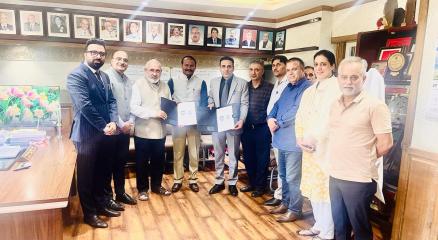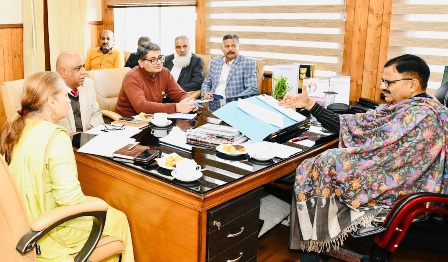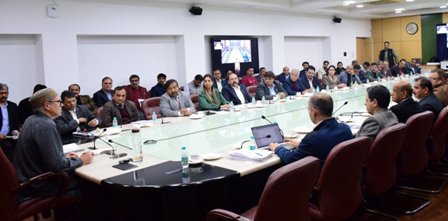
Jammu, Feb 7: Jammu and Kashmir Chief Minister Omar Abdullah Friday said the pre-budget consultations were essential for shaping a budget that truly reflects the aspirations of the people.
He was speaking during the pre-budget consultations for the third consecutive day with public representatives and key stakeholders. The pre-budget consultations are being held to gain firsthand insights into the issues and developmental priorities of various sectors and districts.
He acknowledged the pivotal role of public representatives in understanding grassroots-level challenges and assured them that their concerns would be duly considered.
The Chief Minister stated that this budget held special significance as it was the first time in many years that J&K was preparing its own budget in consultation with public representatives.
He stressed that these consultations were an effort to ensure inclusivity in the budgeting process.
In the past, it was not possible for the Finance Minister of the country to meet with you all and discuss J&K s specific needs. But after the elections and the formation of our government, we now have the authority to draft our own budget, making these interactions even more crucial, he said.
The Chief Minister noted that over 33 interventions had been made during the session, reflecting the wide range of developmental issues requiring attention. He assured the participants that while it was not possible to address each demand immediately, nothing that has been said here will be ignored and that all concerns would be carefully examined during budget formulation.
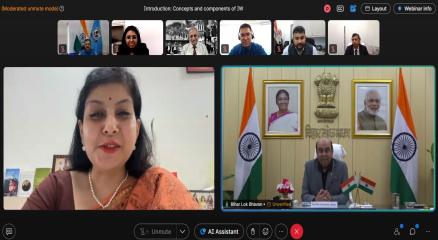
The meeting was attended by Chief Secretary Atal Dulloo, Additional Chief Secretary Education Shantmanu, Additional Chief Secretary to CM Dheeraj Gupta, Administrative Secretaries of Finance, Social Welfare, Tourism, Industry & Commerce, Youth Services & Sports, Deputy Commissioners of Pulwama and Reasi districts, and heads of various departments, both in person and virtually.
Public representatives, including District Development Council (DDC) Chairpersons and Members of Legislative Assembly (MLAs) from Pulwama and Reasi districts, raised concerns regarding electricity supply, drinking water schemes, flood management, staffing of schools and hospitals, upgradation of primary health centers, construction of bridges, and the development of new tourist destinations, parks, and parking facilities.
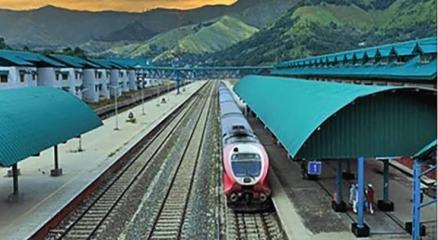
Touching upon economic growth and industrial development, he stressed the need to support manufacturing, trade, and tourism. He noted the expansion of the railway network, highlighting how connectivity had gradually improved from Pathankot to Jammu, then to Udhampur and Katra, with plans for the train to reach Srinagar this year.
However, he said that apprehensions over Jammu s economy must be addressed from the adverse effects of shifting trade patterns, ensuring that the region continues to thrive as a commercial hub.
On tourism, the Chief Minister emphasized that Jammu had immense potential, particularly in religious and pilgrimage tourism. He said, If marketed and promoted effectively, Jammu province can become India s top destination for religious tourism. He noted that while most visitors come for Mata Vaishno Devi s pilgrimage, efforts must be made to showcase Jammu s other sacred sites, encouraging pilgrims to extend their stay and explore the region s cultural heritage.
He also stressed the importance of sports tourism, stating that discussions were underway for organizing a major sports event in Jammu, similar to the successful Srinagar Marathon. Plans were also in place for the expansion of Jammu Airport, addressing infrastructural challenges to improve connectivity.
The Chief Minister also expressed his support for private education, stating that Jammu & Kashmir should explore legislative frameworks to encourage the establishment of private universities, providing more opportunities for quality higher education.
Concluding his address, he thanked all participants for their valuable inputs, assuring them that their concerns and suggestions would be incorporated into the government s policies and development agenda.
We will try to ensure that your ideas are reflected in our policies and programs. Your time and efforts in this consultation process are truly appreciated, he said.
In a separate pre-budget consultation session, Chief Minister Omar Abdullah met with representatives from various sectors, including industry & trade, tourism, hotel & hospitality, education, social welfare, tribal affairs, youth affairs, and agriculture.
During the session, stakeholders from various sectors, including industry & trade, tourism, hotel & hospitality, education, social welfare, tribal affairs, youth affairs, and agriculture, put forth several key demands.
They emphasized the need for developing Jammu as a religious and pilgrimage tourism hub, expanding private education opportunities, enhancing sports infrastructure, and strengthening support for tribal communities.
Additionally, discussions were held on boosting tourism, improving trade policies, and fostering industrial growth to drive economic development in the region.
During his interaction, Chief Minister Omar Abdullah reaffirmed his commitment to ensuring that the upcoming J&K Budget reflects the aspirations of the people, incorporating their demands into the government s development agenda.
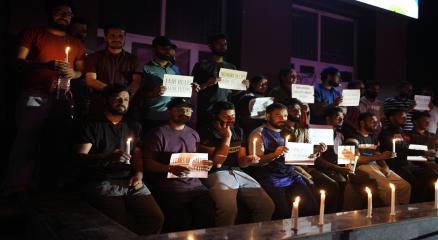
New Delhi, May 12: A massive protest organised by the National Students' Union of India (NSUI) broke out near the Shastri Bhawan on Tuesday, against the alleged paper leak in NEET-UG this year. The exam was held on May 3, following which allegations of paper leak surfaced, triggering investigations by the Rajasthan Special Operations Group (SOG) and central agencies. Earlier, the National Testing Agency (NTA) announced the cancellation of NEET-UG 2026, and said the examination will be re-conducted on dates to be notified separately. In a statement, the NTA said the decision was taken with the approval of the Government of India in the interest of maintaining transparency and preserving trust in the national examination system.
Srinagar, Feb 12: Jammu and Kashmir recorded over 15.48 lakh traffic violation cases in 2025, with authorities collecting more than Rs 34.17 crore as penalty under the Motor Vehicles Act, the Centre informed Parliament on Thursday. The information was shared in the Lok Sabha in response to a question raised by MP Janardan Singh Sigriwal. According to the official data, 15,48,525 challans were issued across the Union Territory in 2025, while the penalty amount recovered stood at Rs 34,17,36,740. The figures further show that in 2024, a total of 15,44,105 violations were registered with a penalty collection of around Rs 43.40 crore, while in 2023, 12,38,584 challans were issued and Rs 34.56 crore was collected. For the current year, till February 8, 2026, Jammu and Kashmir has recorded 1,63,531 traffic violation cases, with revenue collection of about Rs 2.11 crore. The Ministry of Road Transport and Highways stated that stricter penalties under the Motor Vehicles (Amendment) Act, 2019 are aimed at ensuring better compliance and deterrence. It also said that traffic enforcement falls under the jurisdiction of States and Union Territories. The government has issued a Standard Operating Procedure (SOP) for electronic monitoring and is promoting technology-driven enforcement through Automatic Number Plate Recognition (ANPR) cameras integrated with the VAHAN database. Awareness campaigns under the Sadak Suraksha Abhiyan are also being carried out to improve road safety.
New Delhi, Jan 25: The Dental Council of India (DCI) has directed all universities and dental colleges across the country to strictly ensure a minimum of 80 percent biometric attendance for Post Graduate students before allowing them to appear in examinations. The decision has been taken to curb absenteeism among postgraduate dental students. According to a circular issued by the Dental Council of India-a statutory body under the Ministry of Health and Family Welfare, Government of India, the decision has been taken after multiple complaints were received from dental colleges in Rajasthan, Haryana and Uttar Pradesh regarding non-attendance of PG students. "The matter was examined by the Grievance Sub-Committee of the DCI in its meeting held on November 24, 2025," the circular reads. It reads that after detailed discussion and deliberation, the committee recommended that all universities and dental colleges must ensure compliance with Regulation 18(a)(i) of the DCI Master of Dental Surgery Course Regulations, 2017, which mandates at least 80 per cent attendance. "The recommendation of the Grievance Sub-Committee has been approved by the Executive Committee of the Dental Council of India through circulation and has now been formally communicated for information and necessary action," the circular reads. As per the circular, all the universities and dental colleges have been directed to ensure minimum 80 per cent biometric attendance of all PG students before permitting them to appear in examinations. The order, issued by Deputy Secretary Dental Council of India Mukesh Kumar, is expected to be implemented with immediate effect across the country.
Srinagar, Jan 8: Contractual faculty members working in government degree colleges of Jammu and Kashmir Higher Education Department (HED) have expressed strong resentment over what they term as a glaring disparity in salaries, demanding revision of their pay in line with University Grants Commission (UGC) norms and regularisation of their services. The faculty, many of whom hold PhDs and are qualified through NET, SET and JRF, said they have been denied UGC-recommended pay scales despite discharging academic responsibilities equivalent to their regular counterparts. “Hundreds of highly qualified scholars have been pushed into silent suffering. For years, we have been assured that our pay revision is under consideration, but nothing has materialised so far,” said Dr Ishfaq Gowhar, a contractual faculty member. Earlier, Director Colleges J&K had acknowledged the legitimacy of the faculty’s demand, stating that while the issue was genuine, its implementation involved significant financial implications due to the large number of contractual appointments. “We are aware that they deserve salary enhancement, but the number of contractual faculty is huge and it has financial implications,” he earlier said. Dr Gowhar pointed out that contractual lecturers, who form the backbone of the higher education system, continue to work on a fixed monthly honorarium of Rs 28,000, which has remained unchanged for nearly a decade. “The irony is that a Class IV employee with a Class 10 qualification draws a salary exceeding Rs 50,000, while doctorate-holding teachers engaged in teaching, mentoring and academic research are paid a fraction of that,” he said. He added that institutions such as SKUAST-K, University of Kashmir and Islamic University of Science and Technology (IUST) have implemented revised UGC pay scales, but the Higher Education Department has failed to extend similar treatment to its contractual faculty. Dr Gowhar said the demand for “equal work, equal pay” gets prominently featured in election campaigns, raising hopes among contractual teachers. “Promises were made and slogans echoed during elections, but once the process ended, our voices were reduced to silence. Even meeting officials now feels impossible,” he said. He said contractual faculty were not seeking privileges but dignity, fairness and recognition for their service. The faculty appealed to the Jammu and Kashmir Lieutenant Governor Manoj Sinha, Chief Minister Omar Abdullah and the Education Minister to intervene and take concrete steps towards addressing their long-pending demands. “This issue is not merely about salaries. It is about survival, justice and dignity in the classrooms of Jammu and Kashmir,” he said.
Srinagar, March 6: Around 17 candidates from Jammu and Kashmir have qualified the Civil Services Examination (CSE)-2025, the result for which was declared by the Union Public Service Commission (UPSC) on Friday. The commission recommended a total of 958 candidates for appointment to the Indian Administrative Service (IAS), Indian Foreign Service (IFS), Indian Police Service (IPS) and various central services. Anuj Agnihotri, an MBBS graduate, has topped the civil services examination 2025, while Rajeshwari Suve M and Akansh Dhull have got the second and third ranks respectively. According to the official list released by the UPSC the 17 candidates from J&K who have figured in the final merit list include Suvan Sharma (Rank 148), Sugandha Gupta (207), Towseef Ganie (Rank 254), Ritika (Rank 456), Sooyash Shivam (Rank 572), Muneeb Parrah (Rank 581), Ghulam Din (Rank 683), Dwarka Gaadhi (Rank 721), Akash (Rank 747), Koh E Safa (Rank 763), Yasaar (Rank 811), Abhishek (Rank 820), Pankaj (Rank 856), Mohammad Ajaz (Rank 869), Azhar (Rank 886), Sarfraz (Rank 936), and Irfan (Rank 957). The results were declared after conducting the written examination in August 2025 followed by the personality tests (interviews) conducted between December 2025 and February 2026. As per the result notification issue by the UPSC, a total of 958 candidates have been recommended for appointment against 1087 vacancies reported by the government for the examination cycle. These include 180 vacancies in the IAS, 55 in the IFS, 150 in the IPS, 507 in Central Services Group A and 195 in Group B services. Of the total recommended candidates, 317 are from the general category, 104 from the economically weaker sections, 306 from other backward classes, 158 from scheduled castes and 73 from scheduled tribes. A consolidated reserve list of 258 candidates has also been published in accordance with the rules. The claims of recommended candidates regarding reservation categories will be subject to verification by the concerned authorities. The UPSC has stated that the candidature of 348 recommended candidates has been kept provisional, while the result of the two candidates has been kept withheld. The CSE is conducted annually in three stages- preliminary, Mains and interview by the UPSC to select officers of the Indian Administrative Service (IAS), Indian Foreign Service (IFS) and Indian Police Service (IPS) among others. The civil services (preliminary) examination 2025 was conducted on May 25 of 2025. A total of 937876 candidates applied for this examination, out of which 5,76,793 actually appeared in the test. A total of 14,161 candidates qualified for appearance in the written (Main) examination which was held in August, 2025. Of these, 2736 candidates had qualified for the personality test (interview) of the examination. Prime Minister Narendra Modi congratulated the candidates who qualified the UPSC exam. "Congratulations to all those who have successfully cleared the Civil Services Examination, 2025. Their dedication, perseverance and hard work have led to this significant milestone. Wishing them the very best as they embark on a journey of serving the nation and fulfilling the aspirations of the people," PM Modi wrote on his official X handle. "To those who may not have secured the desired outcome in the Civil Services Examination, I understand that such moments can be difficult. However, this is only one step in a larger journey. Many opportunities lie ahead, both in future examinations and in the many avenues through which you can contribute to our nation. My best wishes for the road ahead," his post on X reads. UPSC chairman Ajay Kumar announced the declaration of the result and congratulated the candidates who qualified the exam. "Congrats to all successful candidates as you begin a career of service to the nation. For those who did not make it-the learning from this journey will guide you in the paths ahead," UPSC Chairman wrote in a post on X. Among the 17 candidates from J&K who qualified UPSC exam inlcude a visually impaired candidate Irfan Ahmad Lone, a resident of Manzpora in the Naidkhai area of Bandipora.


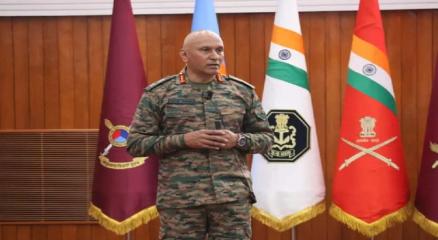
Srinagar/New Delhi Oct 09: Army Commander Lieutenant General Pratik Sharma on Friday said that Northern Command destroyed seven terrorist camps during ‘Operation Sindoor,’ while nearly 12,000 artillery rounds were exchanged along the Line of Control (LoC) during an 88-hour operation in May 2025. Addressing Defence Summit in New Delhi Lieutenant General Sharma said the Northern Command was assigned the responsibility of destroying seven out of the nine camps. “The task was accomplished successfully,” he added. He said that while fighting continued in the air and missile domains, troops along the Line of Control (LoC) were also involved in frequent exchanges of fire and faced heavy ceasefire violations. “Exchange of artillery fire continued for nearly 88 hours. Almost 12,000 rounds were used. It was a successful execution,” Sharma said. (KNO)
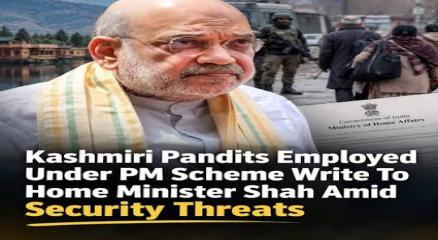
Srinagar, Sep 12: Kashmiri Pandit employees working in Kashmir Valley under the prime minister's package on Friday urged the Centre to take immediate measures in view of "security concerns" and "growing sense of insecurity" to prevent "another cycle of displacement". In a letter to Union Home Minister Amit Shah, president of All PM Package Employees Forum Sunny Raina flagged "serious security concerns" and "the growing sense of fear and uncertainty prevailing" among Kashmiri Hindu employees and their families currently residing and working in the Kashmir Valley. The letter comes amid a series of security threats received by the Kashmiri Pandits who have returned to the valley as government officials under the prime minister’s rehabilitation package. Raina said Kashmiri Pandits have been making a “sincere but extremely difficult effort” to resettle in Kashmir, but targeted killings of civilians and Kashmiri Hindus since 2021 have "created a deep sense of fear among our families". "Every such incident revives the painful memories of the 1990s and raises a genuine concern that Kashmiri Hindus may once again be forced into displacement from their homeland," the letter said. The employees said the situation may appear normal on the surface, but at the grassroots level, "a sense of uneasiness and tension continues to exist". "Many families remain deeply concerned about their safety and the future of their children,” he said. "There is also a perception among many of us that the process of our complete social rehabilitation and acceptance has not progressed as we had hoped. We are trying to rebuild our lives here, but the atmosphere of uncertainty makes this process extremely difficult," he added. Stressing that the community was concerned about the recent "increase in threatening letters and intimidation", the employees said the developments cannot be viewed in isolation. "We remember that during the 1990s, threatening letters and notices were among the early warning signs that created fear among Kashmiri Hindu families and contributed to the atmosphere that ultimately resulted in their mass displacement," they said. Urging Shah to take the recent threatening letters and communications against Kashmiri Hindus and PM Package employees with utmost seriousness and order a thorough investigation, the letter demanded strict legal action against those responsible for issuing threats, intimidation or inciting violence. "Strengthen intelligence gathering and preventive security measures around PM Package employees, their families and residential colonies. Conduct a comprehensive security review of all PM Package employee accommodations and settlements," it said. The letter also stated that the Union Home Ministry should ensure employees are not compelled to choose between their livelihood and their personal safety. "Establish an effective mechanism through which PM Package employees can immediately report threats and receive timely protection. Closely monitor any emerging pattern of targeted intimidation so that the situation does not deteriorate into another cycle of displacement," it said. The employees emphasised that their appeal is rooted in a desire to remain in the Valley rather than abandon it. "We have spent the last 15 years trying to rebuild what was destroyed decades ago. We do not want another displacement. We want to stay in Kashmir, work here and live here with dignity and security. "The Government of India has repeatedly demonstrated its commitment towards the rehabilitation and security of Kashmiri Hindus. We therefore place our faith in your leadership and earnestly request immediate, visible and concrete action before the present atmosphere of fear becomes another humanitarian crisis," the employees said.
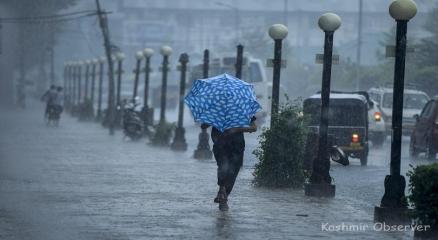
Srinagar, Aug 11: Jammu and Kashmir is likely to witness another spell of heavy to very heavy rainfall in parts of the Jammu division on Wednesday, with the weather department warning of flash floods, landslides and mudslides in vulnerable areas. The Meteorological Centre said one or two spells of light to moderate rain and thundershowers are expected at many places across the Union Territory on August 12. However, some districts of the Jammu division could receive heavy to very heavy rainfall, while isolated areas of Kashmir may experience brief spells of intense showers, it said. The advisory comes after several parts of the Jammu region received significant rainfall during the past 24 hours. Kathua KVK recorded the highest rainfall of 156 mm, followed by Jammu with 79 mm, Katra 71 mm and Samba 55 mm, according to the weather department. The department said the prevailing wet spell is likely to continue in a subdued form between August 13 and 16, with light to moderate rain and thundershowers possible at many places and brief intense showers at isolated locations. ANOTHER WET SPELL EXPECTED BETWEEN Aug 17-19 Another spell of wet weather is expected between August 17 and 19, when heavy rain or brief intense showers could occur in a few districts, particularly during the early morning and afternoon hours. The weather is expected to improve thereafter, with only light rain or thundershowers possible at scattered places between August 20 and 22, according to the forecast. The MeT office cautioned that torrential rain and brief intense showers could trigger flash floods, landslides and mudslides, particularly in vulnerable and hilly areas. SRINAGAR RECORDS 33 C, JAMMU 31.2 C Meanwhile, Srinagar recorded a maximum temperature of 33 degrees Celsius on Monday, three degrees above the normal for this time of the year. Its minimum temperature was 21.6 degrees Celsius, also three degrees above normal. Among other stations, Qazigund recorded a maximum of 30.6 degrees Celsius, Kupwara 33.3, Pahalgam 25.5, Kokernag 29.2 and Gulmarg 24.5 degrees Celsius. In the Jammu region, Jammu recorded a maximum temperature of 31.2 degrees Celsius, nearly two degrees below normal, while its minimum temperature was 22 degrees Celsius, more than three degrees below normal. Katra received 71.1 mm of rain during the 24-hour period ending Tuesday morning, while Jammu recorded 79 mm during the same period. The Met department has advised people, particularly those living in landslide- and flood-prone areas, to remain alert during periods of intense rainfall. (KNO