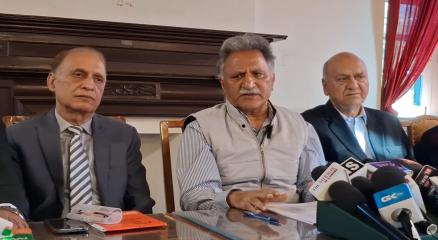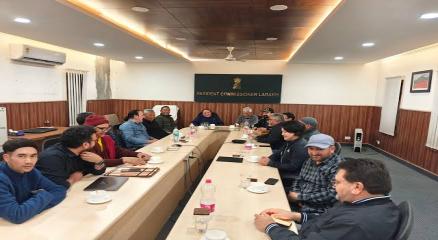
Srinagar, Oct 10 : A high-level team of the Union Home Ministry will hold a fresh round of talks with Ladakh's political leadership here on October 15, with the Centre and local groupings still appearing divided over the way forward on the region's core demands. Top sources said the Leh Apex Body (LAB) will submit its replies to nine queries raised by the MHA in the previous rounds of discussions. The Kargil Democratic Alliance (KDA). However, is pressing for a draft proposal from the Centre before the talks proceed — a demand that has become a sticking point between the two sides. Ladakh MP, a former MP and other senior leaders from the region are likely to attend the meeting, sources said. The MHA has been engaging with Ladakh's stakeholders since 2023, but the talks are yet to produce a breakthrough on the demands for full statehood and Sixth Schedule status — the twin issues that have driven sustained protests in the union territory.
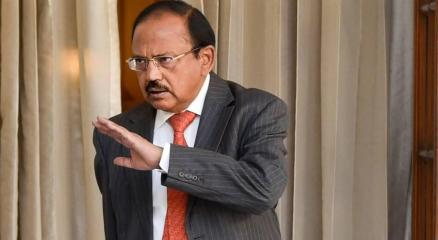
Roorkee, Sep 19: National Security Advisor (NSA) Ajit Doval said on Saturday that India's GDP would increase from the current USD 4.015 trillion to USD 38 trillion in the next 20 years. Addressing the convocation ceremony of the Indian Institute of Technology (IIT) Roorkee as the chief guest, Doval said that the students are fortunate to be living in a transformative era where their future holds great promise. Citing the example of Lord Ram, the NSA urged students to be courageous in their lives. He said that sage Vishwamitra chose Lord Ram to annihilate demons because of his courageous nature. "Massive changes are taking place in India, and the country is moving towards a magnificent future," the NSA said. "As the prime minister has termed the period leading up to 2047 as 'Amrit Kaal', it is truly a wonderful Amrit Kaal. India's current GDP stands at USD 4.015 trillion, and it will reach USD 38 trillion in the next 20 years," Doval added. "The Current generation is the luckiest with abundant opportunities, unlike past struggles. This is the age of technology, engineering, and innovation, which drives societal growth, with the youth having decades for progress," he said. The NSA further said that decision-making and building one's own doctrine are critical to becoming a leader. “You will never become a leader if you are not a decision maker. You have got to make a decision… you have got to build your own doctrine," he said. Doval also shared an anecdote from his early career days while posted in Sikkim, recounting how he learned three mantras for success in life from a Sherpa. Doval explained that the first mantra is knowing where one stands on the map; the second is knowing where one needs to go; and the third is knowing the path to get there and come back.
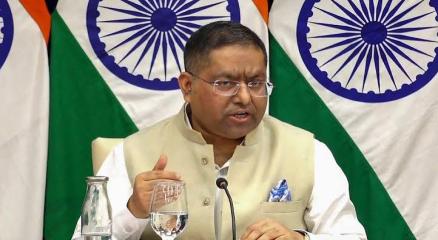
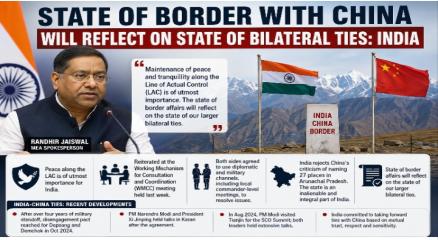
New Delhi, Aug 18: India on Tuesday condemned cross-border terrorism and said its fight against terrorism would continue and New Delhi would take “whatever action is required” to defeat the menace. Addressing media persons in New Delhi, Ministry of External Affairs spokesperson Randhir Jaiswal said that India wanted the global community to understand that the country was being targeted by global terrorism and had made sustained efforts over the years to build international action against cross-border terrorism. “Our fight against terrorism will continue further and we will take whatever action is required to defeat terrorism,” the MEA spokesperson said. On the unrest in Pakistan-occupied Kashmir (PoK), Jaiswal said a large number of people were killed by Pakistani forces and many others injured. He alleged that the Pakistan government had also restricted the supply of essential commodities in the region. India, he said, urged Pakistan to ensure the provision of basic amenities to the people of PoK, while calling for international support and sympathy for those affected by the situation. On ties with Bangladesh, Jaiswal said India continued to have energy cooperation with the neighbouring country and was examining its requirements, refinery capacity and availability in connection with Dhaka’s request for additional energy supplies. He said India desired a “positive, constructive and forward-looking” relationship with Bangladesh based on mutual interests. On Bangladesh’s request for the extradition of former Prime Minister Sheikh Hasina, Jaiswal reiterated India’s consistent position that the request was being examined through established processes between the two countries. Meanwhile, on India-Afghanistan relations, the MEA spokesperson said deep-rooted ties between the two countries continued to drive their historic relationship and were helping strengthen bilateral ties further. Jaiswal also conveyed India’s condolences over the loss of lives in the earthquakes in Indonesia. He said a large number of people had been killed and many others injured, expressing India’s solidarity with Indonesia during the difficult hour.
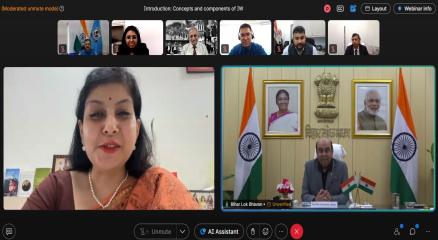
Ahmedabad, Aug 18: Rashtriya Raksha University (RRU) has launched a week-long certificate course on Information Warfare to examine the role of perception, narratives and influence in contemporary security and conflict. The programme was inaugurated by the university’s School of Internal Security, Defence and Strategic Studies. Addressing the inaugural session online, Bihar Governor Lt Gen Syed Ata Hasnain (Retd.) spoke about information warfare as a continuous cognitive contest and highlighted the growing influence of social media and strategic communication. Hasnain discussed the “10 Cs” of strategic communication and said the impact of narratives can extend beyond individuals to wider sections of society. He also emphasised the changing nature of conflict, where information and perception increasingly form part of the security environment. The week-long course will cover psychological warfare, regional case studies, cyber operations, artificial intelligence, electronic warfare and social media. It is aimed at providing participants with an understanding of emerging informational and cognitive dimensions of conflict. The opening day also included sessions examining diplomacy and strategic communication in the global arena, providing participants with perspectives on the relationship between information, foreign policy and security. The programme is being organised as part of RRU’s academic and training initiatives in the fields of internal security, defence and strategic studies.
New Delhi, Aug 14: India on Friday reiterated that Jammu and Kashmir and Ladakh were an integral and inalienable part of the country saying that there was no change in its position on the Indus Water Treaty (IWT). Addressing a media persons, Ministry of External Affairs (MEA) spokesperson Randhir Jaiswal said it was ready to extend assistance to Colombia following the devastating earthquake disaster. He said that India’s existing arrangement to supply diesel to Bangladesh was continuing, while any additional request would be examined keeping in mind India’s own refining capacity and availability of diesel. On the Indus Water Treaty, Jaiswal said India’s position remained unchanged and was already well known. “India’s position on the Indus Water Treaty is well-known. There is no change in it,” he said. He expressed condolences over the earthquake disaster in Colombia and said India had conveyed its readiness to assist the country in whatever manner possible. Jaiswal said India had already sent 20 metric tonnes of relief material to Colombia, including medical supplies, medical equipment and other items required for post-earthquake recovery. He said India was in touch with the Colombian government through its diplomatic mission and was monitoring the situation. India’s offer of assistance comes as part of its continued humanitarian outreach during major natural disasters and emergencies affecting friendly countries. On remarks by Norwegian Foreign Minister Espen Barth Eide, Jaiswal once again underlined New Delhi’s position on Jammu and Kashmir. “The whole of Jammu, Kashmir and Ladakh is an integral and inalienable part of India,” he said. Jaiswal said the issues that should concern the international community were the alleged atrocities being perpetrated in illegally Pakistan-occupied Jammu and Kashmir (PoJK) and the use of Pakistan-occupied Kashmir for cross-border terrorism. India has consistently maintained that Jammu and Kashmir is an integral part of the country and that Pakistan should end its illegal occupation of areas under its control. On Bangladesh’s request for additional fuel supplies amid its energy concerns, Jaiswal said the existing arrangement between the two countries for the supply of diesel remained operational. “There is an ongoing arrangement with Bangladesh for supply of diesel, which is continuing,” he said. However, he made it clear that any additional requirement would have to be assessed against India’s own domestic needs. The spokesperson said such a request would be examined keeping in mind India’s refining capacity as well as the availability of diesel in the country. On the upcoming BRICS Summit in September, Jaiswal said India had extended invitations to several countries to participate in the summit. He said Bangladesh Prime Minister Muhammad Yunus had also been invited for a bilateral visit to India, along with an invitation to participate in the outreach session of the BRICS Summit. The outreach component is aimed at expanding engagement with countries beyond the BRICS grouping and strengthening dialogue on issues of common regional and global interest. On the issue of the Foreign Contribution Regulation Act (FCRA), Jaiswal said legislative matters concerning India were internal matters to be decided through the country’s constitutional and parliamentary processes. “Legislative matters concerning India are our own internal matters on which the Parliament of India is there to decide,” he said. He also urged the media to disregard what he described as “mischievous reports” on the issue. Reacting to the Congress’ remarks against Italian Prime Minister Giorgia Meloni, Jaiswal said India maintained strong relations with Italy, which had expanded and strengthened in recent years. He said diplomatic engagement between countries was guided by mutual respect and understanding. “India has strong ties with Italy which have expanded and strengthened in recent years,” Jaiswal said, adding that as part of diplomatic practice, India worked to strengthen bilateral relations while remaining respectful of each other and the mutual understanding between the two sides. On Afghanistan, the MEA spokesperson said India had undertaken several engagements with the country that had contributed to strengthening the partnership in several areas. “We have longstanding ties with Afghanistan and we look forward to strengthening these ties,” Jaiswal said. India has maintained engagement with Afghanistan on humanitarian assistance and other areas while continuing to assess developments in the country. On India-Nepal relations, Jaiswal described the ties between the two countries as longstanding, warm and multifaceted. He said the relationship was underpinned by unique people-to-people ties and remained strong, while acknowledging that issues could arise between the two neighbours that needed to be addressed through dialogue. “There will be issues which we need to sit together and discuss. For any such issues, we have bilateral mechanisms in place,” he said.
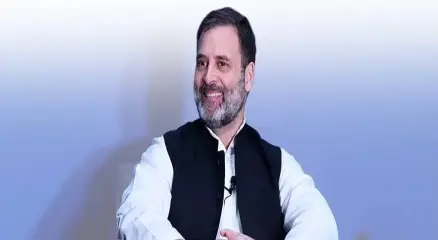
New Delhi, Aug 14: The Supreme Court on Friday quashed criminal defamation proceedings against Leader of Opposition in the Lok Sabha Rahul Gandhi over his remarks on Hindutva ideologue V D Savarkar, holding that the requisite sanction from the Uttar Pradesh government for prosecution had not been obtained. A Bench comprising Justices Dipankar Datta and Sheel Nagu allowed Gandhi's plea and set aside the summons issued against him by the lower court. The case relates to remarks Gandhi made during the Congress's Bharat Jodo Yatra in Maharashtra in 2022, when he described Savarkar as a “servant of the British” and alleged that he received a pension from the British. SC Stays HC Order on Karur Stampede Jobs The Supreme Court on Friday stayed a Madras High Court order that had quashed the Tamil Nadu government's decision to provide government employment to family members of those killed in the Karur stampede last year. A Bench of Justices J B Pardiwala and K Vinod Chandran passed the interim order while hearing the Tamil Nadu government's challenge to the July 27 verdict of the Madurai Bench of the Madras High Court. During the hearing, the apex court questioned the challenge to the state's decision, observing that the government had offered employment to bereaved families following an unfortunate tragedy. The High Court had struck down the decision to provide compassionate appointments to families of those who died in the September 2025 Karur stampede.

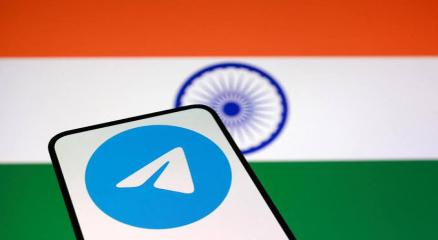
New Delhi, June 23: Google restored instant messaging app Telegram on Tuesday morning as a temporary ban imposed by the government ended in the midnight of June 22. The platform was accessible to some existing users before Google restored it. The app continued to remain delisted on Apple's Appstore till around 10 am. An emailed query sent to Apple did not elicit an immediate response in this regard. The government had temporarily imposed a blanket ban on Telegram until June 22 and sources indicated that there is no change or extension of timelines in the order. The government had ordered the ban on Telegram following its failure to prevent the circulation of fake examination papers of NEET, dissemination of misleading information and other fraudulent activities that impacted the examination process. Before imposing the ban, government officials met Telegram representatives on June 3 where these concerns were flagged. Thereafter, the Centre decided to block the app and its associated web links, including the web version, till June 22. Telegram has also been directed to block its message editing feature till June 30. The NEET re-examination was conducted on June 21 and so far there has been no report of any fraudulent activity. Telegram Founder and CEO Pavel Durov had criticised India's IT ministry for banning Telegram for one week because some users shared leaked exam questions. He alleged that Reliance, in which Meta has a partial stake, may have lobbied, along with its competitor WhatsApp, to impose the ban on the company's app in the country.
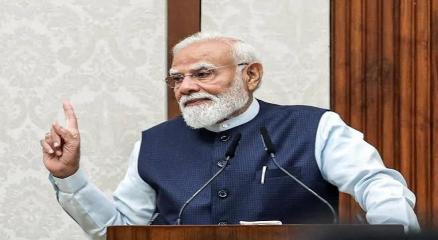
New Delhi, Jun 23: Every file represents the aspirations, concerns and lives of countless citizens, Prime Minister Narendra Modi told young IAS officers on Tuesday, while asking them to place people at the centre of every decision and ensure that governance remains empathetic, responsive and inclusive. Interacting with 183 officer trainees of the IAS-2024 batch, who have been attached as assistant secretaries in various ministries and departments here, the prime minister also said major developmental challenges cannot be solved in silos and effective coordination across departments is essential for achieving meaningful and lasting outcomes. He told the young civil servants to dedicate themselves to nation-building with a strong sense of purpose, innovation and citizen-centric governance, and urged them to always remember the human impact behind every administrative file. Modi said every file represents the aspirations, concerns and lives of countless citizens, according to an official statement. Stressing the mantra of "Nagrik Devo Bhava", the prime minister called upon the young officers to place citizens at the centre of every decision and ensure that governance remains empathetic, responsive and inclusive, the statement said. He urged them to constantly evaluate their own contribution towards nation-building and derive satisfaction not from positions held, but from measurable outcomes achieved. Modi said after two years of field exposure and administrative learning, the officers now stand at a crucial stage where their decisions will shape not just their own careers, but the future of crores of citizens. He emphasised that the real test of public service begins by handling real-life situations with integrity, sensitivity and commitment. Highlighting the vision of "Viksit Bharat 2047", Modi noted that every policy and administrative decision over the coming decades must contribute towards building a developed India. Calling for a whole-of-government approach, he stressed that the country's priorities today include "Aatmanirbhar Bharat", "Make in India", manufacturing growth, energy security and creating opportunities for youngsters. The prime minister underlined the transformation in governance over the last 10 years, noting that administration has moved from a process-centric model to a result-oriented approach. He cited the growing role of digital governance, artificial intelligence and technology in improving service delivery, enabling citizens to access services with ease and transparency. Emphasising the importance of data-driven governance, Modi said data must not be viewed merely as numbers, but as a reflection of the collective lives, challenges and aspirations of millions of people. He asked the officers to regularly verify whether policies are effectively translating into outcomes on the ground. The prime minister also highlighted the growing role of women in nation-building, noting that more than 40 per cent of the current batch comprises women officers. He expressed confidence that their energy, talent and dedication would play a pivotal role in taking India's development journey to new heights. The young officer trainees also shared their experiences from their field training and attachment in ministries. Union Minister Jitendra Singh, Principal Secretaries to the Prime Minister P K Mishra and Shaktikanta Das, Cabinet Secretary T V Somanathan, Director of the Lal Bahadur Shastri National Academy of Administration Sriram Taranikanti, among others, were present on the occasion.
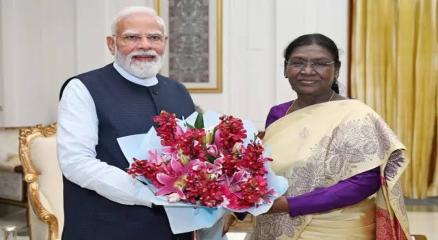
New Delhi, Jun 23: Prime Minister Narendra Modi on Tuesday called on President Droupadi Murmu at the Rashtrapati Bhavan amid buzz over a reshuffle of the Union council of ministers. The president's office shared pictures of the meeting in a post on X. "Prime Minister Shri @narendramodi called on President Droupadi Murmu at Rashtrapati Bhavan," the post said. The meeting, which took place soon after the civil investiture ceremony to confer Padma awards, assumes significance as political circles in the national capital are buzzing with the growing possibility of a cabinet reshuffle. Earlier in the day, veteran BJP leader from Kerala George Kurian resigned from the Union council of ministers following the expiry of his Rajya Sabha term. Kurian (65) was Union minister of state for minority affairs and also for fisheries, animal husbandry and dairying. President Murmu has accepted Kurian's resignation, a communique issued by the Rashtrapati Bhavan said. The BJP had decided not to renominate Kurian, whose term ended on June 21, in the recent Rajya Sabha polls. Union Minister of State for Railways Ravneet Singh, whose Rajya Sabha term ended on June 21, has also not been renominated by the BJP to the Upper House. Singh, who had been a Rajya Sabha member from Rajasthan since August 2024, also holds the charge as the Minister of State for the Ministry of Food Processing Industries. Of late, a few Union ministers have been given key organisational responsibilities in their home states. Their appointment has also led to speculation of an imminent cabinet reshuffle. BJP national president Nitin Nabin had on May 28 appointed Union Minister of State for Road Transport and Highways Harsh Malhotra as Delhi BJP chief. Malhotra (62) is also Union Minister of State for Corporate Affairs. He currently holds both portfolios. Union Minister of State for Finance Pankaj Chaudhary was in December last year named the new president of the BJP's Uttar Pradesh unit.
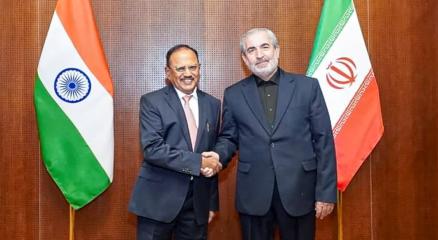
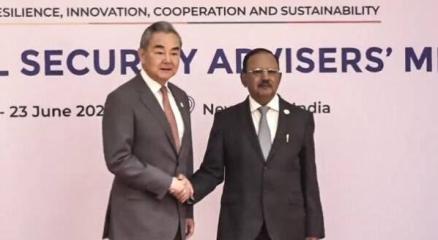
New Delhi, Jun 22: National Security Adviser Ajit Doval on Monday held wide-ranging talks with senior Iranian security official Ghadir Nezamipour focusing on the evolving security environment in West Asia. Nezamipour, the Deputy Secretary for Defence Affairs at Iran's powerful Supreme National Security Council (SNSC), is in New Delhi to attend a conclave of BRICS. "Both sides reviewed the ongoing situation in West Asia. They also discussed cooperation under the BRICS platform and India-Iran bilateral ties," External Affairs Ministry spokesman Randhir Jaiswal said on social media. It is the first visit to India by a senior official from Iran after it struck a peace agreement with the US. The NSAs of BRICS nations will hold extensive discussions on the security scenario in the region on Tuesday. The conclave officially begins on Monday. India to host key BRICS security conclave amid rising geopolitical tensions. Chinese Foreign Minister Wang Yi, Russian NSA Sergei Shoigu, and other top BRICS security officials are set to be part of the deliberations. The conclave will be chaired by NSA Doval. New Delhi is hosting the conclave in its capacity as the current chair of the influential grouping. BRICS, originally comprising Brazil, Russia, India, China, and South Africa, expanded in 2024 to include Egypt, Ethiopia, Iran, and the United Arab Emirates (UAE), with Indonesia joining in 2025. BRICS has emerged as an influential grouping as it brings together 11 major emerging economies of the world, representing around 49.5 per cent of the global population, around 40 per cent of the global GDP and around 26 per cent of the global trade. The top BRICS security officials are expected to deliberate extensively on the overall regional security scenario including the situation in West Asia as well as the Russia-Ukraine conflict. The Indian side is likely to raise its concerns over terrorism including cross-border terrorist activities targeting Jammu and Kashmir by terror groups based in Pakistan. The Pakistan-Afghanistan hostilities may too figure in the deliberations, people familiar with the matter said. The BRICS foreign ministers' meeting in May had ended without a joint statement as sharp differences between Iran and the UAE over the West Asia conflict were on full display. BRICS operates under a framework of consensus and India had issued a chair's statement and outcome document featuring two specific paragraphs where unanimity could not be reached.
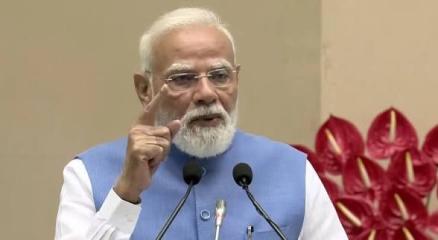
New Delhi, Jun 22: Prime Minister Narendra Modi launched a scathing attack on the Congress on Monday for decades of unabated Maoist violence in the country and said the hands of those who are waving the Constitution now were trembling then. Addressing the "Republic Summit 2026" here, Modi also said Bharat is not only a fast-growing economy, but also a credible and reliable global power and the country is scripting the future of the next 1,000 years. He said the previous Congress governments had labelled Naxal-affected areas as backward regions but the NDA government undertook the challenge of transforming those areas, helping the people there rise above despair and igniting their aspirations for progress. To reflect this new approach, Modi said his government renamed those areas as aspirational districts and blocks and today, these aspirational districts and blocks are driving the growth of those regions. He said a significant proportion of the population in these regions lived in poverty but over the last few years, 25 crore people have overcome poverty, with aspirational districts playing a crucial role in this achievement and those areas that were once affected by Naxalism are seeing new rays of development now. The prime minister said even in the 21st century, terrorists had prevented any facility from being established in the tribal areas. He added that even a government vehicle could not pass through as it would be riddled with bullets. Governments came and went, generations came and went and it seemed that this misfortune of violence would persist just like that, Modi said. "Between 2004 and 2014, more than 17,000 violent incidents occurred due to Maoist terrorism and nearly 7,000 lives were lost. After 2014, we moved forward with the resolve of Nation First to change the situation. "Today, Maoist terrorism in the country is counting its final breaths. This became possible because it required total dedication. Today, those who are waving the Constitution, their hands were trembling to even show the Constitution then," he said. Congress leader Rahul Gandhi has been seen carrying a copy of the Constitution for different occasions, including while taking oath as an MP after the 2024 Lok Sabha polls.
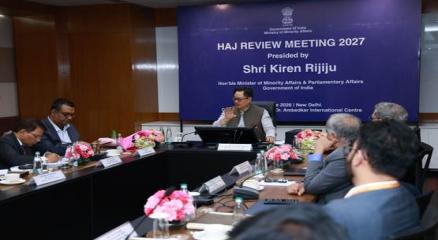
New Delhi, June 22: The Ministry of Minority Affairs on Monday announced the Haj Policy 2027, outlining a series of measures aimed at enhancing pilgrim services and streamlining the pilgrimage process. Union Minister for Minority Affairs and Parliamentary Affairs, Kiren Rijiju, formally released the policy and announced the commencement of applications for Haj-2027. As per the official handout, the prospective pilgrims can submit their applications online through the Haj Committee of India portal (hajcommittee.gov.in) and the Haj Suvidha mobile application. The government said the digital application process has been designed to make registration simpler, more accessible and transparent. Under the new policy, the allocation of the Haj quota between the Haj Committee of India and private operators is expected to remain unchanged at a 70:30 ratio. Of the total quota allotted to India last year, 1,22,518 seats were allocated to the Haj Committee of India and 52,507 to the private sector. The Centre, however, said it would continue efforts to secure an increase in India's Haj quota beyond last year's total allocation of 1,75,025 pilgrims. The policy was finalised following a Haj review meeting chaired by Rijiju on June 18, during which the arrangements for Haj-2026 were assessed and preparations for Haj-2027 were approved. The Ministry said the early release of the policy and opening of applications would facilitate timely planning in accordance with the schedule prescribed by the Saudi authorities. Building on several pilgrim-centric initiatives introduced during Haj-2026, the new policy seeks to further improve comfort, safety and convenience for pilgrims. Measures introduced last year included sofa-cum-beds in Mina, high-speed train travel between Makkah and Madinah, hotel-style accommodation in Makkah and a 20-day Short Haj Package. The Indian Haj Mission was also awarded two Labbaytum Awards by the Saudi Ministry of Hajj and Umrah in the category of "Best Haj Coordination and Communication" for Haj-2026. Among the major reforms announced for Haj-2027 is the enhancement of on-ground assistance through an improved State Haj Inspector-to-pilgrim ratio, which has been revised from one inspector for every 150 pilgrims to one for every 135 pilgrims. To address the growing waiting list, the policy provides preferential consideration to the top 20 per cent of applicants who remained on the final waiting list for Haj-2026. The Short Haj Package has also been retained, with Kolkata added as a new embarkation point following strong demand from the region. The policy further aligns medical screening procedures with Saudi health guidelines and introduces stricter checks to ensure that individuals suffering from chronic medical conditions are not cleared for the pilgrimage, citing health and safety concerns. In a significant push towards technology-driven management, the Ministry is planning to introduce artificial intelligence-based interventions across various stages of Haj operations. These include AI-assisted application and document verification, demand forecasting for flight allocation and real-time grievance monitoring. A key feature under consideration is a multilingual conversational AI assistant capable of providing round-the-clock support in Hindi, Urdu and other regional languages. The system is expected to assist pilgrims with applications, payments, travel details, accommodation, baggage-related information and grievance redressal through voice and text-based interactions. The Ministry said the proposed AI platform would reduce errors in applications, minimise dependence on intermediaries and improve access to accurate information, particularly for first-time and elderly pilgrims. Plans are also underway to integrate the system with Saudi Arabia's Nusuk platform to enable seamless coordination and real-time information sharing throughout the pilgrimage. Rijiju urged all eligible pilgrims to complete their applications within the stipulated timelines and directed the Haj Committee of India and other concerned agencies to ensure a smooth, transparent and efficient application process. He reiterated the government's commitment to providing every Indian pilgrim with a safe, comfortable and dignified Haj experience.

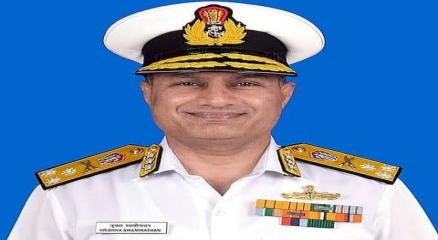
New Delhi, May 31: Chief of Naval Staff, Admiral Krishna Swaminathan on Sunday sad that the Indian Navy was deeply committed to jointness, Atmanirbharata, and indigenisation, and that will also be one of his key result areas. "I am extremely grateful to have this opportunity to work with the men and women of the Indian Navy, whom I consider the finest professionals anywhere in the world," he said. He said their welfare, well-being, professional performance, and personal growth shall be of the highest importance to him. "I shall remain invested in that very sincerely in the days to come. At this stage, I would like to express the collective gratitude of the Indian Navy to Admiral Dinesh Tripathi for his highly meritorious and illustrious service to the nation," he said. Admiral Krishna Swaminathan said Tripathi, the outgoing chief of Navy has been an extremely effective CNS, "led us very successfully, and given us the benefit of his guidance and vision at every turn." "On behalf of a grateful Navy, I wish him the very best as he transits to a new phase of his life," he said Swaminathan said he will devote every single day of his life to making the Navy a better, stronger, sharper, and more impactful service so that it can serve the interests of national security, national development, and national economic prosperity to the best of its ability.
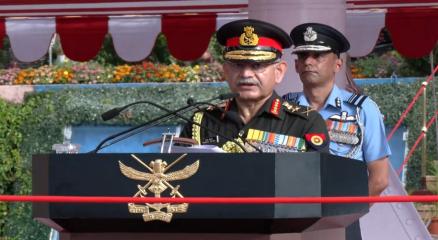
Pune, May 30: Indian Army Chief General Upendra Dwivedi on Saturday said the armed forces were preparing for the possibility of “Operation Sindoor 2.0” while simultaneously transforming themselves into a future-ready force capable of fighting wars across multiple domains, including cyber, space and cognitive battlefields. Addressing media persons during his visit to review the Passing Out Parade (POP) of the 150th Course of the National Defence Academy (NDA) at the prestigious tri-services academy in Khadakwasla, Pune, the Army Chief said future conflicts would no longer remain confined to conventional battlefields and would increasingly involve land, air, sea, space, cyber, electromagnetic and cognitive domains. Referring to Operation Sindoor, General Dwivedi said the operation demonstrated India's resolve and the armed forces' capability to deliver a “calibrated, precise and purposeful response.” He said the operation highlighted the importance of integrated planning, real-time intelligence, precision targeting, robust air defence systems, secure communications and synergy among different military domains. “Operation Sindoor is still continuing. There is a temporary cessation of hostilities. The Indian Army and all three services are preparing well for Operation Sindoor 2.0, if it takes place,” he said. He added that the armed forces were enhancing interoperability and equipping themselves for the next generation of warfare. The Army Chief said that modern battlefields have become highly transparent, where movements are constantly monitored by adversaries. "Every movement is known to the other side, therefore we have to be very cautious in terms of our deployment, employment and the protection required to protect our troops as well as civilians in border areas,” he said. Emphasising the growing role of technology in warfare, General Dwivedi described Artificial Intelligence (AI) as a critical force multiplier. He said AI enables faster decision-making in high-velocity conflict environments where commanders must process vast amounts of information and manage multiple operational cycles simultaneously. “With numerous drones and counter-drone systems on the battlefield, automation and AI become essential for handling resources and making decisions quickly,” he said. Highlighting the Army’s ongoing transformation, General Dwivedi said several technology-enabled formations, including the 1st Regiment Battalions, Divyastha Batteries, Shaktimaan Regiments and Bharat Battalions, have been raised from existing resources as part of the Army’s “Decade of Transformation.” He also underscored the significance of drone warfare, stating that every soldier must acquire drone-operating skills. “Eagle on the Arms means every jawan should know how to fly a drone,” he said, noting that extensive drone training is being conducted at military academies and training establishments. According to the Army Chief, networking and data-centric warfare will be the next major leap for the armed forces. “Data has become a strategic resource and decision-making must be faster, smarter and more resilient,” he said. General Dwivedi further highlighted the government's push for self-reliance in defence manufacturing and innovation, saying the Army is working closely with DRDO, industry, start-ups, academia and national institutions to convert indigenous ideas into battlefield capabilities. Invoking Prime Minister Narendra Modi’s mantra of “JAI” (Jointness, Atmanirbharta and Innovation), he said these principles would continue to guide India’s military preparedness. On the proposed theatre command reforms, General Dwivedi said the process of military theatrisation is progressing steadily. He revealed that discussions within the Chiefs of Staff Committee have concluded and a comprehensive report has been submitted to the Defence Minister for review. He expressed confidence that the next leadership under the new Chief of Defence Staff (CDS) would advance the reforms and that theatre commands could become operational within the next two to three years. Under the proposed structure, service chiefs would focus on force sustenance and capability development, while theatre commanders would oversee operational deployment and joint force orchestration. The Army Chief also stressed the importance of public trust in the era of information warfare. “Information warfare is only successful if the whole nation gets together and trusts the people who are giving the information,” he said. He added that nations united by trust and shared purpose are ultimately more likely to prevail in conflicts. Recalling his days as a cadet at the National Defence Academy (NDA), General Dwivedi expressed confidence in the capabilities of the younger generation. He said the confidence and enthusiasm displayed by today’s cadets assured him that the next generation of military leaders would surpass their predecessors and carry forward the transformation of the Indian armed forces.
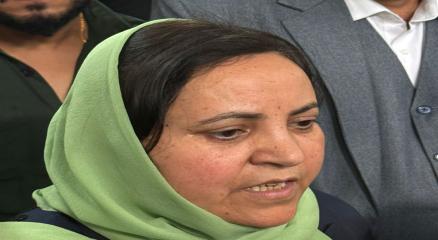
Srinagar, May 14: Jammu and Kashmir Health and Education Minister Sakina Itoo on Thursday called for a transparent investigation into the alleged ‘NEET-UG paper leak’ incident. The minister said all those involved in the fraud must face strict punishment, irrespective of their influence or position. Talking to reporters, Sakina Itoo said the alleged fraud has deeply affected students who worked tirelessly for years to qualify one of the country’s most competitive examinations. “This is unfortunate because children work very hard and put immense effort into qualifying this examination,” she said. She said any malpractice in such examinations amounts to playing with the future and careers of deserving students. “The investigation should be conducted properly and in a transparent manner. Whoever is involved should face strict action and severe punishment,” she said. Responding to a question regarding downsizing of government vehicles and related measures announced by the administration, the minister said everyone should contribute if any step helps reduce the country’s problems. “If there is any problem in the country and if we can help in reducing it in any way, then we should also play our role,” she said. Asked about reports of a possible shift to virtual education in view of recent developments, the minister said no such decision has been taken so far.
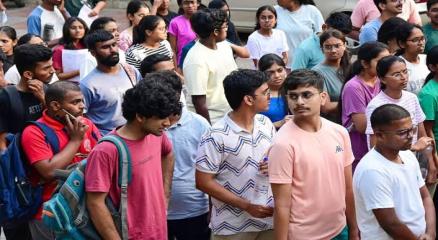
New Delhi, May 12: A massive protest organised by the National Students' Union of India (NSUI) broke out near the Shastri Bhawan on Tuesday, against the alleged paper leak in NEET-UG this year. The exam was held on May 3, following which allegations of paper leak surfaced, triggering investigations by the Rajasthan Special Operations Group (SOG) and central agencies. Earlier, the National Testing Agency (NTA) announced the cancellation of NEET-UG 2026, and said the examination will be re-conducted on dates to be notified separately. In a statement, the NTA said the decision was taken with the approval of the Government of India in the interest of maintaining transparency and preserving trust in the national examination system.

New Delhi, May 12: The National Testing Agency on Tuesday announced the cancellation of the NEET (UG) 2026 examination conducted on May 3, citing serious concerns over the integrity and transparency of the examination process. In a post on its official X handle, NTA said the decision was taken with the approval of the Government of India (GoI) after inputs examined by the agency in coordination with central agencies and findings shared by law enforcement authorities indicated that the examination process “could not be allowed to stand.” In an official statement, NTA said the examination would now be re-conducted on fresh dates to be notified separately. The revised schedule, including issuance of fresh admit cards, will be communicated through the agency’s official channels in the coming days. The development comes days after NTA, on May 8, referred matters related to alleged irregularities in the examination to central agencies for independent verification and necessary action. The Government of India has also decided to hand over the matter to the Central Bureau of Investigation for a comprehensive inquiry into the allegations surrounding the examination. NTA said it would extend full cooperation to the investigating agency and provide all records and materials required for the probe. NTA said the decision was necessary to safeguard the credibility of the national examination system and acknowledged that conducting the examination afresh would cause “real and significant inconvenience” to candidates and their families. However, NTA said that allowing the present examination to stand would have caused “greater and more lasting damage” to public trust in the system. The exam conducting body further clarified that registration data, candidature details and examination centres selected during the May 2026 cycle would remain valid for the re-conducted examination. It said no fresh registration process would be required and no additional examination fee would be charged from candidates. In a significant relief to students, NTA also announced that the examination fees already paid by candidates would be refunded, while the re-conducted examination would be organised using the agency’s internal resources. NEET (UG), the country’s largest entrance examination for undergraduate medical courses, is taken annually by lakhs of students seeking admission to MBBS, BDS and allied medical programmes across India. NTA has advised candidates and parents to rely only on official communication channels for updates regarding the revised examination schedule and to avoid unverified information circulating on social media.

Bhubaneswar, May 7: A 19-year-old NEET aspirant in Odisha’s Bhadrak district was found hanging in his house on Thursday, police said. His family alleged that the teen took his life, fearing that he would not clear the exam he appeared on May 3. The deceased has been identified as Jyoti Prakash Barik, a resident of Nunda village under Tihidi block. According to police, he was found hanging from the ceiling of their rented house in Bhadrak town police station area. Though he was taken to Bhadrak District Headquarters Hospital, doctors declared him dead on arrival, police said. While Bhadrak Town Police registered a case of unnatural death and launched an investigation into the matter, his family members said he was under intense mental stress after appearing in the exam on Sunday. Jyoti Prakash had failed to crack the NEET examination last year and was optimistic of clearing it this time. The National Eligibility cum Entrance Test (NEET-UG) is a national-level entrance exam for undergraduate medical courses, including MBBS, BDS, AYUSH, and BSc Nursing, conducted annually. His father runs a tea stall to earn his livelihood and spent around Rs 3 lakh for his son's coaching, family members claimed. "Fearing another failure, he might have died by suicide," his father said. Speaking to reporters, the family members said Jyoti Prakash was alone at home last night when the incident occurred. (PTI)
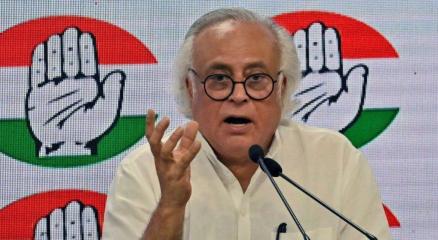
New Delhi, Apr 29 (PTI): The Congress on Wednesday alleged that Defence Minister Rajnath Singh gave a "shameful clean chit" to Pakistan while speaking at an SCO meeting in Bishkek, and claimed that his shocking statements were "anti-national". Congress general secretary in-charge communications Jairam Ramesh also alleged that this "new stance" in relation to Pakistan is all part of Prime Minister Narendra Modi's policy of "appeasement" of the US and "calibrated capitulation" to China. Ramesh shared a video clip of Singh speaking in Bishkek in which he said, "We must not forget that terrorism has no nationality and no theology. No grievance, real or supposed, can become an excuse for terrorism and humanitarian loss." In his post on X attacking Singh, Ramesh said, "Yesterday, the Defence Minister, obviously with the approval of and at the instance of the Prime Minister, gave a shameful clean chit to Pakistan while speaking in Bishkek." Is Pakistan not the epicentre of terrorism, Ramesh asked. "Are there no terrorist camps in Pakistan with India as their target? Is there no ideological anti-India indoctrination in Pakistan? Were not the Mumbai and Pahalgam terror attacks masterminded and executed by terrorists from Pakistan?" the Congress leader said. "Clearly this new stance in relation to Pakistan is all part of the PM's policy of appeasement of the US and calibrated capitulation to China," Ramesh said. "The Defence Minister's shocking statements are as anti-national as the PM's bizarre clean chit to China on June 19, 2020," he alleged. Singh, in an address at a conclave of Shanghai Cooperation Organisation (SCO) in Bishkek, had also said Operation Sindoor demonstrated India's firm resolve that "terror epicentres" are no longer immune to "justifiable punishment". Singh had also called on the influential grouping to not lose sight of "state-sponsored" cross-border terrorism and that there should not be any place for any "double standards" in combating the menace. (PTI)
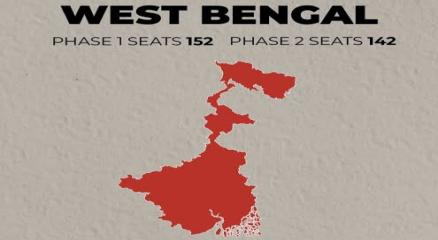
Kolkata, Apr 29: A total of 18.39 per cent of 3.21 crore voters exercised their franchise in the first two hours of polling to 142 constituencies in the second and final phase of West Bengal assembly elections, a senior EC official said. Till 9 am, Purba Bardhaman district recorded the highest turnout at 20.86 per cent, followed by Hooghly at 20.16 per cent, he said. Nadia recorded 18.5 per cent turnout, followed by North 24 Parganas (17.81 per cent), Kolkata Uttar (17.28 per cent) and South 24 Parganas (17.25 per cent), Kolkata Dakshin (16.81 per cent), he elaborated. "Polling is underway peacefully, barring some minor incidents in certain areas. We have sought reports from the officials concerned," he told PTI. Voting is underway in 142 constituencies in the second and final phase of the West Bengal assembly elections amid unprecedented security arrangements. Polling began at 7 am with voters lining up outside booths across Kolkata, Howrah, North and South 24 Parganas, Nadia, Hooghly and Purba Bardhaman -- districts that together form the political and electoral core of the state. A total of 3,21,73,837 electors, including 1,64,35,627 men, 1,57,37,418 women and 792 third-gender voters, are eligible to cast their votes in this phase of polling held at 41,001 stations, all of which have been covered by webcasting. (PTI)
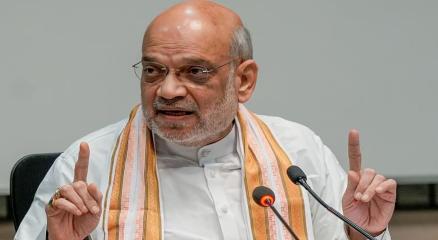
Srinagar, Apr 27: Union Home Minister Amit Shah on Monday said that Prime Minister Narendra Modi dealt a decisive blow to terrorism by taking bold steps like abrogation of Article 370, surgical strikes and Operation Sindoor. Addressing an election rally in West Bengal, Shah said that PM Modi crushed terrorism which no previous leader or regime could. "Operation Sindoor after the Pahalgam terror attack sent a clear message to the adversary that terrorism won’t be tolerated. The government had acted firmly against terrorism and crushed it with an iron fist," he said. He also attacked West Bengal Chief Minister Mamata Banerjee, accusing her government of being soft on terrorism. “The PM Modi led regime has taken decisive action against terror, particularly in Jammu and Kashmir,” he said. Shah cited the abrogation of Article 370 in 2019, stating that the move had strengthened the country’s fight against terrorism and integrated Jammu and Kashmir more closely with the Union. The Union Home Minister said the Centre’s approach marked a shift from previous governments, asserting that strong measures had been taken to counter terror threats. “Modi Ji ended Article 370, which was protected by the Congress and its ally TMC. Modi Ji dealt a decisive blow to terrorism through a surgical strike, airstrike, and Operation Sindoor. But the TMC and the Congress fed biryani to terrorists when they were in power,” Shah said. He also hit out at Congress president Mallikarjun Kharge over remarks against PM Modi. “PM Modi who ended terrorism, Congress’s president calls him a terrorist. Due to his proximity to Rahul Gandhi, the public conduct of Kharge Ji has deteriorated. Form a BJP government in West Bengal, and we will end terrorism here too,” he said. “Kharge Ji, the more you abuse Modi Ji, the more the lotus will bloom,” Shah added. The Home Minister said there is a strong wave in favour of the BJP and once voted to power, it would “push back all infiltrators”. (KNO)
New Delhi, May 12: A massive protest organised by the National Students' Union of India (NSUI) broke out near the Shastri Bhawan on Tuesday, against the alleged paper leak in NEET-UG this year. The exam was held on May 3, following which allegations of paper leak surfaced, triggering investigations by the Rajasthan Special Operations Group (SOG) and central agencies. Earlier, the National Testing Agency (NTA) announced the cancellation of NEET-UG 2026, and said the examination will be re-conducted on dates to be notified separately. In a statement, the NTA said the decision was taken with the approval of the Government of India in the interest of maintaining transparency and preserving trust in the national examination system.
Srinagar, Feb 12: Jammu and Kashmir recorded over 15.48 lakh traffic violation cases in 2025, with authorities collecting more than Rs 34.17 crore as penalty under the Motor Vehicles Act, the Centre informed Parliament on Thursday. The information was shared in the Lok Sabha in response to a question raised by MP Janardan Singh Sigriwal. According to the official data, 15,48,525 challans were issued across the Union Territory in 2025, while the penalty amount recovered stood at Rs 34,17,36,740. The figures further show that in 2024, a total of 15,44,105 violations were registered with a penalty collection of around Rs 43.40 crore, while in 2023, 12,38,584 challans were issued and Rs 34.56 crore was collected. For the current year, till February 8, 2026, Jammu and Kashmir has recorded 1,63,531 traffic violation cases, with revenue collection of about Rs 2.11 crore. The Ministry of Road Transport and Highways stated that stricter penalties under the Motor Vehicles (Amendment) Act, 2019 are aimed at ensuring better compliance and deterrence. It also said that traffic enforcement falls under the jurisdiction of States and Union Territories. The government has issued a Standard Operating Procedure (SOP) for electronic monitoring and is promoting technology-driven enforcement through Automatic Number Plate Recognition (ANPR) cameras integrated with the VAHAN database. Awareness campaigns under the Sadak Suraksha Abhiyan are also being carried out to improve road safety.
New Delhi, Jan 25: The Dental Council of India (DCI) has directed all universities and dental colleges across the country to strictly ensure a minimum of 80 percent biometric attendance for Post Graduate students before allowing them to appear in examinations. The decision has been taken to curb absenteeism among postgraduate dental students. According to a circular issued by the Dental Council of India-a statutory body under the Ministry of Health and Family Welfare, Government of India, the decision has been taken after multiple complaints were received from dental colleges in Rajasthan, Haryana and Uttar Pradesh regarding non-attendance of PG students. "The matter was examined by the Grievance Sub-Committee of the DCI in its meeting held on November 24, 2025," the circular reads. It reads that after detailed discussion and deliberation, the committee recommended that all universities and dental colleges must ensure compliance with Regulation 18(a)(i) of the DCI Master of Dental Surgery Course Regulations, 2017, which mandates at least 80 per cent attendance. "The recommendation of the Grievance Sub-Committee has been approved by the Executive Committee of the Dental Council of India through circulation and has now been formally communicated for information and necessary action," the circular reads. As per the circular, all the universities and dental colleges have been directed to ensure minimum 80 per cent biometric attendance of all PG students before permitting them to appear in examinations. The order, issued by Deputy Secretary Dental Council of India Mukesh Kumar, is expected to be implemented with immediate effect across the country.
Srinagar, Jan 8: Contractual faculty members working in government degree colleges of Jammu and Kashmir Higher Education Department (HED) have expressed strong resentment over what they term as a glaring disparity in salaries, demanding revision of their pay in line with University Grants Commission (UGC) norms and regularisation of their services. The faculty, many of whom hold PhDs and are qualified through NET, SET and JRF, said they have been denied UGC-recommended pay scales despite discharging academic responsibilities equivalent to their regular counterparts. “Hundreds of highly qualified scholars have been pushed into silent suffering. For years, we have been assured that our pay revision is under consideration, but nothing has materialised so far,” said Dr Ishfaq Gowhar, a contractual faculty member. Earlier, Director Colleges J&K had acknowledged the legitimacy of the faculty’s demand, stating that while the issue was genuine, its implementation involved significant financial implications due to the large number of contractual appointments. “We are aware that they deserve salary enhancement, but the number of contractual faculty is huge and it has financial implications,” he earlier said. Dr Gowhar pointed out that contractual lecturers, who form the backbone of the higher education system, continue to work on a fixed monthly honorarium of Rs 28,000, which has remained unchanged for nearly a decade. “The irony is that a Class IV employee with a Class 10 qualification draws a salary exceeding Rs 50,000, while doctorate-holding teachers engaged in teaching, mentoring and academic research are paid a fraction of that,” he said. He added that institutions such as SKUAST-K, University of Kashmir and Islamic University of Science and Technology (IUST) have implemented revised UGC pay scales, but the Higher Education Department has failed to extend similar treatment to its contractual faculty. Dr Gowhar said the demand for “equal work, equal pay” gets prominently featured in election campaigns, raising hopes among contractual teachers. “Promises were made and slogans echoed during elections, but once the process ended, our voices were reduced to silence. Even meeting officials now feels impossible,” he said. He said contractual faculty were not seeking privileges but dignity, fairness and recognition for their service. The faculty appealed to the Jammu and Kashmir Lieutenant Governor Manoj Sinha, Chief Minister Omar Abdullah and the Education Minister to intervene and take concrete steps towards addressing their long-pending demands. “This issue is not merely about salaries. It is about survival, justice and dignity in the classrooms of Jammu and Kashmir,” he said.
Srinagar, March 6: Around 17 candidates from Jammu and Kashmir have qualified the Civil Services Examination (CSE)-2025, the result for which was declared by the Union Public Service Commission (UPSC) on Friday. The commission recommended a total of 958 candidates for appointment to the Indian Administrative Service (IAS), Indian Foreign Service (IFS), Indian Police Service (IPS) and various central services. Anuj Agnihotri, an MBBS graduate, has topped the civil services examination 2025, while Rajeshwari Suve M and Akansh Dhull have got the second and third ranks respectively. According to the official list released by the UPSC the 17 candidates from J&K who have figured in the final merit list include Suvan Sharma (Rank 148), Sugandha Gupta (207), Towseef Ganie (Rank 254), Ritika (Rank 456), Sooyash Shivam (Rank 572), Muneeb Parrah (Rank 581), Ghulam Din (Rank 683), Dwarka Gaadhi (Rank 721), Akash (Rank 747), Koh E Safa (Rank 763), Yasaar (Rank 811), Abhishek (Rank 820), Pankaj (Rank 856), Mohammad Ajaz (Rank 869), Azhar (Rank 886), Sarfraz (Rank 936), and Irfan (Rank 957). The results were declared after conducting the written examination in August 2025 followed by the personality tests (interviews) conducted between December 2025 and February 2026. As per the result notification issue by the UPSC, a total of 958 candidates have been recommended for appointment against 1087 vacancies reported by the government for the examination cycle. These include 180 vacancies in the IAS, 55 in the IFS, 150 in the IPS, 507 in Central Services Group A and 195 in Group B services. Of the total recommended candidates, 317 are from the general category, 104 from the economically weaker sections, 306 from other backward classes, 158 from scheduled castes and 73 from scheduled tribes. A consolidated reserve list of 258 candidates has also been published in accordance with the rules. The claims of recommended candidates regarding reservation categories will be subject to verification by the concerned authorities. The UPSC has stated that the candidature of 348 recommended candidates has been kept provisional, while the result of the two candidates has been kept withheld. The CSE is conducted annually in three stages- preliminary, Mains and interview by the UPSC to select officers of the Indian Administrative Service (IAS), Indian Foreign Service (IFS) and Indian Police Service (IPS) among others. The civil services (preliminary) examination 2025 was conducted on May 25 of 2025. A total of 937876 candidates applied for this examination, out of which 5,76,793 actually appeared in the test. A total of 14,161 candidates qualified for appearance in the written (Main) examination which was held in August, 2025. Of these, 2736 candidates had qualified for the personality test (interview) of the examination. Prime Minister Narendra Modi congratulated the candidates who qualified the UPSC exam. "Congratulations to all those who have successfully cleared the Civil Services Examination, 2025. Their dedication, perseverance and hard work have led to this significant milestone. Wishing them the very best as they embark on a journey of serving the nation and fulfilling the aspirations of the people," PM Modi wrote on his official X handle. "To those who may not have secured the desired outcome in the Civil Services Examination, I understand that such moments can be difficult. However, this is only one step in a larger journey. Many opportunities lie ahead, both in future examinations and in the many avenues through which you can contribute to our nation. My best wishes for the road ahead," his post on X reads. UPSC chairman Ajay Kumar announced the declaration of the result and congratulated the candidates who qualified the exam. "Congrats to all successful candidates as you begin a career of service to the nation. For those who did not make it-the learning from this journey will guide you in the paths ahead," UPSC Chairman wrote in a post on X. Among the 17 candidates from J&K who qualified UPSC exam inlcude a visually impaired candidate Irfan Ahmad Lone, a resident of Manzpora in the Naidkhai area of Bandipora.