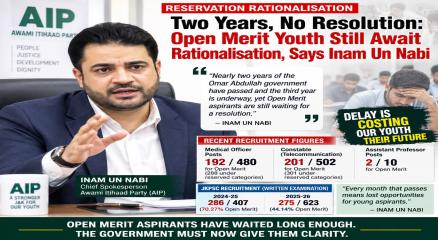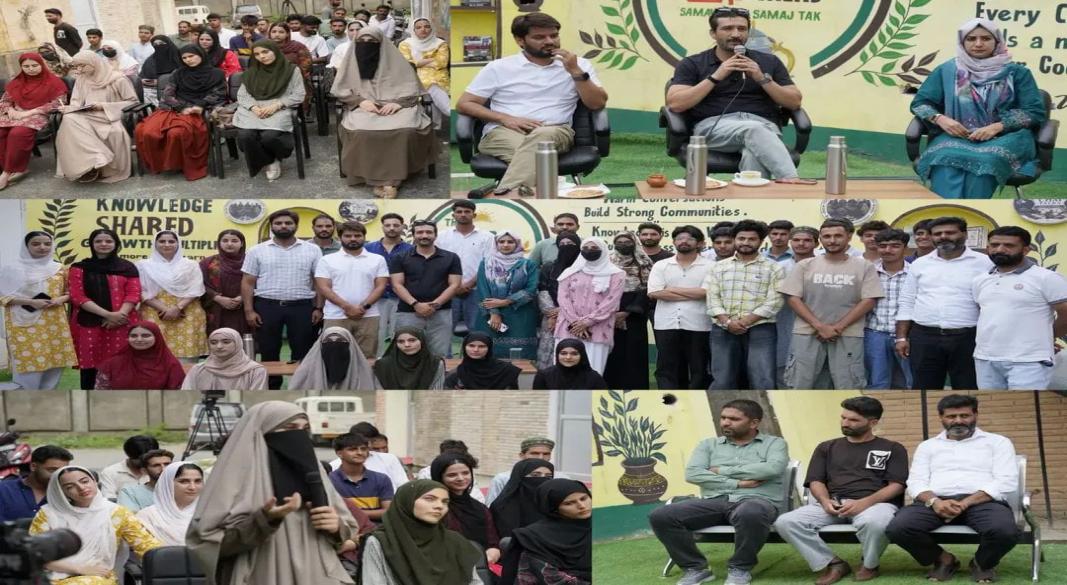
Bandipora, Jul 8: Entrepreneur Jibran Khan, founder of the Zero Miles restaurant chain, on Wednesday shared his inspirational journey from menial jobs to building a successful enterprise, urging youngsters to embrace entrepreneurship and create employment opportunities for others.
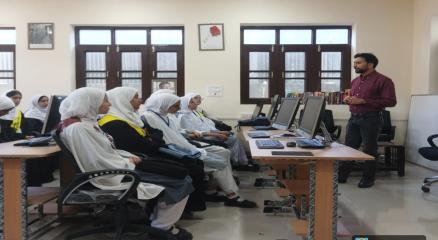
The interactive session, titled 'Nun Chai Talks', was organised by the District Administration Bandipora at the Waqar Knowledge Centre and witnessed enthusiastic participation from students of HKM Degree College Bandipora, HSS Mantrigam, and youth from across the district.
Khan, who started with a single outlet in Sopore in 2017 and now operates six franchise locations across North Kashmir employing 60 people, candidly spoke about his early struggles, including washing dishes and doing odd jobs.
"I ran from pillar to post in search of a job and I don't want young ones to suffer like that," Khan said, explaining his motivation to create employment avenues.
After completing his Class 12 in tourism, Khan worked with multinational companies in Chandigarh and Dubai before returning to Kashmir to pursue his passion.
He urged aspiring entrepreneurs to remain innovative, embrace challenges confidently, and leverage government schemes supporting self-employment.
Assistant Commissioner Development (ACD) Bandipora, Dr Suhaib Wani, encouraged participants to sharpen their skills and utilise government initiatives promoting innovation and sustainable livelihoods.
Dr Zulfi, a resource person from Waqar Knowledge Centre, briefed attendees about mentorship programmes, skill development initiatives, and financial assistance available for young entrepreneurs.
Students raised queries on business planning, overcoming initial hurdles, accessing financial support, and identifying market opportunities, with speakers responding through practical suggestions and real-life experiences.
BDO Aloosa and Nodal Officer, Waqar Knowledge Centre, Ulfat Ali, thanked Khan for his inspiring address and reaffirmed the administration's commitment to organising more such sessions for Bandipora's youth. (KNS)
New Delhi, May 12: A massive protest organised by the National Students' Union of India (NSUI) broke out near the Shastri Bhawan on Tuesday, against the alleged paper leak in NEET-UG this year. The exam was held on May 3, following which allegations of paper leak surfaced, triggering investigations by the Rajasthan Special Operations Group (SOG) and central agencies. Earlier, the National Testing Agency (NTA) announced the cancellation of NEET-UG 2026, and said the examination will be re-conducted on dates to be notified separately. In a statement, the NTA said the decision was taken with the approval of the Government of India in the interest of maintaining transparency and preserving trust in the national examination system.
Srinagar, Feb 12: Jammu and Kashmir recorded over 15.48 lakh traffic violation cases in 2025, with authorities collecting more than Rs 34.17 crore as penalty under the Motor Vehicles Act, the Centre informed Parliament on Thursday. The information was shared in the Lok Sabha in response to a question raised by MP Janardan Singh Sigriwal. According to the official data, 15,48,525 challans were issued across the Union Territory in 2025, while the penalty amount recovered stood at Rs 34,17,36,740. The figures further show that in 2024, a total of 15,44,105 violations were registered with a penalty collection of around Rs 43.40 crore, while in 2023, 12,38,584 challans were issued and Rs 34.56 crore was collected. For the current year, till February 8, 2026, Jammu and Kashmir has recorded 1,63,531 traffic violation cases, with revenue collection of about Rs 2.11 crore. The Ministry of Road Transport and Highways stated that stricter penalties under the Motor Vehicles (Amendment) Act, 2019 are aimed at ensuring better compliance and deterrence. It also said that traffic enforcement falls under the jurisdiction of States and Union Territories. The government has issued a Standard Operating Procedure (SOP) for electronic monitoring and is promoting technology-driven enforcement through Automatic Number Plate Recognition (ANPR) cameras integrated with the VAHAN database. Awareness campaigns under the Sadak Suraksha Abhiyan are also being carried out to improve road safety.
New Delhi, Jan 25: The Dental Council of India (DCI) has directed all universities and dental colleges across the country to strictly ensure a minimum of 80 percent biometric attendance for Post Graduate students before allowing them to appear in examinations. The decision has been taken to curb absenteeism among postgraduate dental students. According to a circular issued by the Dental Council of India-a statutory body under the Ministry of Health and Family Welfare, Government of India, the decision has been taken after multiple complaints were received from dental colleges in Rajasthan, Haryana and Uttar Pradesh regarding non-attendance of PG students. "The matter was examined by the Grievance Sub-Committee of the DCI in its meeting held on November 24, 2025," the circular reads. It reads that after detailed discussion and deliberation, the committee recommended that all universities and dental colleges must ensure compliance with Regulation 18(a)(i) of the DCI Master of Dental Surgery Course Regulations, 2017, which mandates at least 80 per cent attendance. "The recommendation of the Grievance Sub-Committee has been approved by the Executive Committee of the Dental Council of India through circulation and has now been formally communicated for information and necessary action," the circular reads. As per the circular, all the universities and dental colleges have been directed to ensure minimum 80 per cent biometric attendance of all PG students before permitting them to appear in examinations. The order, issued by Deputy Secretary Dental Council of India Mukesh Kumar, is expected to be implemented with immediate effect across the country.
Srinagar, Jan 8: Contractual faculty members working in government degree colleges of Jammu and Kashmir Higher Education Department (HED) have expressed strong resentment over what they term as a glaring disparity in salaries, demanding revision of their pay in line with University Grants Commission (UGC) norms and regularisation of their services. The faculty, many of whom hold PhDs and are qualified through NET, SET and JRF, said they have been denied UGC-recommended pay scales despite discharging academic responsibilities equivalent to their regular counterparts. “Hundreds of highly qualified scholars have been pushed into silent suffering. For years, we have been assured that our pay revision is under consideration, but nothing has materialised so far,” said Dr Ishfaq Gowhar, a contractual faculty member. Earlier, Director Colleges J&K had acknowledged the legitimacy of the faculty’s demand, stating that while the issue was genuine, its implementation involved significant financial implications due to the large number of contractual appointments. “We are aware that they deserve salary enhancement, but the number of contractual faculty is huge and it has financial implications,” he earlier said. Dr Gowhar pointed out that contractual lecturers, who form the backbone of the higher education system, continue to work on a fixed monthly honorarium of Rs 28,000, which has remained unchanged for nearly a decade. “The irony is that a Class IV employee with a Class 10 qualification draws a salary exceeding Rs 50,000, while doctorate-holding teachers engaged in teaching, mentoring and academic research are paid a fraction of that,” he said. He added that institutions such as SKUAST-K, University of Kashmir and Islamic University of Science and Technology (IUST) have implemented revised UGC pay scales, but the Higher Education Department has failed to extend similar treatment to its contractual faculty. Dr Gowhar said the demand for “equal work, equal pay” gets prominently featured in election campaigns, raising hopes among contractual teachers. “Promises were made and slogans echoed during elections, but once the process ended, our voices were reduced to silence. Even meeting officials now feels impossible,” he said. He said contractual faculty were not seeking privileges but dignity, fairness and recognition for their service. The faculty appealed to the Jammu and Kashmir Lieutenant Governor Manoj Sinha, Chief Minister Omar Abdullah and the Education Minister to intervene and take concrete steps towards addressing their long-pending demands. “This issue is not merely about salaries. It is about survival, justice and dignity in the classrooms of Jammu and Kashmir,” he said.
Srinagar, March 6: Around 17 candidates from Jammu and Kashmir have qualified the Civil Services Examination (CSE)-2025, the result for which was declared by the Union Public Service Commission (UPSC) on Friday. The commission recommended a total of 958 candidates for appointment to the Indian Administrative Service (IAS), Indian Foreign Service (IFS), Indian Police Service (IPS) and various central services. Anuj Agnihotri, an MBBS graduate, has topped the civil services examination 2025, while Rajeshwari Suve M and Akansh Dhull have got the second and third ranks respectively. According to the official list released by the UPSC the 17 candidates from J&K who have figured in the final merit list include Suvan Sharma (Rank 148), Sugandha Gupta (207), Towseef Ganie (Rank 254), Ritika (Rank 456), Sooyash Shivam (Rank 572), Muneeb Parrah (Rank 581), Ghulam Din (Rank 683), Dwarka Gaadhi (Rank 721), Akash (Rank 747), Koh E Safa (Rank 763), Yasaar (Rank 811), Abhishek (Rank 820), Pankaj (Rank 856), Mohammad Ajaz (Rank 869), Azhar (Rank 886), Sarfraz (Rank 936), and Irfan (Rank 957). The results were declared after conducting the written examination in August 2025 followed by the personality tests (interviews) conducted between December 2025 and February 2026. As per the result notification issue by the UPSC, a total of 958 candidates have been recommended for appointment against 1087 vacancies reported by the government for the examination cycle. These include 180 vacancies in the IAS, 55 in the IFS, 150 in the IPS, 507 in Central Services Group A and 195 in Group B services. Of the total recommended candidates, 317 are from the general category, 104 from the economically weaker sections, 306 from other backward classes, 158 from scheduled castes and 73 from scheduled tribes. A consolidated reserve list of 258 candidates has also been published in accordance with the rules. The claims of recommended candidates regarding reservation categories will be subject to verification by the concerned authorities. The UPSC has stated that the candidature of 348 recommended candidates has been kept provisional, while the result of the two candidates has been kept withheld. The CSE is conducted annually in three stages- preliminary, Mains and interview by the UPSC to select officers of the Indian Administrative Service (IAS), Indian Foreign Service (IFS) and Indian Police Service (IPS) among others. The civil services (preliminary) examination 2025 was conducted on May 25 of 2025. A total of 937876 candidates applied for this examination, out of which 5,76,793 actually appeared in the test. A total of 14,161 candidates qualified for appearance in the written (Main) examination which was held in August, 2025. Of these, 2736 candidates had qualified for the personality test (interview) of the examination. Prime Minister Narendra Modi congratulated the candidates who qualified the UPSC exam. "Congratulations to all those who have successfully cleared the Civil Services Examination, 2025. Their dedication, perseverance and hard work have led to this significant milestone. Wishing them the very best as they embark on a journey of serving the nation and fulfilling the aspirations of the people," PM Modi wrote on his official X handle. "To those who may not have secured the desired outcome in the Civil Services Examination, I understand that such moments can be difficult. However, this is only one step in a larger journey. Many opportunities lie ahead, both in future examinations and in the many avenues through which you can contribute to our nation. My best wishes for the road ahead," his post on X reads. UPSC chairman Ajay Kumar announced the declaration of the result and congratulated the candidates who qualified the exam. "Congrats to all successful candidates as you begin a career of service to the nation. For those who did not make it-the learning from this journey will guide you in the paths ahead," UPSC Chairman wrote in a post on X. Among the 17 candidates from J&K who qualified UPSC exam inlcude a visually impaired candidate Irfan Ahmad Lone, a resident of Manzpora in the Naidkhai area of Bandipora.


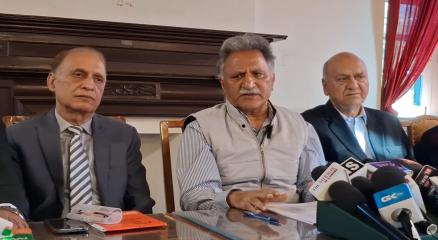
Srinagar, Oct 10: The Group of Concerned Citizens (GCC), comprising retired civil servants and other concerned individuals, has called for substantial amendments to the Jammu and Kashmir Ease of Doing Business Act, 2026, warning that several provisions could weaken regulatory oversight, undermine planned urban development and adversely affect public welfare. Addressing a press conference, GCC members said the legislation, while intended to reduce bureaucratic delays, attract investment and generate employment, appeared to prioritise the interests of entrepreneurs over environmental protection, urban planning and the needs of ordinary citizens. The group urged the Jammu and Kashmir government to revisit the Act, undertake wider consultations with experts and stakeholders, and introduce safeguards to ensure that the objective of facilitating business does not come at the cost of the region's fragile environment and quality of life. One of the major concerns raised by the GCC was the provision for deemed approvals, under which permissions could be treated as granted if authorities failed to act within the prescribed period. The group questioned the adequacy of a mechanism that could allow projects to proceed without explicit regulatory clearance. It also flagged the provision for a three-year inspection moratorium, arguing that restrictions on inspections and regulatory scrutiny could leave authorities with limited scope to intervene when activities cause harm to the public or the environment. GCC members said the inspections during the moratorium would be subject to specific conditions, including approval from the competent empowered committee, potentially restricting the ability of officials to ensure compliance with applicable norms. The GCC also expressed concern over the interplay of different schedules of the legislation, particularly provisions relating to prohibited activities, activities exempted from permissions and those not requiring no-objection certificates (NOCs). Members said that these provisions, when read together, could facilitate industrial and commercial activities in residential areas without adequate safeguards, raising questions about land-use compatibility, public health and the orderly development of urban settlements. The group warned that extensive construction and investment activity, without effective regulatory checks, could intensify pressure on Kashmir's limited land resources and affect agricultural and horticultural land. It also questioned provisions allowing relaxation of development-control norms and master plans, arguing that such relaxations could undermine planned urban development and weaken the purpose of preparing master plans for cities. The GCC specifically raised concerns over the powers provided under the Act to relax master-plan provisions, including the role assigned to the Chief Minister as chairman of the Ease of Doing Business Council at the UT level. It suggested that decisions on such relaxations should instead be handled through an appropriate administrative committee, following due process and transparent scrutiny. The group further questioned provisions relating to land-use changes, warning that deemed approvals and relaxed procedures could potentially facilitate the conversion of agricultural and horticultural land for construction and industrial purposes. Highlighting the possible consequences of accelerated construction, the GCC cautioned that unregulated building activity could increase dust pollution and further strain the region's already limited urban infrastructure. The group also objected to provisions concerning industrial plots, including those relating to transfer and freehold arrangements, questioning whether such measures would promote actual industrialisation or encourage the trading of industrial land. It argued that industrial policies should prioritise productive investment, manufacturing and employment generation rather than facilitate transactions involving industrial plots. The GCC also raised concerns over provisions relating to schools and higher education institutions, questioning whether relaxations in infrastructure requirements could compromise the availability of essential facilities such as classrooms, laboratories and playgrounds. It said educational institutions should be required to maintain adequate infrastructure to ensure that students receive quality education in a safe and appropriate environment. The group further questioned the proposed reliance on empanelled professionals for vetting and certifying project proposals, raising concerns about the standards of certification, accountability and the role of locally trained professionals. It also flagged the absence of a clearly defined percentage for local employment in the Act, arguing that the legislation should include stronger provisions to ensure that local youth benefit from investments facilitated by the government. The GCC expressed concern over the Act's overriding effect on 17 other laws, saying the implications of such a provision needed careful examination to ensure that existing regulatory safeguards were not weakened. Responding to questions about J&K's reported high ranking in ease of doing business, a GCC representative said the group was unaware of the criteria underlying the ranking and maintained that the provisions of the new legislation required substantial scrutiny irrespective of the ranking. The group also questioned whether the rules had undergone adequate public consultation before being finalised, stressing the need for greater transparency and engagement with stakeholders. GCC said it was not opposed to the government's objective of facilitating investment or reducing bureaucratic red tape. GCC members said that the legislation needed to strike a balance between economic growth and the broader interests of society. The group members said that responsible entrepreneurs, too, would benefit from a regulatory framework that provides clarity, accountability and safeguards against arbitrary decisions. GCC called on the government to amend and revisit the legislation through consultations with experts, urban planners and other stakeholders, saying the law should genuinely advance both ease of doing business and ease of living for the people of Jammu and Kashmir.
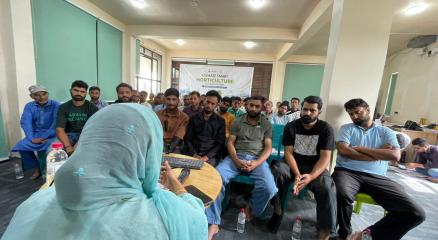
Srinagar, Sept 1: Qul Fruits conducted its fourth and fifth training sessions for field staff on Tuesday at Qulgah, Newa, bringing together 50 field staff members for focused learning on digital advisory, farmer communication, in-season crop management, pest and disease control, and pre-harvest quality. The training programme was aimed at strengthening the field team’s ability to provide farmers with timely, informed and practical support. As field staff work directly with farmers and their orchards, continuous capacity building is essential to ensure that technical knowledge is effectively translated into practical action at the ground level. Qul Fruits is a technology-driven horticulture platform working to advance modern apple cultivation in Jammu & Kashmir. The company works closely with farmers through its field network, with a focus on high-density apple plantations, scientific orchard management, technical advisory and farmer support. Training session four, led by Jasir Balkhi, Web Developer at Qul Fruits, focused on Digital Advisory, Record Keeping, Farmer Communication and Field Troubleshooting. The session highlighted the growing role of digital tools and systematic record keeping in modern field operations. Effective documentation and communication can help field staff better understand farmer concerns, maintain accurate field-level information and support faster and more informed troubleshooting. “Digital advisory is becoming an increasingly important part of modern field operations. When information is properly recorded and communicated, it becomes easier for field teams to understand issues and support farmers effectively,” said Jasir Balkhi. Training Session 5, led by Dr. Rabia, Pathologist at Qul Fruits, focused on In-Season Crop Management, Canopy and Fruit Management, Pest & Disease Control, and Pre-Harvest quality. The session was particularly relevant to the current crop cycle, as management practices during the growing season have a direct bearing on plant health, fruit development and final fruit quality. Strengthening the technical understanding of field staff enables them to identify potential issues more effectively and guide farmers on appropriate orchard management practices. "Healthy crops and quality fruit require attention throughout the season. Strengthening the technical knowledge of our field staff helps ensure that important aspects of crop, pest and disease management receive the right attention at the field level,” said Dr. Rabia. With 50 field staff participating, the two sessions marked another step in Qul Fruits’ ongoing efforts to strengthen its field-level capabilities and ensure that farmers have access to knowledgeable, responsive and timely support. The training brought together digital and technical learning, reflecting the growing importance of combining technology with scientific orchard management in modern horticulture. Qul Fruits has been working with farmers across the region to promote improved orchard practices and strengthen productivity and fruit quality through technology, technical expertise and field-level engagement. Through its field teams and continuous training initiatives, Qul Fruits aims to bridge the gap between technical knowledge and its practical application at the orchard level, enabling farmers to access timely guidance and informed support throughout the crop cycle.


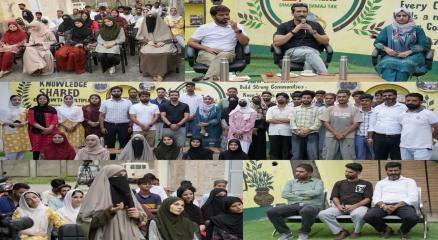

Srinagar, Jul 7: In a significant step towards strengthening community led environmental action, the MEERC Council of the Private Schools’ Association Jammu & Kashmir (PSAJK) in collaboration with the Nigeen Lake Conservation Organisation (NLCO) convened a multi stakeholder dialogue on environmental sustainability, waste management, and civic responsibility. The event brought together policymakers, environmentalists, educationists, government officials, and civil society representatives under one roof under the title Dont Waste The Future at the Institution of Engineers (India), Church Lane, Srinagar. The programme was attended MLA M Y Tarigami as the chief guest who is also the Chairman, House Committee on Environment, J&K Legislative Assembly. Former Advisor to the J&K Governor Khurshid Ahmad Ganai, Joint Director Tourism Kashmir Waseem Raja, , Mr. Farooq A. Gillani, (IFS Retd.), Padma Shri S P Verma, President PSAJK Dr. Baba Nazrul Islam, Dr. Raja Muzaffar Bhat social activist along with NLCO Core Group members Dr. Farooq Peer, Aijaz Naqshbandi, and Peerzada Faiyaz Ahmad. The programme was moderated by Advocate Nadeem Qadri, while the welcome address was delivered by Dr. Baba Nazrul Islam and the vote of thanks was deliverd by president Rotary Club of Kashmir Dr. Tauseef Ahmad Bhat. Addressing the gathering, NLCO Chairman Manzoor Ahmad Wangnoo emphasized that environmental conservation can no longer remain the sole responsibility of government agencies. He called for active public participation, particularly by educational institutions, describing students as the most powerful ambassadors of environmental stewardship. The PSAJK shall work with the academicians to form HPC which will add portfolio development in our circulumn and within a span of one year the association shall adopt green campuses all across J&K. The dialogue culminated in the unanimous adoption of five resolutions that will guide future collaborative initiatives between NLCO, PSAJK, educational institutions, and civil society. The resolutions includes restoration and conservation of Brari Nambal, adoption of ten public and religious spaces for cleanliness and beautification, launch of the Green Campus and safe surroundings initiative in and around schools, student signature campaign highlighting concerns related to the stray dog menace and student mass awareness and action on solid waste management reaching each household. Speaking on the occasion, the guests appreciated NLCO’s and PSAJK sustained efforts in promoting environmental action and commended the organisations for building meaningful partnerships between government institutions, schools, environmental experts, and civil society. The speakers unanimously stressed that environmental stewardship must move beyond awareness programmes and translate into sustained action through community participation, responsible waste management, restoration of natural ecosystems, and active youth engagement. Chairman NLCO Manzoor Ahmad Wangnoo reaffirmed the organisation’s commitment to working with all stakeholders to transform the resolutions into measurable action on the ground. “Real change begins when institutions, communities, and citizens work together. These resolutions are not merely commitments on paper but a roadmap towards a cleaner, greener, and more sustainable Kashmir,” he said. PSAJK called upon schools, students, parents, government departments, civil society organizations and citizens to work collectively towards building a clean, green and sustainable and environmentally responsible Jammu and Kashmir. The Green Marathon programme starting from Kupwara and Green Campus Program was initiated by Adv. Nadeem Qadri who is also the Advisor, to the J&K chapter of The Climate Reality Project India and South Asia.