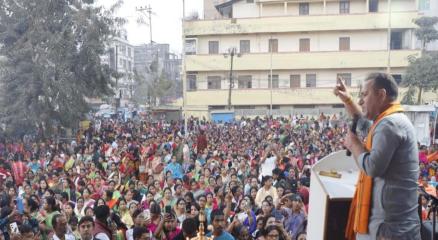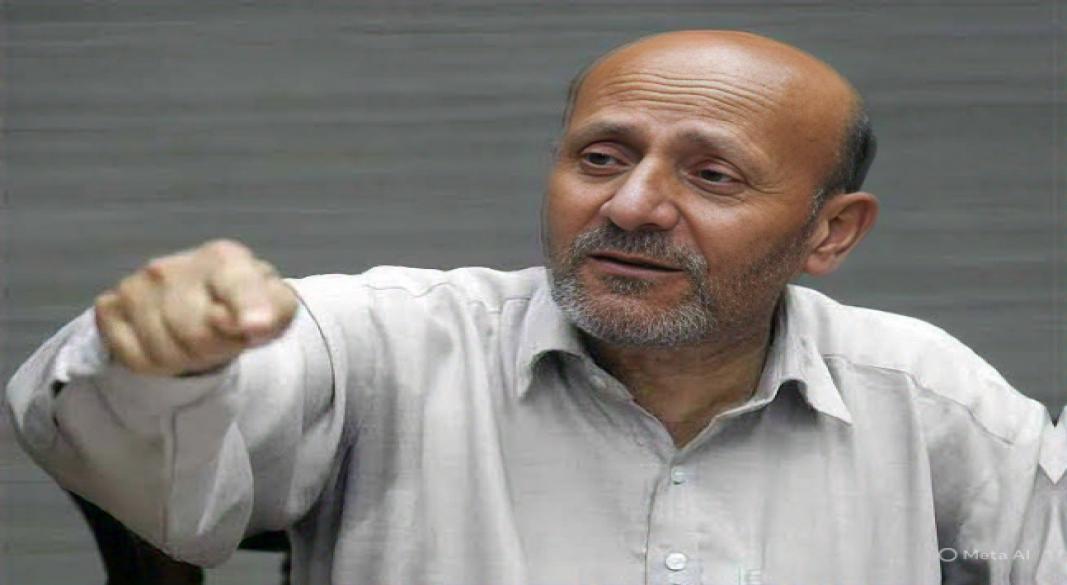
Srinagar, Feb 12: North Kashmir MP Engineer Rashid Thursday made a strong and emotional appeal to the Union Government, urging it not to strangle the livelihoods of daily wagers, contractual and consolidated employees and warning that development built on their suffering would amount to grave injustice.
During his address in the House, Engineer Rashid said that irrespective of who owns the wealth or who builds grand structures, every palace is ultimately constructed on the sweat and blood of workers.
“If we fail to respect their labour and sacrifice, it will be a great injustice,” he said.
Drawing attention to the situation in Jammu and Kashmir, the MP said the House would be shocked to learn that thousands of daily wagers, contractual and consolidated employees, working in factories, workshops and government departments have remained unregularised for decades.
He pointed out that many of them were engaged in their youth, their children are now in their twenties and the employees themselves have crossed fifty years of age, yet continue to be denied regular status.
Sharing a personal example, Engineer Rashid said he himself worked in the public sector in 2008 and even after leaving the job fourteen years ago, dues in his area remain unpaid till date, reflecting the harsh realities faced by daily wagers and contractual staff.
Citing the saying of Prophet Muhammad (SAW), he reminded the House that wages must be paid before the sweat dries and questioned why even the right to strike is being taken away from such employees.
Er Rashid urged the government to bring, if not immediately, then at least in the near future, a national policy for the regularisation of daily wagers, contractual and consolidated employees working in factories, semi government organisation and government departments, so that families forced to survive on uncertainty can earn dignified livelihoods.
Engineer Rashid also raised serious concern over the condition of porters working along border areas, from Karnah to Kanyakumari, who serve alongside the Army and BSF but whose rights remain completely unprotected.
He cited cases from Baramulla where porters lost their lives while on duty and received only token compensation with no proper rehabilitation and demanded statutory protection of their rights.
Highlighting the plight of employees in the unorganised sector, he questioned the adequacy of the minimum wage, asking what could possibly be managed in Rs 350 per day.
He pointed out that even inside Parliament, sanitation staff who repeatedly greet MPs are themselves denied dignified wages, despite being an essential but unorganised workforce.
The MP further criticised the functioning of labour courts and labour administration stating that accident victims are forced to wander for justice when daily wagers or contractual employees lose limbs or suffer serious injuries at workplaces.
He said labour courts and designated officials often treat such postings casually, resulting in denial of timely relief.
Engineer Rashid also warned that economic growth figures and trillion-dollar dreams are meaningless if achieved by crushing daily wagers, contractual and consolidated employees.
“Do not choke them,” he appealed. “Whether the palace is yours or the wealth belongs to someone else, it is built on their blood and sweat. Ignoring their rights will be a grave injustice.”
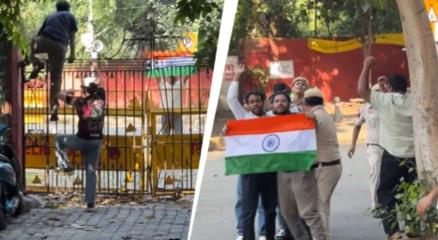
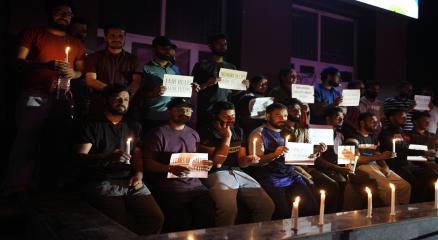
New Delhi, May 12: A massive protest organised by the National Students' Union of India (NSUI) broke out near the Shastri Bhawan on Tuesday, against the alleged paper leak in NEET-UG this year. The exam was held on May 3, following which allegations of paper leak surfaced, triggering investigations by the Rajasthan Special Operations Group (SOG) and central agencies. Earlier, the National Testing Agency (NTA) announced the cancellation of NEET-UG 2026, and said the examination will be re-conducted on dates to be notified separately. In a statement, the NTA said the decision was taken with the approval of the Government of India in the interest of maintaining transparency and preserving trust in the national examination system.
Srinagar, Feb 12: Jammu and Kashmir recorded over 15.48 lakh traffic violation cases in 2025, with authorities collecting more than Rs 34.17 crore as penalty under the Motor Vehicles Act, the Centre informed Parliament on Thursday. The information was shared in the Lok Sabha in response to a question raised by MP Janardan Singh Sigriwal. According to the official data, 15,48,525 challans were issued across the Union Territory in 2025, while the penalty amount recovered stood at Rs 34,17,36,740. The figures further show that in 2024, a total of 15,44,105 violations were registered with a penalty collection of around Rs 43.40 crore, while in 2023, 12,38,584 challans were issued and Rs 34.56 crore was collected. For the current year, till February 8, 2026, Jammu and Kashmir has recorded 1,63,531 traffic violation cases, with revenue collection of about Rs 2.11 crore. The Ministry of Road Transport and Highways stated that stricter penalties under the Motor Vehicles (Amendment) Act, 2019 are aimed at ensuring better compliance and deterrence. It also said that traffic enforcement falls under the jurisdiction of States and Union Territories. The government has issued a Standard Operating Procedure (SOP) for electronic monitoring and is promoting technology-driven enforcement through Automatic Number Plate Recognition (ANPR) cameras integrated with the VAHAN database. Awareness campaigns under the Sadak Suraksha Abhiyan are also being carried out to improve road safety.
New Delhi, Jan 25: The Dental Council of India (DCI) has directed all universities and dental colleges across the country to strictly ensure a minimum of 80 percent biometric attendance for Post Graduate students before allowing them to appear in examinations. The decision has been taken to curb absenteeism among postgraduate dental students. According to a circular issued by the Dental Council of India-a statutory body under the Ministry of Health and Family Welfare, Government of India, the decision has been taken after multiple complaints were received from dental colleges in Rajasthan, Haryana and Uttar Pradesh regarding non-attendance of PG students. "The matter was examined by the Grievance Sub-Committee of the DCI in its meeting held on November 24, 2025," the circular reads. It reads that after detailed discussion and deliberation, the committee recommended that all universities and dental colleges must ensure compliance with Regulation 18(a)(i) of the DCI Master of Dental Surgery Course Regulations, 2017, which mandates at least 80 per cent attendance. "The recommendation of the Grievance Sub-Committee has been approved by the Executive Committee of the Dental Council of India through circulation and has now been formally communicated for information and necessary action," the circular reads. As per the circular, all the universities and dental colleges have been directed to ensure minimum 80 per cent biometric attendance of all PG students before permitting them to appear in examinations. The order, issued by Deputy Secretary Dental Council of India Mukesh Kumar, is expected to be implemented with immediate effect across the country.
Srinagar, Jan 8: Contractual faculty members working in government degree colleges of Jammu and Kashmir Higher Education Department (HED) have expressed strong resentment over what they term as a glaring disparity in salaries, demanding revision of their pay in line with University Grants Commission (UGC) norms and regularisation of their services. The faculty, many of whom hold PhDs and are qualified through NET, SET and JRF, said they have been denied UGC-recommended pay scales despite discharging academic responsibilities equivalent to their regular counterparts. “Hundreds of highly qualified scholars have been pushed into silent suffering. For years, we have been assured that our pay revision is under consideration, but nothing has materialised so far,” said Dr Ishfaq Gowhar, a contractual faculty member. Earlier, Director Colleges J&K had acknowledged the legitimacy of the faculty’s demand, stating that while the issue was genuine, its implementation involved significant financial implications due to the large number of contractual appointments. “We are aware that they deserve salary enhancement, but the number of contractual faculty is huge and it has financial implications,” he earlier said. Dr Gowhar pointed out that contractual lecturers, who form the backbone of the higher education system, continue to work on a fixed monthly honorarium of Rs 28,000, which has remained unchanged for nearly a decade. “The irony is that a Class IV employee with a Class 10 qualification draws a salary exceeding Rs 50,000, while doctorate-holding teachers engaged in teaching, mentoring and academic research are paid a fraction of that,” he said. He added that institutions such as SKUAST-K, University of Kashmir and Islamic University of Science and Technology (IUST) have implemented revised UGC pay scales, but the Higher Education Department has failed to extend similar treatment to its contractual faculty. Dr Gowhar said the demand for “equal work, equal pay” gets prominently featured in election campaigns, raising hopes among contractual teachers. “Promises were made and slogans echoed during elections, but once the process ended, our voices were reduced to silence. Even meeting officials now feels impossible,” he said. He said contractual faculty were not seeking privileges but dignity, fairness and recognition for their service. The faculty appealed to the Jammu and Kashmir Lieutenant Governor Manoj Sinha, Chief Minister Omar Abdullah and the Education Minister to intervene and take concrete steps towards addressing their long-pending demands. “This issue is not merely about salaries. It is about survival, justice and dignity in the classrooms of Jammu and Kashmir,” he said.
Srinagar, March 6: Around 17 candidates from Jammu and Kashmir have qualified the Civil Services Examination (CSE)-2025, the result for which was declared by the Union Public Service Commission (UPSC) on Friday. The commission recommended a total of 958 candidates for appointment to the Indian Administrative Service (IAS), Indian Foreign Service (IFS), Indian Police Service (IPS) and various central services. Anuj Agnihotri, an MBBS graduate, has topped the civil services examination 2025, while Rajeshwari Suve M and Akansh Dhull have got the second and third ranks respectively. According to the official list released by the UPSC the 17 candidates from J&K who have figured in the final merit list include Suvan Sharma (Rank 148), Sugandha Gupta (207), Towseef Ganie (Rank 254), Ritika (Rank 456), Sooyash Shivam (Rank 572), Muneeb Parrah (Rank 581), Ghulam Din (Rank 683), Dwarka Gaadhi (Rank 721), Akash (Rank 747), Koh E Safa (Rank 763), Yasaar (Rank 811), Abhishek (Rank 820), Pankaj (Rank 856), Mohammad Ajaz (Rank 869), Azhar (Rank 886), Sarfraz (Rank 936), and Irfan (Rank 957). The results were declared after conducting the written examination in August 2025 followed by the personality tests (interviews) conducted between December 2025 and February 2026. As per the result notification issue by the UPSC, a total of 958 candidates have been recommended for appointment against 1087 vacancies reported by the government for the examination cycle. These include 180 vacancies in the IAS, 55 in the IFS, 150 in the IPS, 507 in Central Services Group A and 195 in Group B services. Of the total recommended candidates, 317 are from the general category, 104 from the economically weaker sections, 306 from other backward classes, 158 from scheduled castes and 73 from scheduled tribes. A consolidated reserve list of 258 candidates has also been published in accordance with the rules. The claims of recommended candidates regarding reservation categories will be subject to verification by the concerned authorities. The UPSC has stated that the candidature of 348 recommended candidates has been kept provisional, while the result of the two candidates has been kept withheld. The CSE is conducted annually in three stages- preliminary, Mains and interview by the UPSC to select officers of the Indian Administrative Service (IAS), Indian Foreign Service (IFS) and Indian Police Service (IPS) among others. The civil services (preliminary) examination 2025 was conducted on May 25 of 2025. A total of 937876 candidates applied for this examination, out of which 5,76,793 actually appeared in the test. A total of 14,161 candidates qualified for appearance in the written (Main) examination which was held in August, 2025. Of these, 2736 candidates had qualified for the personality test (interview) of the examination. Prime Minister Narendra Modi congratulated the candidates who qualified the UPSC exam. "Congratulations to all those who have successfully cleared the Civil Services Examination, 2025. Their dedication, perseverance and hard work have led to this significant milestone. Wishing them the very best as they embark on a journey of serving the nation and fulfilling the aspirations of the people," PM Modi wrote on his official X handle. "To those who may not have secured the desired outcome in the Civil Services Examination, I understand that such moments can be difficult. However, this is only one step in a larger journey. Many opportunities lie ahead, both in future examinations and in the many avenues through which you can contribute to our nation. My best wishes for the road ahead," his post on X reads. UPSC chairman Ajay Kumar announced the declaration of the result and congratulated the candidates who qualified the exam. "Congrats to all successful candidates as you begin a career of service to the nation. For those who did not make it-the learning from this journey will guide you in the paths ahead," UPSC Chairman wrote in a post on X. Among the 17 candidates from J&K who qualified UPSC exam inlcude a visually impaired candidate Irfan Ahmad Lone, a resident of Manzpora in the Naidkhai area of Bandipora.


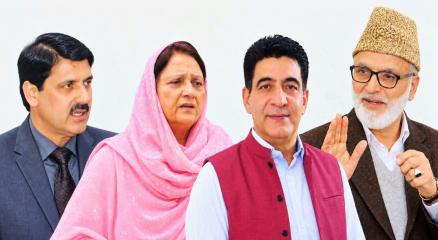
Srinagar, Oct 27: The suspense over the National Conference’s (NC) cabinet reshuffle ended on Tuesday as four legislators of National Congress (NC), Ali Mohammad Sagar, Shamima Firdous, Mir Saifullah and Altaf Ahmad Kaloo, took oath as ministers in the Omar Abdullah-led government at Lok Bhawan in Srinagar. As per the details, J&K Lieutenant Governor Manoj Sinha administered the oath of office and secrecy to the newly inducted ministers at the swearing-in ceremony attended by senior political leaders and officials. The induction will bring a fresh change to the council of ministers even as senior NC leader Mubarak Gul expressed disappointment over being left out of the reshuffle. “I have attended 30 oath-taking ceremonies till now. Every time I was dropped, and today as well, I am being dropped,” Gul told reporters outside Lok Bhawan. Meanwhile, Shamima Firdous expressed happiness over the opportunities given to her by the party and said she would continue to work harder. Mir Saifullah, ahead of his induction, thanked the party leadership and Almighty Allah for the opportunity. “I am really thankful to Dr Farooq Abdullah-led National Conference leadership and Almighty Allah for this opportunity,” he said. As reported earlier, four legislators were expected to join the council of ministers, with Ali Mohammad Sagar and Altaf Ahmad Kaloo among the frontrunners. The induction also comes amid speculation over changes in the existing ministerial lineup. Meanwhile, Shamima Firdous emerged as a surprise inclusion in the cabinet, having not figured prominently among the frontrunners ahead of the reshuffle. Her induction adds a notable turn to the ministerial rejig, as the party finalised its choices for the four vacancies in the Omar Abdullah-led government. (KNO)
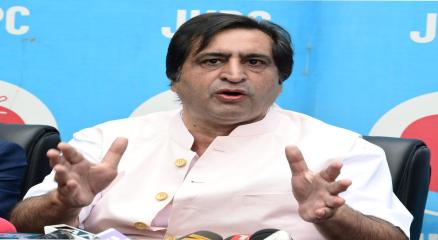
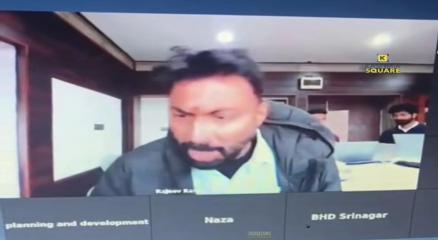
Srinagar, Oct 16: Jammu and Kashmir Peoples Conference president and MLA Handwara Sajad Lone on Friday strongly condemned a video of an IAS officer screaming at a woman KAS officer during a meeting, calling it "much more than workplace bullying." Lone praised the JKAS officer, Beenish, for her courage. "She stood her ground and upheld her dignity," he said. He said the incident should not come as a surprise, since such conduct has become normalised. "Workplace bullying by officers exists," he said, describing a "vicious circle" in which senior officers bully juniors, who in turn bully those beneath them, until the behaviour reaches its "most lethal form" among ordinary citizens. Lone said the real shock was that none of the male officers present in the room, or those attending the video meeting remotely, spoke up for their colleague. He demanded stern action in this case and a permanent institutional mechanism to discourage bullying and intimidation, with legal provisions making it a crime. He said the protection must extend to the public as well. "It should be a crime to shout at, intimidate or bully common masses," he said. Citing another example, Lone accused that a recently retired officer's pension and post-retirement benefits were put on hold by a senior IAS officer over an "utterly flimsy reason." "Nobody will speak up," he said.


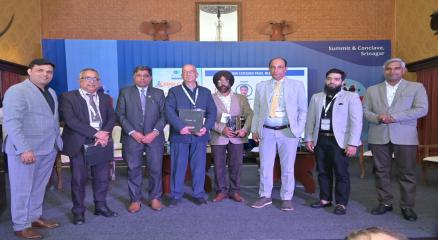
Srinagar, Oct 15: One of India’s leading homegrown multinational logistics companies DTDC Express Limited has launched DTDC Udaan in Kashmir, marking the first chapter of an initiative aimed at helping regional businesses, artisans and MSMEs access wider domestic and international markets. By bringing together its logistics network, digital commerce capabilities and 16,500+ channel partners across India, DTDC aims to make market expansion more accessible, with local points of contact to help businesses navigate the journey from onboarding to reaching new customers. Kashmir has a rich legacy of craftsmanship and enterprise. From Pashmina shawls and GI-tagged saffron to traditional handicrafts, premium dry fruits and willow sports equipment, the region produces goods with distinctive identities and strong market potential. However, taking these products to customers beyond the Valley often requires more than a quality product. Businesses need access to reliable shipping, fulfilment infrastructure, digital sales channels and the ability to manage growing demand across geographies. DTDC Udaan aims to bridge this gap by helping regional businesses move from local opportunity to wider market access. The launch event, held recently in Srinagar, brought together 48 business owners and trade leaders from across Kashmir’s commercial ecosystem. Participants represented diverse sectors, including willow sports equipment manufacturers such as Tramboo Sports and Hangul Sports, alongside businesses specialising in traditional products and regional produce. The session opened with a keynote address by Rajesh Nair, Business Head, North, DTDC, followed by discussions on the opportunities available to local enterprises through DTDC’s integrated logistics and commerce capabilities. Speaking on the launch, Abhishek Chakraborty, CEO, DTDC Express Ltd., said, “Across Bharat, there are businesses creating exceptional products with the potential to reach customers around the world. Kashmir, with its world-renowned Pashmina shawls, GI-tagged saffron, traditional handicrafts and willow sports equipment, is a wonderful example of this. Through DTDC Udaan, we want to help bridge the gap between local enterprise and global opportunity by bringing our logistics network, technology and fulfilment capabilities closer to these businesses. With 16,500+ channel partners as an integral part of our network, we can offer not just connectivity but also local points of contact to guide and handhold businesses as they grow. Kashmir marks the first chapter of DTDC Udaan, and we look forward to extending this initiative to regional business ecosystems across Bharat.” DTDC Udaan brings together multiple capabilities to support businesses at different stages of expansion. DTDC eCommerce provides fulfilment support spanning inventory management, order processing and delivery, while DTDC WorldWyde enables international shipping across more than 220 global destinations. DTDC Raftaar offers faster delivery options in serviceable markets, and eDOT simplifies business onboarding, allowing eligible businesses to start shipping in as little as 10 minutes. Another key component of DTDC Udaan is Kaarigo, DTDC’s e-commerce platform, for authentic Indian products, artisans and regional sellers. The platform offers local makers and MSMEs an avenue to establish an online presence and connect with customers beyond their immediate markets. By bringing digital commerce and logistics closer together, DTDC Udaan aims to make it easier for regional businesses to take their products online, manage orders and build a wider customer base. As a homegrown company with 36 years of experience in logistics, DTDC has built a network connecting businesses and consumers across India and international markets. Through DTDC Udaan, the company aims to extend the reach of this network to more regional entrepreneurs, recognising that business growth should not be limited by location, scale or access to infrastructure. With Kashmir as its first chapter, DTDC Udaan marks the beginning of a wider effort to connect the products, skills and enterprise of Bharat with opportunities across India and the world. This initiative reflects DTDC’s commitment to its philosophy of “Let’s Grow Together” by helping regional businesses access the infrastructure and opportunities they need to grow beyond geographical boundaries.