Says use new surveillance equipment by security forces makes if difficult for terrorists to infiltrate here
Muhammad Adnan
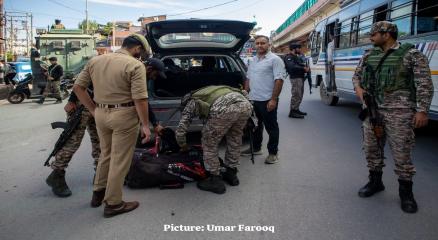
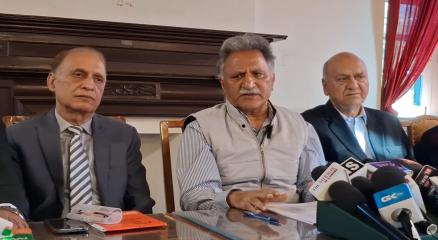
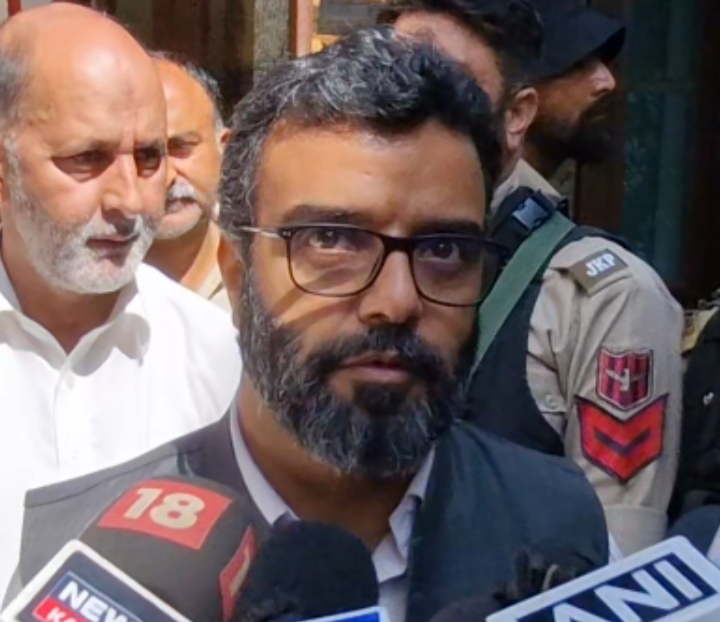
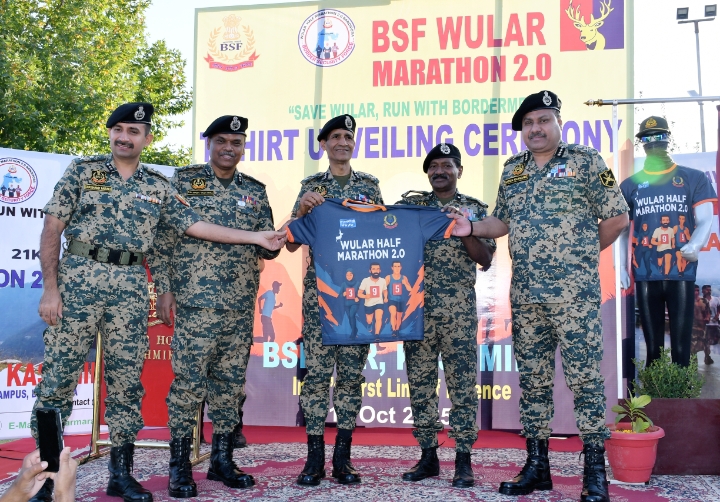
Srinagar, Sept 27: The Inspector General of Border Security Forces (BSF) Kashmir frontier, Ashok Yadav Saturday said that they were dominating the Line of Control (LoC) along with the Indian Army.
Talking to reporters on the sidelines of an event, Ashok Yadav said that this year two infiltration attempts were made by terrorists which were foiled by the security forces.
"We are dominating LoC properly with the Indian Army. This year there were two infiltration attempts which were foiled by the security forces," he said.
He said that with the use of new methodologies and introducing new surveillance equipment, it has become "very difficult" for terrorists to infiltrate to this side of the border.
"They are continuously trying to infiltrate the terrorists before the snowfall starts. There are still two months left. Till November, the chances of infiltration are very high here because they know after that the chances of infiltration will be very low," IG BSF Kashmir frontier said.
He said that Pakistan was continuously trying to infiltrate some people here.
"But BSF along with the Army are alert," he said.
He said that presence of terrorists on the launching pads opposite to Kupwara, Bandipora and Baramulla has been observed who are trying to infiltrate to this side.
"They are always looking for a chance to infiltrate. But our security is tight and sometimes they try to take advantage of weather. So they are continuously trying to infiltrate but we are also ready to thwart theo every attempt," IG BSF Kashmir frontier, Ashok Yadav said.
New Delhi, May 12: A massive protest organised by the National Students' Union of India (NSUI) broke out near the Shastri Bhawan on Tuesday, against the alleged paper leak in NEET-UG this year. The exam was held on May 3, following which allegations of paper leak surfaced, triggering investigations by the Rajasthan Special Operations Group (SOG) and central agencies. Earlier, the National Testing Agency (NTA) announced the cancellation of NEET-UG 2026, and said the examination will be re-conducted on dates to be notified separately. In a statement, the NTA said the decision was taken with the approval of the Government of India in the interest of maintaining transparency and preserving trust in the national examination system.
Srinagar, Feb 12: Jammu and Kashmir recorded over 15.48 lakh traffic violation cases in 2025, with authorities collecting more than Rs 34.17 crore as penalty under the Motor Vehicles Act, the Centre informed Parliament on Thursday. The information was shared in the Lok Sabha in response to a question raised by MP Janardan Singh Sigriwal. According to the official data, 15,48,525 challans were issued across the Union Territory in 2025, while the penalty amount recovered stood at Rs 34,17,36,740. The figures further show that in 2024, a total of 15,44,105 violations were registered with a penalty collection of around Rs 43.40 crore, while in 2023, 12,38,584 challans were issued and Rs 34.56 crore was collected. For the current year, till February 8, 2026, Jammu and Kashmir has recorded 1,63,531 traffic violation cases, with revenue collection of about Rs 2.11 crore. The Ministry of Road Transport and Highways stated that stricter penalties under the Motor Vehicles (Amendment) Act, 2019 are aimed at ensuring better compliance and deterrence. It also said that traffic enforcement falls under the jurisdiction of States and Union Territories. The government has issued a Standard Operating Procedure (SOP) for electronic monitoring and is promoting technology-driven enforcement through Automatic Number Plate Recognition (ANPR) cameras integrated with the VAHAN database. Awareness campaigns under the Sadak Suraksha Abhiyan are also being carried out to improve road safety.
New Delhi, Jan 25: The Dental Council of India (DCI) has directed all universities and dental colleges across the country to strictly ensure a minimum of 80 percent biometric attendance for Post Graduate students before allowing them to appear in examinations. The decision has been taken to curb absenteeism among postgraduate dental students. According to a circular issued by the Dental Council of India-a statutory body under the Ministry of Health and Family Welfare, Government of India, the decision has been taken after multiple complaints were received from dental colleges in Rajasthan, Haryana and Uttar Pradesh regarding non-attendance of PG students. "The matter was examined by the Grievance Sub-Committee of the DCI in its meeting held on November 24, 2025," the circular reads. It reads that after detailed discussion and deliberation, the committee recommended that all universities and dental colleges must ensure compliance with Regulation 18(a)(i) of the DCI Master of Dental Surgery Course Regulations, 2017, which mandates at least 80 per cent attendance. "The recommendation of the Grievance Sub-Committee has been approved by the Executive Committee of the Dental Council of India through circulation and has now been formally communicated for information and necessary action," the circular reads. As per the circular, all the universities and dental colleges have been directed to ensure minimum 80 per cent biometric attendance of all PG students before permitting them to appear in examinations. The order, issued by Deputy Secretary Dental Council of India Mukesh Kumar, is expected to be implemented with immediate effect across the country.
Srinagar, Jan 8: Contractual faculty members working in government degree colleges of Jammu and Kashmir Higher Education Department (HED) have expressed strong resentment over what they term as a glaring disparity in salaries, demanding revision of their pay in line with University Grants Commission (UGC) norms and regularisation of their services. The faculty, many of whom hold PhDs and are qualified through NET, SET and JRF, said they have been denied UGC-recommended pay scales despite discharging academic responsibilities equivalent to their regular counterparts. “Hundreds of highly qualified scholars have been pushed into silent suffering. For years, we have been assured that our pay revision is under consideration, but nothing has materialised so far,” said Dr Ishfaq Gowhar, a contractual faculty member. Earlier, Director Colleges J&K had acknowledged the legitimacy of the faculty’s demand, stating that while the issue was genuine, its implementation involved significant financial implications due to the large number of contractual appointments. “We are aware that they deserve salary enhancement, but the number of contractual faculty is huge and it has financial implications,” he earlier said. Dr Gowhar pointed out that contractual lecturers, who form the backbone of the higher education system, continue to work on a fixed monthly honorarium of Rs 28,000, which has remained unchanged for nearly a decade. “The irony is that a Class IV employee with a Class 10 qualification draws a salary exceeding Rs 50,000, while doctorate-holding teachers engaged in teaching, mentoring and academic research are paid a fraction of that,” he said. He added that institutions such as SKUAST-K, University of Kashmir and Islamic University of Science and Technology (IUST) have implemented revised UGC pay scales, but the Higher Education Department has failed to extend similar treatment to its contractual faculty. Dr Gowhar said the demand for “equal work, equal pay” gets prominently featured in election campaigns, raising hopes among contractual teachers. “Promises were made and slogans echoed during elections, but once the process ended, our voices were reduced to silence. Even meeting officials now feels impossible,” he said. He said contractual faculty were not seeking privileges but dignity, fairness and recognition for their service. The faculty appealed to the Jammu and Kashmir Lieutenant Governor Manoj Sinha, Chief Minister Omar Abdullah and the Education Minister to intervene and take concrete steps towards addressing their long-pending demands. “This issue is not merely about salaries. It is about survival, justice and dignity in the classrooms of Jammu and Kashmir,” he said.
Srinagar, March 6: Around 17 candidates from Jammu and Kashmir have qualified the Civil Services Examination (CSE)-2025, the result for which was declared by the Union Public Service Commission (UPSC) on Friday. The commission recommended a total of 958 candidates for appointment to the Indian Administrative Service (IAS), Indian Foreign Service (IFS), Indian Police Service (IPS) and various central services. Anuj Agnihotri, an MBBS graduate, has topped the civil services examination 2025, while Rajeshwari Suve M and Akansh Dhull have got the second and third ranks respectively. According to the official list released by the UPSC the 17 candidates from J&K who have figured in the final merit list include Suvan Sharma (Rank 148), Sugandha Gupta (207), Towseef Ganie (Rank 254), Ritika (Rank 456), Sooyash Shivam (Rank 572), Muneeb Parrah (Rank 581), Ghulam Din (Rank 683), Dwarka Gaadhi (Rank 721), Akash (Rank 747), Koh E Safa (Rank 763), Yasaar (Rank 811), Abhishek (Rank 820), Pankaj (Rank 856), Mohammad Ajaz (Rank 869), Azhar (Rank 886), Sarfraz (Rank 936), and Irfan (Rank 957). The results were declared after conducting the written examination in August 2025 followed by the personality tests (interviews) conducted between December 2025 and February 2026. As per the result notification issue by the UPSC, a total of 958 candidates have been recommended for appointment against 1087 vacancies reported by the government for the examination cycle. These include 180 vacancies in the IAS, 55 in the IFS, 150 in the IPS, 507 in Central Services Group A and 195 in Group B services. Of the total recommended candidates, 317 are from the general category, 104 from the economically weaker sections, 306 from other backward classes, 158 from scheduled castes and 73 from scheduled tribes. A consolidated reserve list of 258 candidates has also been published in accordance with the rules. The claims of recommended candidates regarding reservation categories will be subject to verification by the concerned authorities. The UPSC has stated that the candidature of 348 recommended candidates has been kept provisional, while the result of the two candidates has been kept withheld. The CSE is conducted annually in three stages- preliminary, Mains and interview by the UPSC to select officers of the Indian Administrative Service (IAS), Indian Foreign Service (IFS) and Indian Police Service (IPS) among others. The civil services (preliminary) examination 2025 was conducted on May 25 of 2025. A total of 937876 candidates applied for this examination, out of which 5,76,793 actually appeared in the test. A total of 14,161 candidates qualified for appearance in the written (Main) examination which was held in August, 2025. Of these, 2736 candidates had qualified for the personality test (interview) of the examination. Prime Minister Narendra Modi congratulated the candidates who qualified the UPSC exam. "Congratulations to all those who have successfully cleared the Civil Services Examination, 2025. Their dedication, perseverance and hard work have led to this significant milestone. Wishing them the very best as they embark on a journey of serving the nation and fulfilling the aspirations of the people," PM Modi wrote on his official X handle. "To those who may not have secured the desired outcome in the Civil Services Examination, I understand that such moments can be difficult. However, this is only one step in a larger journey. Many opportunities lie ahead, both in future examinations and in the many avenues through which you can contribute to our nation. My best wishes for the road ahead," his post on X reads. UPSC chairman Ajay Kumar announced the declaration of the result and congratulated the candidates who qualified the exam. "Congrats to all successful candidates as you begin a career of service to the nation. For those who did not make it-the learning from this journey will guide you in the paths ahead," UPSC Chairman wrote in a post on X. Among the 17 candidates from J&K who qualified UPSC exam inlcude a visually impaired candidate Irfan Ahmad Lone, a resident of Manzpora in the Naidkhai area of Bandipora.



Srinagar, Oct 10: Chairman Jammu & Kashmir Pensioners United Front (JKPUF) Abdul Qayoom Wani Saturday organised a massive protest demonstration at floriculture park near, Lal Chowk, Srinagar, to press for the pending demands of pensioners. The protest was attended by a large gathering of pensioners who unanimously adopted a twelve-point resolution demanding immediate intervention by the Central and State Governments on issues concerning pensioners, senior citizens, employees and the working class. The gathering conveyed a clear and unequivocal message to the governments that the patience of crores of pensioners and senior citizens must not be tested any further. The pensioners demanded that the government honour their contribution to the nation by ensuring dignity, social security and equitable treatment after retirement. The resolution called for immediate implementation of the 8th Central pay commission for pensioners, as has been done under previous Pay Commissions. It also demanded revocation of the present Terms of Reference and the Validation Act, 2025, which, according to the JKPUF, deny pensioners their rightful consideration under the new pay commission. Among the major demands endorsed by the gathering were implementation of the 8th CPC for all pensioners of the country, stopping recovery of commuted pension after ten years, in accordance with judgments of the Supreme Court and other courts. The association also demanded enhancement of the medical allowance to Rs 3,000 per month for every pensioner and removal of disparity between Jammu & Kashmir and Ladakh. JKPUF also demanded extension of the central goverment health scheme to all pensioners, irrespective of their date of retirement, and withdrawal of the restriction applicable to those retiring after October 10, 2019. "The government should announce enhancement of old-age and widow pension from Rs 1,000 to ₹5,000 per month," Wani in a statement said. He also demanded immediate withdrawal of the New Pension Scheme (NPS) and restoration of the Old Pension Scheme (OPS). JKPUF also demanded regularisation of eligible in-charge officers and other employees in the education and other departments as well. "Government should also speed up regularisation of daily wagers, casual labourers and other temporary employees and ensure implementation of minimum wages for vulnerable categories including contengent paid workers of education department, Anganwadi workers, ASHA workers, cooks, SPOs, Aaya workers and other similarly placed employees," Wani said. JKPUF Chairman asked the government to ensure job security and equal pay for equal work for contractual employees working under Centrally Sponsored Schemes (CSS) besides pitching for effective implementation of the Senior Citizens Act, 2017, including provision of Senior Citizen Cards through a single-window mechanism and dedicated counters at government offices, hospitals, airports and Civil Secretariats. "Government should release DA which was stopped in covid period," the statement reads. Wani demanded grant of additional pension at the rate of five percent each after attaing the age of 65years, 70 years and 80 years instead of 20 percent at the age of 80 years. "Pensioners cannot be ignored indefinitely. The Central and State Governments must come clear on the demands of pensioners and take immediate steps to resolve the issues as well," Wani said while addressing the protesting pensioners here. He said pensioners devoted the best years of their lives to public service and nation-building and therefore deserved respect, dignity, healthcare and financial security, rather than repeated delays and assurances. He criticised public representatives for "remaining vocal about their own privileges and protocol" while failing to adequately address the issues of employees, workers and pensioners despite repeated representations. Wani particularly appealed to Prime Minister, Finance Minister and Home Minister to personally intervene in the matter and respond to the concerns of crores of pensioners and senior citizens across the country. He warned that continued neglect of these legitimate demands would compel pensioners to intensify their peaceful and democratic struggle at the national level. Unconditional Support to National Pensioners’ Programmes The gathering unanimously resolved to extend unconditional support to national-level protest programmes being organised in favour of pensioners’ legitimate rights. Wani also informed the gathering that the Core Committee of the All India State Pensioners Federation is scheduled to meet in Delhi next month to deliberate upon and finalise the future course of action. “This Protest Is a Wake-Up Call” Calling the Srinagar demonstration a wake-up call to pensioners across Jammu & Kashmir and the country, Wani urged pensioners who have remained away from organised activities to come forward and join the movement. He appealed to pensioners to remain united, saying that only a collective and sustained democratic movement could compel the authorities to take their concerns seriously. “This is the right time to unite and act unitedly. If we remain silent today, it may be too late tomorrow. Pensioners must stand together to protect their dignity, rights and social security and to give a befitting democratic response to anti-pensioner policies,” Wani said. The gathering concluded with a unanimous pledge that the pensioners’ movement would continue through peaceful, constitutional and democratic means until the genuine demands incorporated in the resolution are addressed.

Srinagar, Oct 09: In a major administrative shake-up, the Jammu and Kashmir Government on Friday ordered the transfer and posting of 100 senior police officers across the Union Territory with immediate effect. According to an order issued by the Home Department, the reshuffle includes officers from both the Indian Police Service (IPS) and Jammu and Kashmir Police Service (JKPS) cadres. Senior IPS officer Danesh Rana, who was awaiting posting, has been appointed Managing Director of the J&K Police Housing Corporation, relieving S.J.M. Gillani of the additional charge. Garib Dass, Director of the Sher-i-Kashmir Police Academy (SKPA), Udhampur, has been posted as ADG Homeguards, Civil Defence and SDRF, while Dr Mohd Haseeb Mughal has been appointed Director of SKPA Udhampur. Abdul Jabbar has been posted as IG Armed Police Jammu, while Shahid Mehraj Rather has been appointed IG Technical Services J&K, retaining the additional charge of Director Police Telecommunications. Rayees Mohammad Bhat has been transferred from DIG CID Kashmir to DIG CID Headquarters J&K. At the range and directorate levels, Shiv Kumar Sharma has been posted as DIG Railways, while Swarn Singh Kotwal has been appointed DIG Udhampur-Reasi Range. Zahid Naseem Manhas has been posted as DIG Armed Police Jammu, and Hareesh H.P. has been appointed Director of the Special Security Force (SSF). The government has also effected several changes in district police commands. Sudhanshu Dhama has been appointed SSP Kupwara, replacing Syed Al Tahir Gilani, who has been transferred as SSP PCR Kashmir. Harshal Rajesh Mahajan has been posted as SSP Ganderbal, Neha Jain as SSP Sopore, Anna Sinha as SSP Ramban and Vaibhav Meena as SSP Poonch. Tahir Saleem Khan has been appointed SSP Bandipora, Sajad Khaliq Bhat SSP Handwara and Irshad Hussain Rather SSP Awantipora. In traffic policing, Bisma Qazi has been appointed SSP Traffic City Srinagar, replacing Aijaz Ahmad Bhat, who has been posted as Commandant of the 23rd JKAP IR Battalion. K.M. Priyanka has been appointed SSP Traffic National Highway, while Master Popsy has been posted as SSP Rural Traffic Jammu. Anand Kumar Mishra has been posted as head of the Anti-Narcotics Task Force (ANTF) J&K. The order also entails the transfer and posting of several commandants across Armed Police and India Reserve (IR) battalions, besides changes in intelligence wings, training institutions and other key police formations. The sweeping reshuffle is aimed at reassigning responsibilities across various operational, administrative and specialised wings of the J&K Police, with the transfers taking effect immediately. (KNO)
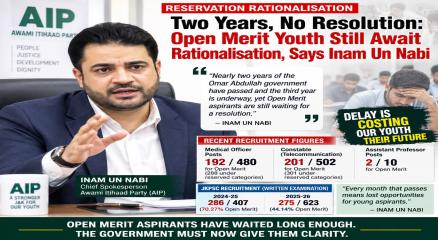
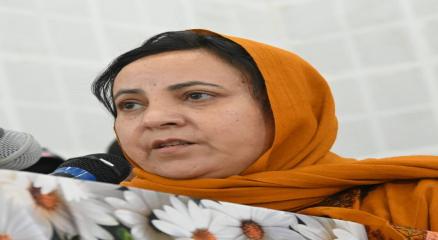
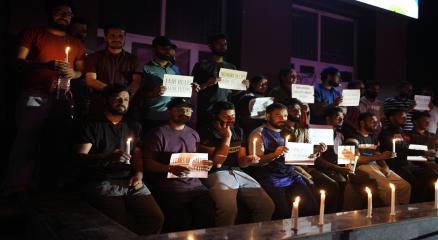
Srinagar, Sep 4: Minister for Health and Medical Education (H&ME) Sakina Itoo Friday termed the demand of protesting MBBS interns for an increase in stipend as “genuine” and urged them to call off their strike. She said that the matter was already under process with the Finance Department. Itoo said the government was working to address the interns’ demand and maintained that there was no need for them to continue with the agitation. “Their demand is genuine. We are helping you in this. You don't need to go on strike,” she said, referring to her interaction with the protesting interns. However, the minister came down heavily on political leaders and others who have extended support to the protesting interns, accusing them of using the issue for political purposes. “I don't want politics,” Itoo said. She objected to what she described as attempts to turn the interns’ agitation into a political issue through "candlelight demonstrations and public expressions of sympathy." She questioned the record of those now supporting the interns, asking what they had done for the stipend of interns when they were in power. “When they had the power, tell me what they have done for these people. If they have done something, they should bring it on paper,” she said. Itoo alleged that some of those now expressing solidarity had failed to listen to the interns’ concerns while in office and were now making “hollow claims”. She said the government was not doing the interns any favour by considering their demand, stressing that their demand was legitimate and deserved to be addressed. “We are not doing them a favour. Their demand is genuine,” she said. She reiterated that “false sympathy” was being expressed by political actors. Her remarks come amid the ongoing protest by MBBS interns seeking enhancement of their stipend The issue has drawn support from political leaders and social activists.