Says our collective responsibility to deliver justice, legal-aid to defence personnel, tribal communities
KS News Desk
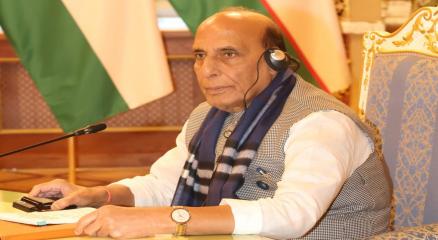
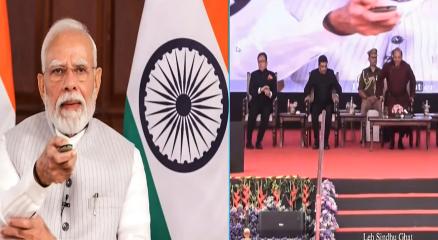
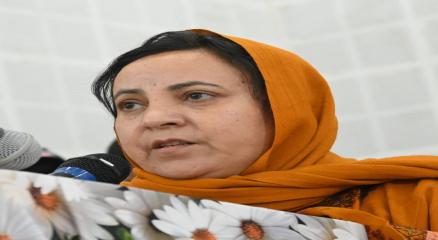
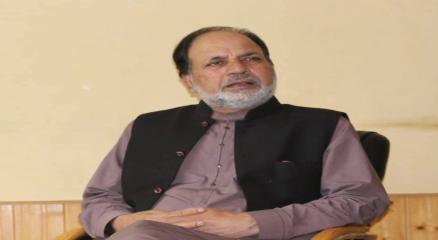
Srinagar, Jul 26: Chief Minister Omar Abdullah Saturday delivered the keynote address at the North Zone Regional Conference of National Legal Services Authority (NALSA) on Reaffirming the Constitutional Vision of Justice for Defence Personnel & Tribalsheld at SKICC Srinagar.
This constitutionally significant conference focuses on advancing the rights and entitlements of defence personnel and tribal communitiestwo segments of society that, in the Chief Ministers words, one defends the Constitution with unflinching resolve and the other has long waited for its full embrace.
Addressing the audience at SKICC, CM said that this Regional Conference was of great significance to deliberate and collectively reflect on the foundational promise of our Republic for realization of justicesocial, economic, and political which is enshrined in the preamble and concretised in Article 39A of our Constitution, which enjoins the State to ensure that access to justice is not curtailed by economic or other disabilities.
Paying tribute to the service and sacrifices of defence personnel, many of whom hail from Jammu and Kashmir, the Chief Minister emphasized the need for swift, compassionate legal redressal for those serving in inhospitable terrains under difficult circumstances. He highlighted the systemic legal barriers faced by defence personnel in matters such as pension disputes and service-related grievances owing to their geographic remoteness, and the distinct constraints of military life.
CM commended the J&K State Legal Services Authority for its initiative in amending its legal aid rules to expressly include serving and retired defence personnel. CM said that establishment of dedicated legal aid clinics in cantonments and in districts with significant ex-servicemen populations should be prioritised. Equally important is the need to ensure that families of defence personnelparticularly widows, aged parents, and dependent childrenreceive empathetic, expert, and timely legal support, CM said, adding that para-legal volunteers trained specifically in military legal issues should be deployed in areas with high defence populations. Simultaneously, technology must be harnessed to democratise accessthrough mobile apps, virtual consultation platforms, and user-friendly legal information portals. Justice, in our times, must not merely be availableit must be accessible.
On tribal communities, CM said that they were custodians of rich cultural and ecological heritage. Jammu & Kashmir is home to several Scheduled Tribes, including Gujjars, Bakarwals, Pahadis, Gaddis and Sippis, who have preserved ancient traditions while braving difficult terrains.
Our Government has correspondingly augmented its developmental efforts. This year, the capital expenditure for tribal welfare has been raised to ?98 crores. Six Eklavya Model Residential Schools have been made operational, 222 smart classrooms have been established in tribal-dominated schools, and healthcare services have been expanded through mobile medical units. The Tribal Research Institute has also been commissioned. These interventions reflect our commitment to combine dignity with development. Yet, development alone cannot substitute justice. Structural barriers to legal literacy, representation, and redressal continue to persist among tribal populationsowing to linguistic, cultural, and geographic factors.
CM noted that the Legal Services Authority has commendably operationalised 255 legal aid clinics, including in tribal villages and correctional institutions, supported by 527 panel lawyers and 561 para-legal volunteers.
CM expressed the hope that para-legal volunteers are trained from within tribal communities themselves. This will ensure that legal support is rendered in familiar idioms, dialects, and cultural frameworks. We must also expand mobile legal aid vans, promote the use of Tele-Law platforms, and facilitate virtual hearings. Justice, if it is to be meaningful, must reach every remote hamletfrom Poonch to Kishtwar, from Rajouri to Karnah, he said.
Chief Minister Omar Abdullah also spoke about the sensitive balance that must be maintained between national security and the rights of tribal citizens. Many tribal regions are located in border belts or areas of heightened security oversight. However, law enforcement must not translate into legal disenfranchisement. Mechanisms for lodging complaints, accessing courts, and redressing grievances must be made transparent, timely, and responsive.
CM said that Alternate Dispute Resolution (ADR) mechanisms also offer immense promise. Lok Adalats, mediation centres, and village-level panchayat forums, when duly sensitised, can provide swift, culturally respectful adjudicationespecially in matters related to land rights, service entitlements, and local grievances. These models need to be institutionalised and resourced accordingly.
CM stated that capacity-building is essential for Judicial officers, legal aid lawyers, and field functionaries who must be trained in tribal customary law, military jurisprudence, and the ethics of constitutional service. Only through sustained cross-learning can our justice system be truly responsive to the diversity it is meant to serve.
Highlighting the Governments vision, the Chief Minister informed that his Government has sanctioned establishment of a dedicated Law University in Jammu and Kashmir with an initial allocation of ?50 crore. This institution will focus on specialized legal education and research in fields such as tribal law, military justice, constitutional studies, and environmental law.
Quoting Mahatma Gandhi, the Chief Minister concluded, A nations greatness is measured by how it treats its weakest members. He reaffirmed the Governments unwavering support to Legal Services Authorities and their partners in delivering justice to the most marginalised
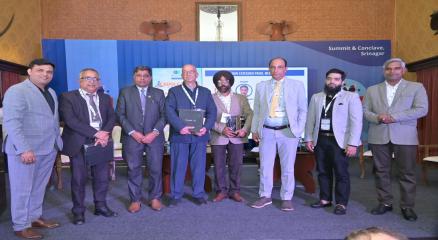
The conference was also addressed by Justice Surya Kant Judge of the Supreme Court of India and Executive Chairman NALSA; Arjun Ram Meghwal, Minister of State Ministry of Law and Justice Government of India; Manoj Sinha Lieutenant Governor, Jammu and Kashmir; Justice Arun Palli, Chief Justice of High Court of Jammu, Kashmir and Ladakh; Justice Sanjeev Kumar Executive Chairman J&K Legal Services Authority; Justice Sindhu Sharma Executive Chairperson, Ladakh Legal Services Authority; Lieutenant General Pratik Sharma, General Officer Commanding-in-Chief, Northern Command.
The conference was attended by the members of the Judiciary, Mian Altaf Member of Parliament, members of the Armed Forces, representatives of the Tribal Communities, Senior Officers of the Government of Jammu & Kashmir and other States, and members of the Legal Fraternity.
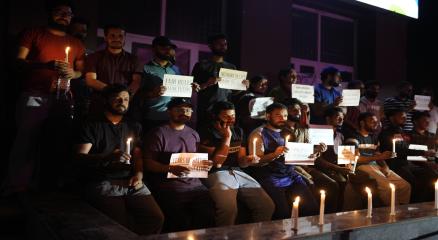
New Delhi, May 12: A massive protest organised by the National Students' Union of India (NSUI) broke out near the Shastri Bhawan on Tuesday, against the alleged paper leak in NEET-UG this year. The exam was held on May 3, following which allegations of paper leak surfaced, triggering investigations by the Rajasthan Special Operations Group (SOG) and central agencies. Earlier, the National Testing Agency (NTA) announced the cancellation of NEET-UG 2026, and said the examination will be re-conducted on dates to be notified separately. In a statement, the NTA said the decision was taken with the approval of the Government of India in the interest of maintaining transparency and preserving trust in the national examination system.
Srinagar, Feb 12: Jammu and Kashmir recorded over 15.48 lakh traffic violation cases in 2025, with authorities collecting more than Rs 34.17 crore as penalty under the Motor Vehicles Act, the Centre informed Parliament on Thursday. The information was shared in the Lok Sabha in response to a question raised by MP Janardan Singh Sigriwal. According to the official data, 15,48,525 challans were issued across the Union Territory in 2025, while the penalty amount recovered stood at Rs 34,17,36,740. The figures further show that in 2024, a total of 15,44,105 violations were registered with a penalty collection of around Rs 43.40 crore, while in 2023, 12,38,584 challans were issued and Rs 34.56 crore was collected. For the current year, till February 8, 2026, Jammu and Kashmir has recorded 1,63,531 traffic violation cases, with revenue collection of about Rs 2.11 crore. The Ministry of Road Transport and Highways stated that stricter penalties under the Motor Vehicles (Amendment) Act, 2019 are aimed at ensuring better compliance and deterrence. It also said that traffic enforcement falls under the jurisdiction of States and Union Territories. The government has issued a Standard Operating Procedure (SOP) for electronic monitoring and is promoting technology-driven enforcement through Automatic Number Plate Recognition (ANPR) cameras integrated with the VAHAN database. Awareness campaigns under the Sadak Suraksha Abhiyan are also being carried out to improve road safety.
New Delhi, Jan 25: The Dental Council of India (DCI) has directed all universities and dental colleges across the country to strictly ensure a minimum of 80 percent biometric attendance for Post Graduate students before allowing them to appear in examinations. The decision has been taken to curb absenteeism among postgraduate dental students. According to a circular issued by the Dental Council of India-a statutory body under the Ministry of Health and Family Welfare, Government of India, the decision has been taken after multiple complaints were received from dental colleges in Rajasthan, Haryana and Uttar Pradesh regarding non-attendance of PG students. "The matter was examined by the Grievance Sub-Committee of the DCI in its meeting held on November 24, 2025," the circular reads. It reads that after detailed discussion and deliberation, the committee recommended that all universities and dental colleges must ensure compliance with Regulation 18(a)(i) of the DCI Master of Dental Surgery Course Regulations, 2017, which mandates at least 80 per cent attendance. "The recommendation of the Grievance Sub-Committee has been approved by the Executive Committee of the Dental Council of India through circulation and has now been formally communicated for information and necessary action," the circular reads. As per the circular, all the universities and dental colleges have been directed to ensure minimum 80 per cent biometric attendance of all PG students before permitting them to appear in examinations. The order, issued by Deputy Secretary Dental Council of India Mukesh Kumar, is expected to be implemented with immediate effect across the country.
Srinagar, Jan 8: Contractual faculty members working in government degree colleges of Jammu and Kashmir Higher Education Department (HED) have expressed strong resentment over what they term as a glaring disparity in salaries, demanding revision of their pay in line with University Grants Commission (UGC) norms and regularisation of their services. The faculty, many of whom hold PhDs and are qualified through NET, SET and JRF, said they have been denied UGC-recommended pay scales despite discharging academic responsibilities equivalent to their regular counterparts. “Hundreds of highly qualified scholars have been pushed into silent suffering. For years, we have been assured that our pay revision is under consideration, but nothing has materialised so far,” said Dr Ishfaq Gowhar, a contractual faculty member. Earlier, Director Colleges J&K had acknowledged the legitimacy of the faculty’s demand, stating that while the issue was genuine, its implementation involved significant financial implications due to the large number of contractual appointments. “We are aware that they deserve salary enhancement, but the number of contractual faculty is huge and it has financial implications,” he earlier said. Dr Gowhar pointed out that contractual lecturers, who form the backbone of the higher education system, continue to work on a fixed monthly honorarium of Rs 28,000, which has remained unchanged for nearly a decade. “The irony is that a Class IV employee with a Class 10 qualification draws a salary exceeding Rs 50,000, while doctorate-holding teachers engaged in teaching, mentoring and academic research are paid a fraction of that,” he said. He added that institutions such as SKUAST-K, University of Kashmir and Islamic University of Science and Technology (IUST) have implemented revised UGC pay scales, but the Higher Education Department has failed to extend similar treatment to its contractual faculty. Dr Gowhar said the demand for “equal work, equal pay” gets prominently featured in election campaigns, raising hopes among contractual teachers. “Promises were made and slogans echoed during elections, but once the process ended, our voices were reduced to silence. Even meeting officials now feels impossible,” he said. He said contractual faculty were not seeking privileges but dignity, fairness and recognition for their service. The faculty appealed to the Jammu and Kashmir Lieutenant Governor Manoj Sinha, Chief Minister Omar Abdullah and the Education Minister to intervene and take concrete steps towards addressing their long-pending demands. “This issue is not merely about salaries. It is about survival, justice and dignity in the classrooms of Jammu and Kashmir,” he said.
Srinagar, March 6: Around 17 candidates from Jammu and Kashmir have qualified the Civil Services Examination (CSE)-2025, the result for which was declared by the Union Public Service Commission (UPSC) on Friday. The commission recommended a total of 958 candidates for appointment to the Indian Administrative Service (IAS), Indian Foreign Service (IFS), Indian Police Service (IPS) and various central services. Anuj Agnihotri, an MBBS graduate, has topped the civil services examination 2025, while Rajeshwari Suve M and Akansh Dhull have got the second and third ranks respectively. According to the official list released by the UPSC the 17 candidates from J&K who have figured in the final merit list include Suvan Sharma (Rank 148), Sugandha Gupta (207), Towseef Ganie (Rank 254), Ritika (Rank 456), Sooyash Shivam (Rank 572), Muneeb Parrah (Rank 581), Ghulam Din (Rank 683), Dwarka Gaadhi (Rank 721), Akash (Rank 747), Koh E Safa (Rank 763), Yasaar (Rank 811), Abhishek (Rank 820), Pankaj (Rank 856), Mohammad Ajaz (Rank 869), Azhar (Rank 886), Sarfraz (Rank 936), and Irfan (Rank 957). The results were declared after conducting the written examination in August 2025 followed by the personality tests (interviews) conducted between December 2025 and February 2026. As per the result notification issue by the UPSC, a total of 958 candidates have been recommended for appointment against 1087 vacancies reported by the government for the examination cycle. These include 180 vacancies in the IAS, 55 in the IFS, 150 in the IPS, 507 in Central Services Group A and 195 in Group B services. Of the total recommended candidates, 317 are from the general category, 104 from the economically weaker sections, 306 from other backward classes, 158 from scheduled castes and 73 from scheduled tribes. A consolidated reserve list of 258 candidates has also been published in accordance with the rules. The claims of recommended candidates regarding reservation categories will be subject to verification by the concerned authorities. The UPSC has stated that the candidature of 348 recommended candidates has been kept provisional, while the result of the two candidates has been kept withheld. The CSE is conducted annually in three stages- preliminary, Mains and interview by the UPSC to select officers of the Indian Administrative Service (IAS), Indian Foreign Service (IFS) and Indian Police Service (IPS) among others. The civil services (preliminary) examination 2025 was conducted on May 25 of 2025. A total of 937876 candidates applied for this examination, out of which 5,76,793 actually appeared in the test. A total of 14,161 candidates qualified for appearance in the written (Main) examination which was held in August, 2025. Of these, 2736 candidates had qualified for the personality test (interview) of the examination. Prime Minister Narendra Modi congratulated the candidates who qualified the UPSC exam. "Congratulations to all those who have successfully cleared the Civil Services Examination, 2025. Their dedication, perseverance and hard work have led to this significant milestone. Wishing them the very best as they embark on a journey of serving the nation and fulfilling the aspirations of the people," PM Modi wrote on his official X handle. "To those who may not have secured the desired outcome in the Civil Services Examination, I understand that such moments can be difficult. However, this is only one step in a larger journey. Many opportunities lie ahead, both in future examinations and in the many avenues through which you can contribute to our nation. My best wishes for the road ahead," his post on X reads. UPSC chairman Ajay Kumar announced the declaration of the result and congratulated the candidates who qualified the exam. "Congrats to all successful candidates as you begin a career of service to the nation. For those who did not make it-the learning from this journey will guide you in the paths ahead," UPSC Chairman wrote in a post on X. Among the 17 candidates from J&K who qualified UPSC exam inlcude a visually impaired candidate Irfan Ahmad Lone, a resident of Manzpora in the Naidkhai area of Bandipora.


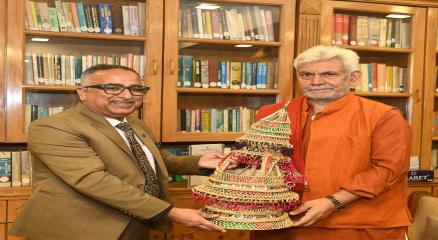
Srinagar, Nov 02: President Private Schools Association Jammu & Kashmir (PSAJK) Dr Nazrul Islam Baba called on J&K Lieutenant Governor of Jammu & Kashmir Manoj Sinha, and briefed him about the wide range of educational, environmental, social and community-oriented initiatives being undertaken by the Association across the Union Territory. During the interaction, Dr. Baba Nazrul Islam highlighted the indispensable contribution of private educational institutions in shaping the educational landscape of Jammu & Kashmir. He observed that schools across the UT, irrespective of their management structures, have consistently served as pillars of peace, social harmony, stability and nation-building. In this larger educational journey, private schools have played a particularly significant role in expanding access to education, raising academic standards, promoting competitive excellence and nurturing responsible citizens. He emphasised that private schools were not merely institutions imparting classroom education but are important stakeholders in social transformation, community development and the creation of an enlightened society. "The contribution of private schools extends beyond academics to character building, value-based education, national integration, leadership development and the promotion of civic responsibility among young learners," he said. Highlighting PSAJK's Green Schools Mission, Dr. Baba Nazrul Islam briefed the J&K LG about the association's commitment to developing environmentally responsible educational campuses across Jammu & Kashmir. He highlighted initiatives such as plantation drives, composting, waste management, biodiversity conservation and the promotion of sustainable practices within school campuses. He also reiterated the vision of transforming schools into centres of environmental awareness, where students become active ambassadors of ecological conservation. The President also apprised the J&K LG of PSAJK's Nasha Mukt Campaign, an important social intervention aimed at creating awareness among students, parents, teachers and communities about the devastating consequences of substance abuse. He emphasised that educational institutions have a moral and social responsibility to contribute towards building a drug-free society. "PSAJK intends to strengthen awareness programmes, student engagement, counselling initiatives and collaborative interventions with government departments and civil society organisations to protect the younger generation from the menace of drugs," he said. Dr. Baba Nazrul Islam further conveyed the willingness of private schools across J&K to emerge as committed knowledge partners in the educational ecosystem of the UT. He stressed that the transformation envisioned under NEP 2020 requires meaningful collaboration between government, private educational institutions, academic bodies, civil society and other stakeholders. He underlined that private schools possess considerable institutional experience, infrastructure, human resources and grassroots outreach that can be constructively leveraged for improving learning outcomes, promoting innovation, strengthening foundational literacy and numeracy, encouraging scientific temper and advancing holistic education. He also emphasised the need to recognise the contribution of thousands of educators, school founders, teachers and educational institution builders who, often despite considerable financial and infrastructural challenges, have dedicated their lives to expanding educational opportunities across Jammu & Kashmir. "The contribution of private schools deserves institutional recognition and encouragement," he added. During the interaction, Dr. Baba Nazrul Islam extended an invitation to the Lieutenant Governor to grace PSAJK's forthcoming felicitation programme dedicated to the Nation Builders of the Union Territory of Jammu & Kashmir. The programme is envisaged as a significant occasion to acknowledge and honour distinguished educators, school founders, educationists and individuals whose lifelong contributions have strengthened the educational and social fabric of the UT. The Lieutenant Governor appreciated the interaction and assured Dr. Baba Nazrul Islam that he would explore the possibility of being present at the felicitation programme. The assurance was received with gratitude by the President PSAJK, who observed that the presence of the LG would provide immense encouragement and recognition to the educational fraternity and those who have devoted their lives to nation-building through education. Dr. Baba Nazrul Islam reiterated that PSAJK remains committed to constructive engagement with the UT administration and all relevant stakeholders. He emphasised that the Association envisions a collaborative educational environment in which every school, irrespective of its management, contributes meaningfully towards peace, prosperity, innovation, environmental sustainability and the larger developmental aspirations of Jammu & Kashmir. Nazrul Baba reaffirmed that PSAJK stands committed to taking forward its mission of making schools centres of knowledge, character, social responsibility and positive transformation. “Private Schools are not just providers of education; they are partners in peace, pillars of social transformation and indispensable stakeholders in nation-building," he added.

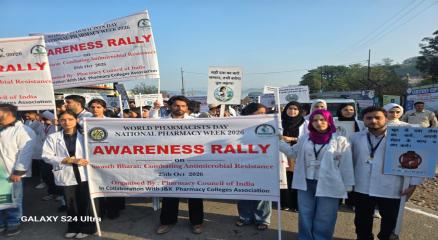
Jammu, Oct 25: The Pharmacy Council of India (PCI), New Delhi, in association with the Jammu and Kashmir Pharmacy Colleges Association, organised a programme to mark World Pharmacists Day and National Pharmacy Week 2026 on 25 October at SVNS Educational Charitable Trust, Sunderbani, District Rajouri, Jammu and Kashmir. The programme was conducted under the theme “Swasth Bharat: Combating Antimicrobial Resistance”, highlighting the importance of responsible antibiotic use and the role of pharmacists in strengthening public health. The programme brought together pharmacy educators, students, institutional representatives and members of the pharmacy fraternity to discuss the development of pharmacy education and the need to strengthen awareness about antimicrobial resistance (AMR). An AMR awareness rally was organised from Sunderbani Chowk to SVNS Charitable Trust to encourage responsible medicine use and educate the public about the risks associated with the misuse and overuse of antibiotics. Dr. Montu Kumar M. Patel, President of the Pharmacy Council of India, emphasised the importance of spreading awareness about antibiotics and antimicrobial resistance. He highlighted the need to promote the rational use of medicines and strengthen the role of pharmacists in educating communities about the dangers of taking antibiotics without appropriate medical advice. Discussions also focused on exploring opportunities for introducing additional pharmacy courses in Jammu and Kashmir to expand educational opportunities and support the professional development of students. Sushil Sudan, Central Council Member (Jammu and Kashmir), PCI, highlighted the need for reforms in pharmacy colleges across the Union Territory. Discussions centred on improving pharmacy education, addressing institutional challenges and strengthening the academic framework to support quality education and professional standards. The need to discuss and clarify matters concerning the examining authority for pharmacy institutions in Jammu and Kashmir was also highlighted as an important aspect of strengthening the education system. The programme featured an inaugural function, panel discussion, expert talks, student presentations, a poster presentation and a pharmacy quiz competition, providing a platform for knowledge-sharing and student engagement. Through this initiative, the Pharmacy Council of India reaffirmed the importance of quality pharmacy education, responsible antibiotic use and public awareness in building a healthier India. The programme aimed to encourage collaboration among pharmacy institutions and stakeholders to strengthen pharmacy education and promote the responsible use of medicines across Jammu and Kashmir.
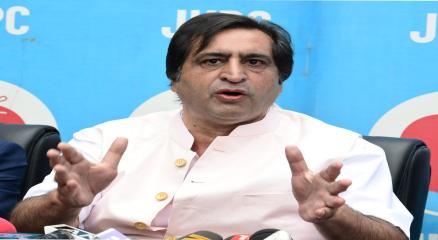
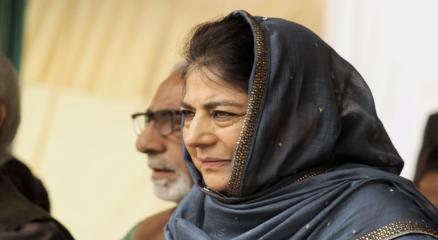
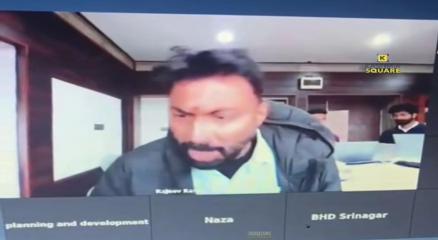
Srinagar, Oct 16: Chief Minister Omar Abdullah has taken serious note of the alleged verbal abuse of a woman Jammu and Kashmir Administrative Service (JKAS) officer by a senior IAS officer and written to the Chief Secretary to ensure that she faces no retaliation, National Conference chief spokesperson Tanvir Sadiq said on Friday. In a post on X, MLA Zadibal as per news agency Kashmir News Service (KNS) said, “Accountability must prevail, and no one should be allowed to misuse their position to intimidate or victimise others.” The development comes amid mounting criticism over a purported video showing a senior IAS officer allegedly abusing the woman officer during an official review meeting in Jammu and Kashmir. The incident has triggered demands for an impartial inquiry and accountability, with the JKAS fraternity and an employees’ organisation calling for safeguards against any retaliatory action against the officer. People’s Democratic Party (PDP) leader Iltija Mufti also condemned the alleged conduct and demanded immediate action against the officer. “How dare you use such derogatory and demeaning language? Take your god complex and dirty slurs elsewhere. We will not tolerate this in Kashmir,” she said in a post on X. Mufti alleged that since 2019, KAS officers and competent Kashmiri IAS officers had been deliberately sidelined, claiming that local officers in the administration and police were being undermined and made subservient to officers from outside the Union Territory. Addressing Omar Abdullah and Lieutenant Governor Manoj Sinha, she said the officer should be suspended immediately, arguing that the same standards should apply to senior officials as those applied to Kashmiri employees facing disciplinary action. Earlier, Srinagar MP Aga Syed Ruhullah Mehdi also criticised the alleged behaviour, accusing the senior bureaucrat of threatening the woman officer’s career after she sought to finish speaking during the meeting. Ruhullah called on the Lieutenant Governor and Chief Secretary Atal Dulloo to ensure that the woman officer was not victimised for standing up for herself. The senior IAS officer, Kumar Rajeev Ranjan, has reportedly suggested that the video could be “morphed or AI-generated”. The authenticity of the footage has not been independently established. (KNS)