Seeks report from Director on addressing complaints related to illegal mining
Jammu, March 01: In a decisive move aimed at tackling the menace of illegal mining in the Union Territory, the Jammu and Kashmir government has attached Joint Director, Geology and Mining, Jammu, H L Langeh, with the Administrative Department, ceasing all powers vested in him with immediate effect.
The order, issued by the Mining Department under Government Order No. 13-JK(MNG) of 2025, comes in the wake of directives received from the office of the Deputy Chief Minister, Surinder Choudhary, reinforcing the administration s commitment towards ensuring transparency and accountability in the mining sector.
The government has taken this step in response to rising concerns over unauthorized mining activities that have been causing severe environmental degradation and revenue loss to the state exchequer.
In light of this, the Director of Geology and Mining, J&K, has been directed to submit a comprehensive report addressing complaints related to illegal mining and the issuance of disposal permits, allowing authorities to initiate further scrutiny and take necessary corrective measures.
The officials have been instructed to ensure strict compliance with mining regulations to prevent any further unlawful extraction of mineral resources.
Deputy Chief Minister, Surinder Choudhary, while addressing the matter, underscored the government s firm stance against illegal mining, stating that the administration would not tolerate any misconduct or negligence in the execution of duties.
He affirmed that illegal mining not only endangers the environment but also deprives the government of rightful revenue, impacting developmental initiatives.
Stressing the need for stringent enforcement mechanisms, the Deputy Chief Minister assured that those found complicit in unauthorized mining activities, irrespective of their position, would face strict legal consequences.
He also urged the public to actively participate in reporting any illegal mining operations, emphasizing that community vigilance plays a crucial role in safeguarding the region s natural resources.
Illegal mining has been a longstanding issue in Jammu and Kashmir, with unregulated extraction causing extensive damage to riverbeds, groundwater levels and local ecosystems.
The government has reiterated its commitment to sustainable and legal mining practices, ensuring that all mineral extraction activities are conducted within the ambit of law and environmental norms.
Efforts are being intensified to introduce advanced monitoring technologies, including satellite surveillance and digital tracking to curb unlawful mining operations.
The action against the Joint Director of Geology and Mining serves as a strong message that the government will not hesitate to take stringent action against any official found to be negligent or complicit in illegal activities.
The government has urged all stakeholders, including law enforcement agencies, regulatory bodies and local communities to work in unison to eliminate illegal mining. With a clear emphasis on accountability and legal enforcement, this move signals a renewed effort to protect Jammu and Kashmir s natural wealth while fostering responsible economic growth. The citizens are encouraged to report any instances of illegal mining through designated helplines and online grievance portals, reinforcing the administration s objective of public participation in governance and environmental conservation.
New Delhi, May 12: A massive protest organised by the National Students' Union of India (NSUI) broke out near the Shastri Bhawan on Tuesday, against the alleged paper leak in NEET-UG this year. The exam was held on May 3, following which allegations of paper leak surfaced, triggering investigations by the Rajasthan Special Operations Group (SOG) and central agencies. Earlier, the National Testing Agency (NTA) announced the cancellation of NEET-UG 2026, and said the examination will be re-conducted on dates to be notified separately. In a statement, the NTA said the decision was taken with the approval of the Government of India in the interest of maintaining transparency and preserving trust in the national examination system.
Srinagar, Feb 12: Jammu and Kashmir recorded over 15.48 lakh traffic violation cases in 2025, with authorities collecting more than Rs 34.17 crore as penalty under the Motor Vehicles Act, the Centre informed Parliament on Thursday. The information was shared in the Lok Sabha in response to a question raised by MP Janardan Singh Sigriwal. According to the official data, 15,48,525 challans were issued across the Union Territory in 2025, while the penalty amount recovered stood at Rs 34,17,36,740. The figures further show that in 2024, a total of 15,44,105 violations were registered with a penalty collection of around Rs 43.40 crore, while in 2023, 12,38,584 challans were issued and Rs 34.56 crore was collected. For the current year, till February 8, 2026, Jammu and Kashmir has recorded 1,63,531 traffic violation cases, with revenue collection of about Rs 2.11 crore. The Ministry of Road Transport and Highways stated that stricter penalties under the Motor Vehicles (Amendment) Act, 2019 are aimed at ensuring better compliance and deterrence. It also said that traffic enforcement falls under the jurisdiction of States and Union Territories. The government has issued a Standard Operating Procedure (SOP) for electronic monitoring and is promoting technology-driven enforcement through Automatic Number Plate Recognition (ANPR) cameras integrated with the VAHAN database. Awareness campaigns under the Sadak Suraksha Abhiyan are also being carried out to improve road safety.
New Delhi, Jan 25: The Dental Council of India (DCI) has directed all universities and dental colleges across the country to strictly ensure a minimum of 80 percent biometric attendance for Post Graduate students before allowing them to appear in examinations. The decision has been taken to curb absenteeism among postgraduate dental students. According to a circular issued by the Dental Council of India-a statutory body under the Ministry of Health and Family Welfare, Government of India, the decision has been taken after multiple complaints were received from dental colleges in Rajasthan, Haryana and Uttar Pradesh regarding non-attendance of PG students. "The matter was examined by the Grievance Sub-Committee of the DCI in its meeting held on November 24, 2025," the circular reads. It reads that after detailed discussion and deliberation, the committee recommended that all universities and dental colleges must ensure compliance with Regulation 18(a)(i) of the DCI Master of Dental Surgery Course Regulations, 2017, which mandates at least 80 per cent attendance. "The recommendation of the Grievance Sub-Committee has been approved by the Executive Committee of the Dental Council of India through circulation and has now been formally communicated for information and necessary action," the circular reads. As per the circular, all the universities and dental colleges have been directed to ensure minimum 80 per cent biometric attendance of all PG students before permitting them to appear in examinations. The order, issued by Deputy Secretary Dental Council of India Mukesh Kumar, is expected to be implemented with immediate effect across the country.
Srinagar, Jan 8: Contractual faculty members working in government degree colleges of Jammu and Kashmir Higher Education Department (HED) have expressed strong resentment over what they term as a glaring disparity in salaries, demanding revision of their pay in line with University Grants Commission (UGC) norms and regularisation of their services. The faculty, many of whom hold PhDs and are qualified through NET, SET and JRF, said they have been denied UGC-recommended pay scales despite discharging academic responsibilities equivalent to their regular counterparts. “Hundreds of highly qualified scholars have been pushed into silent suffering. For years, we have been assured that our pay revision is under consideration, but nothing has materialised so far,” said Dr Ishfaq Gowhar, a contractual faculty member. Earlier, Director Colleges J&K had acknowledged the legitimacy of the faculty’s demand, stating that while the issue was genuine, its implementation involved significant financial implications due to the large number of contractual appointments. “We are aware that they deserve salary enhancement, but the number of contractual faculty is huge and it has financial implications,” he earlier said. Dr Gowhar pointed out that contractual lecturers, who form the backbone of the higher education system, continue to work on a fixed monthly honorarium of Rs 28,000, which has remained unchanged for nearly a decade. “The irony is that a Class IV employee with a Class 10 qualification draws a salary exceeding Rs 50,000, while doctorate-holding teachers engaged in teaching, mentoring and academic research are paid a fraction of that,” he said. He added that institutions such as SKUAST-K, University of Kashmir and Islamic University of Science and Technology (IUST) have implemented revised UGC pay scales, but the Higher Education Department has failed to extend similar treatment to its contractual faculty. Dr Gowhar said the demand for “equal work, equal pay” gets prominently featured in election campaigns, raising hopes among contractual teachers. “Promises were made and slogans echoed during elections, but once the process ended, our voices were reduced to silence. Even meeting officials now feels impossible,” he said. He said contractual faculty were not seeking privileges but dignity, fairness and recognition for their service. The faculty appealed to the Jammu and Kashmir Lieutenant Governor Manoj Sinha, Chief Minister Omar Abdullah and the Education Minister to intervene and take concrete steps towards addressing their long-pending demands. “This issue is not merely about salaries. It is about survival, justice and dignity in the classrooms of Jammu and Kashmir,” he said.
Srinagar, March 6: Around 17 candidates from Jammu and Kashmir have qualified the Civil Services Examination (CSE)-2025, the result for which was declared by the Union Public Service Commission (UPSC) on Friday. The commission recommended a total of 958 candidates for appointment to the Indian Administrative Service (IAS), Indian Foreign Service (IFS), Indian Police Service (IPS) and various central services. Anuj Agnihotri, an MBBS graduate, has topped the civil services examination 2025, while Rajeshwari Suve M and Akansh Dhull have got the second and third ranks respectively. According to the official list released by the UPSC the 17 candidates from J&K who have figured in the final merit list include Suvan Sharma (Rank 148), Sugandha Gupta (207), Towseef Ganie (Rank 254), Ritika (Rank 456), Sooyash Shivam (Rank 572), Muneeb Parrah (Rank 581), Ghulam Din (Rank 683), Dwarka Gaadhi (Rank 721), Akash (Rank 747), Koh E Safa (Rank 763), Yasaar (Rank 811), Abhishek (Rank 820), Pankaj (Rank 856), Mohammad Ajaz (Rank 869), Azhar (Rank 886), Sarfraz (Rank 936), and Irfan (Rank 957). The results were declared after conducting the written examination in August 2025 followed by the personality tests (interviews) conducted between December 2025 and February 2026. As per the result notification issue by the UPSC, a total of 958 candidates have been recommended for appointment against 1087 vacancies reported by the government for the examination cycle. These include 180 vacancies in the IAS, 55 in the IFS, 150 in the IPS, 507 in Central Services Group A and 195 in Group B services. Of the total recommended candidates, 317 are from the general category, 104 from the economically weaker sections, 306 from other backward classes, 158 from scheduled castes and 73 from scheduled tribes. A consolidated reserve list of 258 candidates has also been published in accordance with the rules. The claims of recommended candidates regarding reservation categories will be subject to verification by the concerned authorities. The UPSC has stated that the candidature of 348 recommended candidates has been kept provisional, while the result of the two candidates has been kept withheld. The CSE is conducted annually in three stages- preliminary, Mains and interview by the UPSC to select officers of the Indian Administrative Service (IAS), Indian Foreign Service (IFS) and Indian Police Service (IPS) among others. The civil services (preliminary) examination 2025 was conducted on May 25 of 2025. A total of 937876 candidates applied for this examination, out of which 5,76,793 actually appeared in the test. A total of 14,161 candidates qualified for appearance in the written (Main) examination which was held in August, 2025. Of these, 2736 candidates had qualified for the personality test (interview) of the examination. Prime Minister Narendra Modi congratulated the candidates who qualified the UPSC exam. "Congratulations to all those who have successfully cleared the Civil Services Examination, 2025. Their dedication, perseverance and hard work have led to this significant milestone. Wishing them the very best as they embark on a journey of serving the nation and fulfilling the aspirations of the people," PM Modi wrote on his official X handle. "To those who may not have secured the desired outcome in the Civil Services Examination, I understand that such moments can be difficult. However, this is only one step in a larger journey. Many opportunities lie ahead, both in future examinations and in the many avenues through which you can contribute to our nation. My best wishes for the road ahead," his post on X reads. UPSC chairman Ajay Kumar announced the declaration of the result and congratulated the candidates who qualified the exam. "Congrats to all successful candidates as you begin a career of service to the nation. For those who did not make it-the learning from this journey will guide you in the paths ahead," UPSC Chairman wrote in a post on X. Among the 17 candidates from J&K who qualified UPSC exam inlcude a visually impaired candidate Irfan Ahmad Lone, a resident of Manzpora in the Naidkhai area of Bandipora.


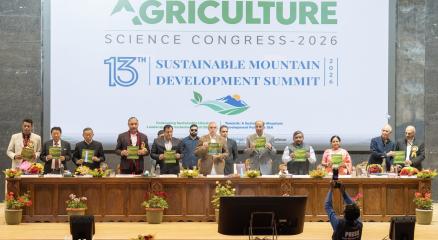
Srinagar, Oct 12: Positioning itself at the forefront of regional policy innovation and ecological governance, Sher-e-Kashmir University of Agricultural Sciences and Technology of Kashmir (SKUAST-K) took centre stage on Monday as Chief Minister Omar Abdullah inaugurated the 13th Sustainable Mountain Development Summit (SMDS) alongside the J&K Agriculture Science Congress 2026 at the university’s Shalimar Campus. The three-day national convention jointly organised by SKUAST-K in collaboration with the Integrated Mountain Initiative (IMI) and the J&K Science, Technology and Innovation Council (JKSTIC), has drawn top policymakers, domain scientists, and delegates from across 11 Himalayan states. Deliberations are centered around the university’s pioneering draft Sustainable Mountain Development Policy (JK-SMDP 2026)—the country’s first state-specific mountain framework, which experts from northeastern Himalayan states have already expressed keen interest in adapting as a template for their respective regions. Chief Minister Omar Abdullah commended SKUAST-K for steering this vital policy initiative and called for an actionable, realistic roadmap that strikes an equitable balance between environmental preservation and community livelihoods. “We cannot stop global warming on our own, but we can certainly take better care of our own environment,” the Chief Minister said, citing erratic snowfall, receding glaciers such as Thajiwas near Sonamarg, and recurring flash floods as warnings of an intensifying climate crisis. Referring to recent disasters in Nepal, he urged the gathering to ensure science moves beyond conference halls into tangible statecraft. “Jammu and Kashmir aspires to become the first Himalayan territory to have its own dedicated mountain policy, and my government is keen to take this forward. However, those recommendations must be grounded in reality—balancing ecological sustainability with everyday economic survival," he said. The Chief Minister highlighted that agriculture and horticulture – not tourism alone – form the actual backbone of J&K’s economy, underscoring that environmental resilience is directly linked to food security and rural prosperity. He advocated for a coordinated approach to hill infrastructure mandating scientific slope-stabilization standards during road construction to prevent recurrent landslides, planned vertical expansion to preserve scarce land, and developing new carrying-capacity-backed tourist destinations equipped with upfront waste and sewage infrastructure rather than abruptly curtailing livelihoods at high-pressure sites like Gulmarg, Pahalgam, and Sonamarg. Delivering the institutional vision, Vice Chancellor SKUAST-K, Prof. Nazir Ahmad Ganai, outlined the university's 11-point policy architecture designed to transition mountain governance into an enforceable model. The proposed framework prioritizes carrying-capacity-based visitor management, automated hazard early warning networks, mandatory clean-in-place and zero-waste systems, clean mobility transitions via green gateways, and close inter-departmental convergence anchored by scientific data. Emphasizing the campus-to-governance synergy, Commissioner Secretary, Housing and Urban Development Department (HUDD) Mandeep Kaur pushed for deeper institutional collaboration between HUDD and SKUAST-K to integrate climate risk assessments into hill-town master planning and seismic-resilient urban development. Minister for Agriculture Production, Javid Ahmad Dar, stressed the need for climate-resilient farming models to insulate rural livelihoods against environmental shocks, while Advisor to the Chief Minister, Nasir Aslam Wani, urged immediate checks on unregulated resource exploitation. The inaugural session also featured strategic perspectives from IMI leadership, including President Dr. S.T.S. Lepcha, former MP and former President P.D. Rai, and Lead Strategist Dr. Rajan Kotru, who emphasized regional pride, inclusive green economies, and cross-Himalayan solidarity. The opening proceedings witnessed the formal release of several landmark summit publications and the screening of Himalayan Voice, a documentary jointly produced by SKUAST-K and IMI. Earlier, Prof. Khursheed A. Dar, Organising Secretary of the Congress, delivered the formal welcome address, while Prof. A.H. Mughal, Dean, Faculty of Forestry and Organising Secretary of the Summit, presented the concluding vote of thanks. Over the next two days, parallel technical tracks across twelve thematic verticals will deliberate on climate-smart agriculture, digital farm innovations, the bio-economy, and the draft mountain policy. The summit is set to culminate in the adoption of the historic Shalimar Declaration, consolidating SKUAST-K’s pivotal role as the primary knowledge anchor guiding the Himalayan arc toward a sustainable and resilient future.

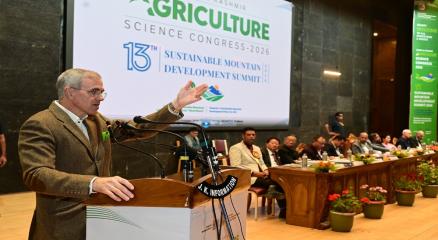
Srinagar, Oct 12: Chief Minister Omar Abdullah Monday called for a practical and balanced approach to sustainable mountain development, stressing that environmental protection, economic growth and people’s livelihoods must go hand in hand. The Chief Minister was speaking after inaugurating the 13th Sustainable Mountain Development Summit, jointly organised by SKUAST-Kashmir and the Integrated Mountain Initiative, in collaboration with the Jammu and Kashmir Science, Technology and Innovation Council (JKSTIC). The summit, held under the J&K Agriculture Science Congress-2026, is themed around sustainable Himalayan landscapes for inclusive Viksit Bharat and the formulation of a Sustainable Mountain Development Policy for Jammu and Kashmir. Emphasising the urgent need to protect the region’s fragile mountain ecology, the Chief Minister said climate change, erratic snowfall, water scarcity, extreme rainfall and landslides were increasingly affecting Jammu and Kashmir, making sustainable development essential for its long-term survival. “We do not take care of our mountains, our environment as much as we should. We cannot stop global warming on our own, nor can we reverse it. The whole world will have to come together to address this challenge. But we can certainly take better care of our own environment,” he said. Referring to changing weather patterns, the Chief Minister observed that snowfall had become increasingly erratic, with reduced snowfall and delayed winter precipitation contributing to water shortages during the spring months. He said prolonged dry spells were often followed by intense rainfall, cloudbursts and flooding, creating fresh challenges for communities and infrastructure. Describing these developments as the new reality, Omar Abdullah said the challenge was to determine how Jammu and Kashmir could continue to develop while adapting to growing environmental risks. “We have to ask ourselves: how do we sustain our livelihoods and how do we develop? Development is essential, but it must be sustainable,” he said. The Chief Minister cautioned against viewing tourism as the sole cause of environmental degradation, while acknowledging the pressure that growing tourist numbers placed on popular destinations. He stressed that environmental responsibility had to be shared by the government, residents, businesses and visitors alike. “Tourism does put pressure on our environment, but to assume that the situation is bad only because of tourism or tourists would also be wrong. We will have to take some responsibility,” he said, urging people to avoid littering, reduce the use of single-use plastic and conserve water and energy. He called for a change in everyday practices, observing that people often discarded plastic wrappers and bottles in public places while expecting the government to clean up after them. While acknowledging the government’s primary responsibility for environmental management, he underlined that individual actions were equally important in protecting the natural surroundings. On tourism development, the Chief Minister said the answer was not to abruptly restrict visitors to established destinations such as Gulmarg, Pahalgam and Sonamarg, where livelihoods depended substantially on tourism. Instead, he advocated developing new destinations through a planned and sustainable approach, with adequate arrangements for sewage treatment, wastewater management and solid waste disposal in place from the outset. “Some of our destinations do not have enough carrying capacity. We have to widen tourism, not to stop people from going to Gulmarg, Pahalgam or Sonamarg, but to develop new and sustainable destinations where the systems for waste disposal and sewage disposal are already ready,” he said. Highlighting the need for environmentally sound infrastructure, Omar Abdullah said unscientific hill cutting during road construction had contributed to landslides and repeated damage to roads, particularly in far-flung areas of Jammu and Kashmir. He said road construction agencies often resorted to indiscriminate cutting of mountain slopes without adequate consideration for slope stabilisation and appropriate cutting angles. While such practices might reduce initial construction costs, the resulting damage during rainfall frequently necessitated reconstruction, diverting resources that could otherwise be used to build new roads. The Chief Minister said he had asked the Forest and Environment Department and the Public Works Department to work together to ensure that development projects incorporated sustainable engineering practices and reduced the risk of landslides. “When you cut a mountain, cut it in a way in which the possibility of landslides may not be eradicated, but at least be reduced,” he said, emphasising that long-term sustainability must take precedence over short-term savings. On urban development and housing, the Chief Minister called for greater emphasis on energy-efficient and earthquake-resilient buildings, along with more efficient land use. With land becoming increasingly scarce in the Valley, he said, planners needed to explore vertical development wherever appropriate rather than continued horizontal expansion, while ensuring compliance with seismic safety requirements. Recalling the devastation caused by past natural disasters, including the 2014 floods and the earthquake that affected the region in 2005, he stressed the need to incorporate disaster resilience into future construction and examine cost-effective ways to retrofit existing buildings. The Chief Minister also highlighted the visible retreat of glaciers in the region, recalling how the glacier near Sonamarg once extended close to the meadows. Today, he said, younger generations have to trek considerably farther to reach the receded glacier. He said the changes underscored the responsibility of the present generation to protect the region’s natural heritage and preserve it for those who would inherit it. “That is what we owe the future generations. Protect what we have, retrieve what we can, and ensure that we do not do any further damage, while also ensuring that livelihoods are protected,” he said. Underlining the importance of agriculture and horticulture to Jammu and Kashmir’s economy, Omar Abdullah said the region’s economic foundations were often misunderstood by those who viewed tourism as its principal source of income. Agriculture and horticulture, he pointed out, contributed substantially more to the economy than tourism. He said protecting the environment and promoting sustainable mountain development were therefore not merely conservation objectives but fundamental to the region’s economic security, livelihoods and long-term prosperity. The Chief Minister expressed hope that the three-day summit would move beyond academic discussions and produce concrete recommendations that could be translated into effective policies and practical action. He said Jammu and Kashmir aspired to become the first Himalayan territory to have its own mountain policy and that his government was keen to take the initiative forward. However, he stressed that the policy must emerge from wider consultation and reflect the realities of the region rather than being based on idealistic assumptions. “Those recommendations need to be grounded in reality. We need to balance the need for sustainability with the need for existence and livelihoods,” he said. The Chief Minister expressed gratitude to delegates and participants who had travelled from different parts of the country to attend the summit and said he would look forward to its recommendations. “I cannot emphasise this point strongly enough. Sustainable development through actionable inputs and practical steps is what I hope this summit will deliver,” he said, wishing the participants success in their deliberations. On the occasion, the Chief Minister also released several publications brought out for the summit. Minister for Agriculture Production Javid Ahmed Dar, Advisor to the Chief Minister Nasir Aslam Wani, Additional Chief Secretary to the Chief Minister Dheeraj Gupta, Commissioner Secretary, Housing and Urban Development Department Mandeep Kaur, Vice-Chancellor SKUAST-Kashmir Prof Nazir Ahmed Ganai, President, Integrated Mountain Initiative, STS Lepcha, former president IMI PD Rai, Councillor, Integrated Mountain Initiative, Rajan Kotru, delegates from 11 mountain states, representatives of NGOs, faculty members, scholars, students and other concerned persons were present.

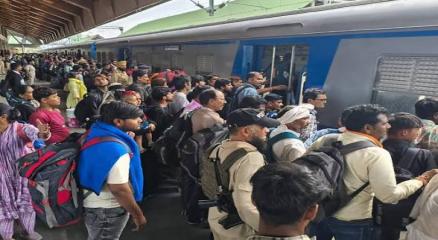
Jammu/Katra, Oct 10: Passengers travelling from Jammu and Katra to different parts of the country faced considerable inconvenience after four trains scheduled to depart on Friday were cancelled at short notice due to anticipated traffic congestion around New Delhi and Hazrat Nizamuddin railway stations. The Jammu railway division said it has made special arrangements to help passengers, officials said. The Railway Board on Friday cancelled over 250 trains connecting New Delhi and Hazrat Nizamuddin stations with destinations across the country ahead of the Cockroach Janta Party (CJP) October 10 protest, demanding the removal of Chief Election Commissioner Gyanesh Kumar. The cancellations cover passenger trains scheduled to depart from their originating stations after 2 pm on October 9, as well as those scheduled to arrive at New Delhi or Hazrat Nizamuddin railway stations between 4 am and 2 pm on October 10. Trains scheduled to depart from these two stations for their destinations, along with local trains, have also been cancelled. Scores of passengers were seen stranded with their luggage at the Jammu Tawi and Katra railway stations, unsure about their onward journeys and seeking alternative transport. Several passengers said they had booked their train tickets two to three months in advance but learned about the cancellations only after reaching the railway station, leaving them stranded with their families. "We booked our tickets two months ago, and our train was scheduled for today. However, we learned just half an hour to an hour before departure that it had been cancelled. We have to reach Delhi, but no alternative arrangements are available. We are travelling with our family and are extremely troubled and worried," Narinder Singh, a passenger from West Bengal, said. He questioned why passengers were not informed in advance and said they had approached the administration for help. "Many people are facing the same problem. Somehow, everyone has to reach Delhi. We are stranded at Katra railway station and are waiting to see what arrangements can be made," he said. At Katra railway station, Raj, a visitor from Dehradun, said he and his companions had booked tickets two months earlier and planned to travel to Delhi before proceeding to Dehradun. "The cancellation had disrupted their itinerary, forcing them to look for alternative transport and prolong their stay in Katra," he said. Raghav Kumar, a passenger from Sitamarhi in Bihar, said he had completed his pilgrimage to the Shri Mata Vaishno Devi shrine and learned about the cancellation of his return train only after reaching the railway station. He had booked his ticket online nearly three months ago. "I am facing a lot of difficulties. I do not know where I will have to stay tonight or what problems I may face. I need help to reach home," he said, appealing to the government and railway authorities to arrange alternative transport or provide financial assistance for the journey. In Jammu, another passenger, Narinder Singh, expressed frustration over the disruption, saying people were struggling to reach their respective destinations. "Look at how much chaos has been created here. People are facing difficulties, and everyone is stranded. Those who need to reach their respective destinations are stuck here," he said. Sunita, a passenger from Mumbai, also expressed displeasure over the train cancellations, alleging that the disruption had caused considerable hardship to passengers travelling with their families. The railway division has set up help desks at major stations, including Jammu Tawi, Katra, Kathua and Pathankot Cantt, and deployed additional staff to manage crowds, assist passengers and operate special refund counters, a spokesperson said. Passenger information is being disseminated through bulk SMS, public announcements, display boards and social media, he said, adding that the Railway Protection Force and Government Railway Police had also been deployed and a dedicated helpline activated. Officials have advised passengers to plan their journeys accordingly and seek assistance through railway helpline 139 or the National Train Enquiry System (NTES) app. (PTI)