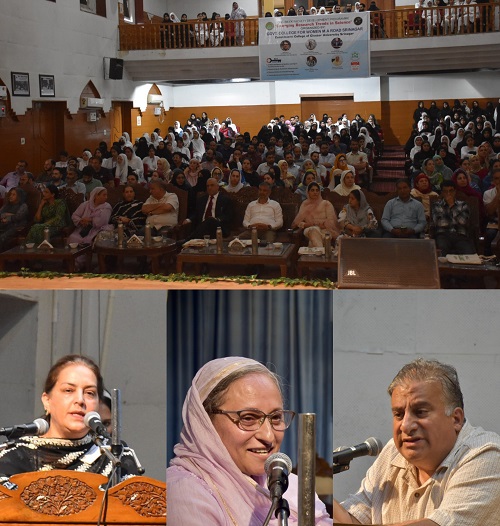
Week-long FDP begins at GCW M A Road
KS News Desk
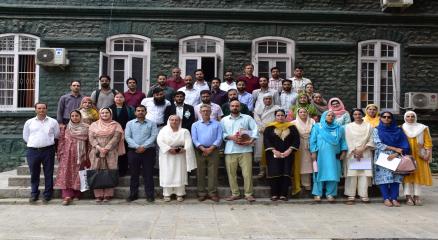
Srinagar, Jul 15: The week-long Faculty Development Programme (FDP) titled Emerging Research Trends in Science organised by Government College for Women, M.A. Road, Srinagar commenced here on Tuesday.
Director Colleges Prof. (Dr.) Sheikh Ajaz Bashir was the Chief Guest at the inaugural function held at the colleges auditorium.
Other dignitaries present on the occasion included Nodal Principal (Kashmir) who also serves as Dean Academic Affairs Cluster University (CU) Srinagar Prof. Seema Naz, Registrar CU Srinagar Prof. Wilayat Hussain Rizvi, Principal Amar Singh College Prof. Aijaz Ahmed Hakak and Principal AAAM College Bemina Prof. Mudasir Afshan.
In his keynote address, Director Colleges appreciated the initiative of the college to organize the FDP on a relevant theme.
Addressing the young faculty members, Prof. Ajaz asked them to think how they want to spend their years of active service.
"Emoluments will come to you. But what is important is what is going to be your contribution to higher education. Don't be in a college on the basis of biometric attendance. Be there on the basis of your engagement with the students. It should be a mentor-mentee kind of mechanism. It should not be a monologue," he said.
He referred to the ensuing academic session and the challenge of rolling out the fourth year of the UG programme under NEP-2020 with two clear-research and honors- verticals.
Director Colleges also assured the faculty that the placement cases are being resolved on fast track cases. This month we are going to launch an online portal for these placements. Now nobody has to come to directorate of colleges. You have to apply online for the placement and your cases will be moved to technical committee twice in a year and thereby to DPC, he said.
Referring to the overwhelming response of students for the ongoing admission process in colleges, Prof. Ajaz said the department has been able to register 54,000 students for admissions this year.
"We should understand how big a change they can bring if we stand by their side," he said.
In her address, Nodal Principal (Kashmir), Prof. Seema Naz also referred to the crucial fourth year of the Four-Year Undergraduate Programme under NEP-2020 from the ensuing session.
For the first time in the colleges, we have to go for the research vertical and we are all deliberating on how we will execute it in our institutions though no doubt it is a big challenge," Prof. Seema said.
Prof. Seema Naz said when we talk about implementing anything, it does not only have to make the students aware, but more importantly the faculty members should be aware about the nuances and then only they can mentor the students in the right manner.
I think this is a very good platform and a time to talk about the research trends in science. This college is a premier college and has always been known for conducting programs on pertinent themes," she said while referring to the theme of FDP.
She said the programme is an effort in the same direction.
"I congratulate the principal and staff and I hope meaningful deliberations happen throughout this one week FDP," she said.
Earlier, in her welcome address, Principal, Prof. (Dr.) Yasmeen Farooq referred to the relevance of the FDP theme.
Applications of technology and innovation in interdisciplinary research is witnessing a boom and it has become imperative for our faculty members to keep pace with new research and techniques that are expanding at an exponential rate," she said.
She said programmes like this serve as an excellent opportunity of learning, upskilling and meaningful networking so that ideas can evolve, skills can be sharpened and professional connections can fructify into bigger futures.
In her concept note of FDP, Course Coordinator and HoD Chemistry, Prof. Majida Maqbool listed the various themes to be covered during the week-long deliberations including Artificial Intelligence & Machine Learning in Transforming the Society, Biotechnology & Life Sciences Advancements, Advanced Materials & Nanotechnology and Sustainable Science & Environmental Research.
She said the FDP comprises of two daily sessions, each lasting two hours followed by a panel discussion for 30 minutes.
On the occasion, the electronic version of the Coffee Table Book of the college was launched by Director Colleges. The book is an attempt to record the past, present and future potential of this glorious institution.
A book on Machine Learning & Cyber-security (AI for Threat Detection & Prevention) authored by senior faculty members of Department of Computer Sciences, Prof. Raashid Ashraf Malik and Dr. Asif Iqbal Kawoosa was also released on the occasion.
Dr. Momina Nazir from Department of Chemistry was felicitated in recognition of successfully obtaining a patent titled Nano Fungicidal Composition and Method Thereof. Similarly, Dr. Parsa Sarosh from Department of Electronics was felicitated for her patent titled Adaptive Headlight Control with lamp Deflection for Vehicles.
Dr. Momina Nazir presented the formal Vote of Thanks. Earlier, the guests received guard of honor from the college NCC cadets. The programme formally began with the national anthem followed by the College Tarana.
New Delhi, May 12: A massive protest organised by the National Students' Union of India (NSUI) broke out near the Shastri Bhawan on Tuesday, against the alleged paper leak in NEET-UG this year. The exam was held on May 3, following which allegations of paper leak surfaced, triggering investigations by the Rajasthan Special Operations Group (SOG) and central agencies. Earlier, the National Testing Agency (NTA) announced the cancellation of NEET-UG 2026, and said the examination will be re-conducted on dates to be notified separately. In a statement, the NTA said the decision was taken with the approval of the Government of India in the interest of maintaining transparency and preserving trust in the national examination system.
Srinagar, Feb 12: Jammu and Kashmir recorded over 15.48 lakh traffic violation cases in 2025, with authorities collecting more than Rs 34.17 crore as penalty under the Motor Vehicles Act, the Centre informed Parliament on Thursday. The information was shared in the Lok Sabha in response to a question raised by MP Janardan Singh Sigriwal. According to the official data, 15,48,525 challans were issued across the Union Territory in 2025, while the penalty amount recovered stood at Rs 34,17,36,740. The figures further show that in 2024, a total of 15,44,105 violations were registered with a penalty collection of around Rs 43.40 crore, while in 2023, 12,38,584 challans were issued and Rs 34.56 crore was collected. For the current year, till February 8, 2026, Jammu and Kashmir has recorded 1,63,531 traffic violation cases, with revenue collection of about Rs 2.11 crore. The Ministry of Road Transport and Highways stated that stricter penalties under the Motor Vehicles (Amendment) Act, 2019 are aimed at ensuring better compliance and deterrence. It also said that traffic enforcement falls under the jurisdiction of States and Union Territories. The government has issued a Standard Operating Procedure (SOP) for electronic monitoring and is promoting technology-driven enforcement through Automatic Number Plate Recognition (ANPR) cameras integrated with the VAHAN database. Awareness campaigns under the Sadak Suraksha Abhiyan are also being carried out to improve road safety.
New Delhi, Jan 25: The Dental Council of India (DCI) has directed all universities and dental colleges across the country to strictly ensure a minimum of 80 percent biometric attendance for Post Graduate students before allowing them to appear in examinations. The decision has been taken to curb absenteeism among postgraduate dental students. According to a circular issued by the Dental Council of India-a statutory body under the Ministry of Health and Family Welfare, Government of India, the decision has been taken after multiple complaints were received from dental colleges in Rajasthan, Haryana and Uttar Pradesh regarding non-attendance of PG students. "The matter was examined by the Grievance Sub-Committee of the DCI in its meeting held on November 24, 2025," the circular reads. It reads that after detailed discussion and deliberation, the committee recommended that all universities and dental colleges must ensure compliance with Regulation 18(a)(i) of the DCI Master of Dental Surgery Course Regulations, 2017, which mandates at least 80 per cent attendance. "The recommendation of the Grievance Sub-Committee has been approved by the Executive Committee of the Dental Council of India through circulation and has now been formally communicated for information and necessary action," the circular reads. As per the circular, all the universities and dental colleges have been directed to ensure minimum 80 per cent biometric attendance of all PG students before permitting them to appear in examinations. The order, issued by Deputy Secretary Dental Council of India Mukesh Kumar, is expected to be implemented with immediate effect across the country.
Srinagar, Jan 8: Contractual faculty members working in government degree colleges of Jammu and Kashmir Higher Education Department (HED) have expressed strong resentment over what they term as a glaring disparity in salaries, demanding revision of their pay in line with University Grants Commission (UGC) norms and regularisation of their services. The faculty, many of whom hold PhDs and are qualified through NET, SET and JRF, said they have been denied UGC-recommended pay scales despite discharging academic responsibilities equivalent to their regular counterparts. “Hundreds of highly qualified scholars have been pushed into silent suffering. For years, we have been assured that our pay revision is under consideration, but nothing has materialised so far,” said Dr Ishfaq Gowhar, a contractual faculty member. Earlier, Director Colleges J&K had acknowledged the legitimacy of the faculty’s demand, stating that while the issue was genuine, its implementation involved significant financial implications due to the large number of contractual appointments. “We are aware that they deserve salary enhancement, but the number of contractual faculty is huge and it has financial implications,” he earlier said. Dr Gowhar pointed out that contractual lecturers, who form the backbone of the higher education system, continue to work on a fixed monthly honorarium of Rs 28,000, which has remained unchanged for nearly a decade. “The irony is that a Class IV employee with a Class 10 qualification draws a salary exceeding Rs 50,000, while doctorate-holding teachers engaged in teaching, mentoring and academic research are paid a fraction of that,” he said. He added that institutions such as SKUAST-K, University of Kashmir and Islamic University of Science and Technology (IUST) have implemented revised UGC pay scales, but the Higher Education Department has failed to extend similar treatment to its contractual faculty. Dr Gowhar said the demand for “equal work, equal pay” gets prominently featured in election campaigns, raising hopes among contractual teachers. “Promises were made and slogans echoed during elections, but once the process ended, our voices were reduced to silence. Even meeting officials now feels impossible,” he said. He said contractual faculty were not seeking privileges but dignity, fairness and recognition for their service. The faculty appealed to the Jammu and Kashmir Lieutenant Governor Manoj Sinha, Chief Minister Omar Abdullah and the Education Minister to intervene and take concrete steps towards addressing their long-pending demands. “This issue is not merely about salaries. It is about survival, justice and dignity in the classrooms of Jammu and Kashmir,” he said.
Srinagar, March 6: Around 17 candidates from Jammu and Kashmir have qualified the Civil Services Examination (CSE)-2025, the result for which was declared by the Union Public Service Commission (UPSC) on Friday. The commission recommended a total of 958 candidates for appointment to the Indian Administrative Service (IAS), Indian Foreign Service (IFS), Indian Police Service (IPS) and various central services. Anuj Agnihotri, an MBBS graduate, has topped the civil services examination 2025, while Rajeshwari Suve M and Akansh Dhull have got the second and third ranks respectively. According to the official list released by the UPSC the 17 candidates from J&K who have figured in the final merit list include Suvan Sharma (Rank 148), Sugandha Gupta (207), Towseef Ganie (Rank 254), Ritika (Rank 456), Sooyash Shivam (Rank 572), Muneeb Parrah (Rank 581), Ghulam Din (Rank 683), Dwarka Gaadhi (Rank 721), Akash (Rank 747), Koh E Safa (Rank 763), Yasaar (Rank 811), Abhishek (Rank 820), Pankaj (Rank 856), Mohammad Ajaz (Rank 869), Azhar (Rank 886), Sarfraz (Rank 936), and Irfan (Rank 957). The results were declared after conducting the written examination in August 2025 followed by the personality tests (interviews) conducted between December 2025 and February 2026. As per the result notification issue by the UPSC, a total of 958 candidates have been recommended for appointment against 1087 vacancies reported by the government for the examination cycle. These include 180 vacancies in the IAS, 55 in the IFS, 150 in the IPS, 507 in Central Services Group A and 195 in Group B services. Of the total recommended candidates, 317 are from the general category, 104 from the economically weaker sections, 306 from other backward classes, 158 from scheduled castes and 73 from scheduled tribes. A consolidated reserve list of 258 candidates has also been published in accordance with the rules. The claims of recommended candidates regarding reservation categories will be subject to verification by the concerned authorities. The UPSC has stated that the candidature of 348 recommended candidates has been kept provisional, while the result of the two candidates has been kept withheld. The CSE is conducted annually in three stages- preliminary, Mains and interview by the UPSC to select officers of the Indian Administrative Service (IAS), Indian Foreign Service (IFS) and Indian Police Service (IPS) among others. The civil services (preliminary) examination 2025 was conducted on May 25 of 2025. A total of 937876 candidates applied for this examination, out of which 5,76,793 actually appeared in the test. A total of 14,161 candidates qualified for appearance in the written (Main) examination which was held in August, 2025. Of these, 2736 candidates had qualified for the personality test (interview) of the examination. Prime Minister Narendra Modi congratulated the candidates who qualified the UPSC exam. "Congratulations to all those who have successfully cleared the Civil Services Examination, 2025. Their dedication, perseverance and hard work have led to this significant milestone. Wishing them the very best as they embark on a journey of serving the nation and fulfilling the aspirations of the people," PM Modi wrote on his official X handle. "To those who may not have secured the desired outcome in the Civil Services Examination, I understand that such moments can be difficult. However, this is only one step in a larger journey. Many opportunities lie ahead, both in future examinations and in the many avenues through which you can contribute to our nation. My best wishes for the road ahead," his post on X reads. UPSC chairman Ajay Kumar announced the declaration of the result and congratulated the candidates who qualified the exam. "Congrats to all successful candidates as you begin a career of service to the nation. For those who did not make it-the learning from this journey will guide you in the paths ahead," UPSC Chairman wrote in a post on X. Among the 17 candidates from J&K who qualified UPSC exam inlcude a visually impaired candidate Irfan Ahmad Lone, a resident of Manzpora in the Naidkhai area of Bandipora.


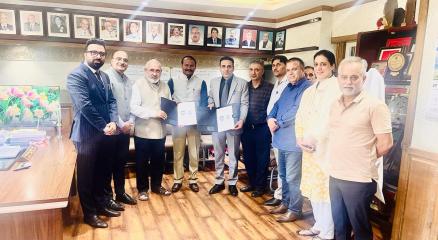
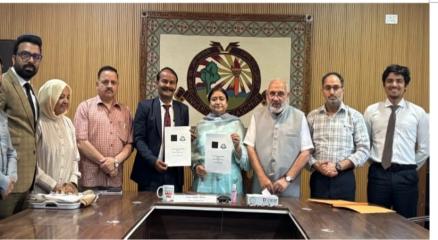
Srinagar, Sep 20: In a significant development, Sher-i-Kashmir Institute of Medical Sciences (SKIMS), Srinagar, and Rashtriya Raksha University (RRU), Jammu and Kashmir Campus, have entered into a Memorandum of Understanding (MoU) aimed at strengthening academic, clinical and professional collaboration in the areas of rehabilitation, mental health, behavioural forensic services, research and training. The MoU was formally signed by the Directors of SKIMS and Rashtriya Raksha University, Jammu and Kashmir Campus, on the occasion graced by distinguished dignitaries, including former Vice-Chancellor of the Central University of Kashmir and Lifetime Professor Dr. Mehraj Uddin Mir, RRU J&K Campus Assistant Director Dr. Mohammad Akmal Shah, Assistant Professor Dr. Mudasir Bhat and Director Finance SKIMS. Speaking on the occasion Director, SKIMS, said this MoU will strengthen interdisciplinary collaboration in clinical learning, rehabilitation, mental health and research. DirectorRashtriya Raksha University, Jammu and Kashmir Campus, said this collaboration will provide valuable clinical exposure to our students and strengthen joint research and training in behavioural sciences and different areas of forensic services. "The agreement provides a framework for collaboration in clinical and forensic teaching, mental health services, rehabilitation, forensic mental health services, capacity building, joint research, academic publications, internships, faculty exchange and knowledge sharing," the official handout reads. As per the handout, the two institutions will also collaborate on joint research projects, publications, scientific workshops, seminars, symposia, conferences and specialised training programmes on mutually identified areas. "The collaboration will also support the development of integrated approaches to challenges relating to disability besides promoting capacity building and interdisciplinary learning," it reads. The collaboration is expected to provide a structured platform for academic exchange, supervised clinical learning, interdisciplinary research and professional training, while strengthening institutional cooperation between SKIMS and RRU, J&K campus.
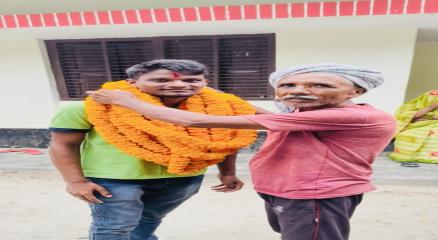
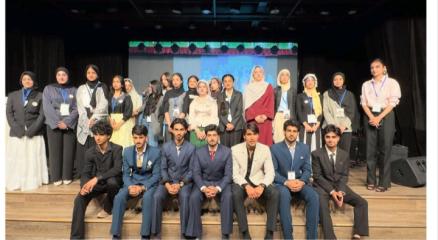
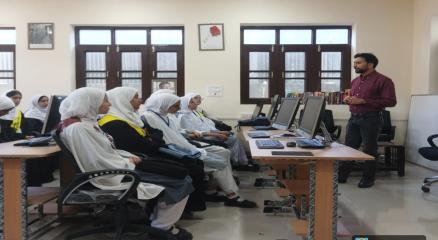
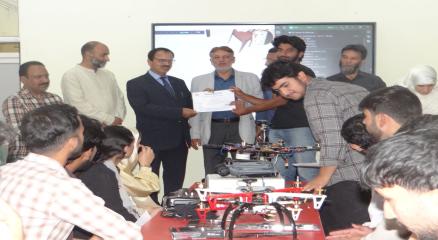
Srinagar Sept 19: The University of Kashmir (KU), through the Centre for Innovation, Incubation & Entrepreneurship (CIIE), Institute of Technology (IoT), Zakura Campus, concluded the first phase of a five-day Skill Development Programme on “Drone Technology – Designing & Hands-on Workshop”, organised from September 14–18 at the e-Yantra Embedded Systems & Robotics Lab. The programme provided participants practical exposure to various aspects of drone technology, including drone components and anatomy, aerodynamics, flight controllers, quadcopter assembly, simulation, mission planning, CAD-based design, Python programming, flight operations and applications in agriculture. A total of 20 participants, selected from over 200 registrations from different educational institutions, participated in the first phase, combining conceptual learning with hands-on experimentation and technology-oriented skill development. Vice-Chancellor, KU, Prof. Nilofer Khan, said emerging technologies such as drones are creating new avenues for innovation, research and entrepreneurship, while practical learning enables students to apply technology to real-world challenges. “By combining conceptual understanding with hands-on learning, we can empower our students to develop technology-based solutions to real-world challenges,” she said. Dean Academic Affairs, KU, Prof. Shariefuddin Pirzada, appreciated the structured approach of the programme, which enabled participants to progress from fundamentals to assembly, simulation, programming and flight operations. Registrar, KU, Prof. Naseer Iqbal, emphasised the importance of practical and interdisciplinary training in contemporary higher education, noting that drone technology integrates areas such as electronics, programming, engineering, design and automation and offers diverse real-world applications. Dean and Director, IoT, Zakura Campus KU, Prof. M. Tariq Banday, highlighted the importance of providing learners opportunities to experiment, build and test technology-based solutions. He added that over 200 participants have registered for the Drone Technology and allied workshops at the Lab. Workshop coordinators Dr. Bilal Ahmad Malik and Dr. Mir Nazish, and Rutba Majeed, DGCA-certified Drone Pilot and Instructor, were also present on the occasion. The workshop is part of KU’s continuing skill-development and capacity-building initiatives aimed at providing practical exposure to emerging technologies and developing industry-relevant skills. The e-Yantra Embedded Systems & Robotics Lab, established at IoT Zakura Campus with support from RUSA 2.0, provides infrastructure for hands-on learning and experimentation in embedded systems, robotics and related technological domains.
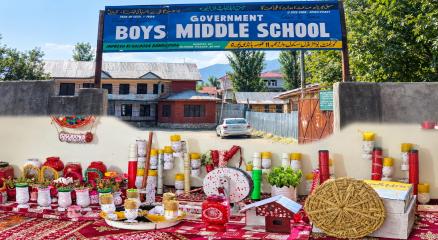

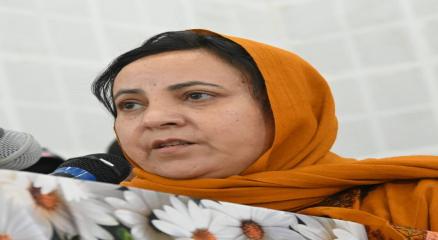
Srinagar, Aug 19: The two-day National Conference on “Gender Equality in the 21st Century—Perspectives & Pathways to SDG-5” concluded at Government College for Women, M.A. Road, Srinagar, on Wednesday. The valedictory session reflected on the wide-ranging academic deliberations held during the conference and underlined the need to translate discussions on gender equality into meaningful social change. Prof. Mufti Mudasir, Professor and Head, Department of English, University of Kashmir, was the Special Guest at the valedictory session and delivered the Valedictory Address. In his address, Prof. Mudasir examined the question of gender justice through the prism of religious, intellectual and legal traditions, arguing for a critical and creative engagement with tradition rather than viewing tradition and reform as necessarily incompatible. Drawing upon Islamic intellectual history and particularly the thought of Allama Muhammad Iqbal, he highlighted how questions concerning women, justice and legal interpretation have been debated from within the intellectual tradition itself. Prof. Mudasir discussed the historical challenges faced by women in matters such as marriage and divorce and Iqbal’s concern over interpretations that could produce inequitable outcomes. He maintained that commitment to religious and spiritual traditions could coexist with a vision of gender justice rooted in human dignity, compassion and fairness. Prof. Mudasir stressed the importance of approaching questions of gender with intellectual openness while remaining sensitive to the cultural and religious contexts in which societies are situated. Earlier, Prof. Shabir Ahmed Parrey, Assistant Professor, Department of Political Science, delivered the Welcome Address while Prof. Mustafa Majid, Assistant Professor, Department of Education, presented the consolidated reports of the technical sessions. Principal, Prof. (Dr.) Yasmeen Farooq said the conference witnessed deliberations on gender equality from diverse perspectives, including education, economics, political participation, literature, media, technology, environment and everyday social experience. The valedictory proceedings were moderated by Dr. Suhail Ahmad, Assistant Professor and Head, Department of Journalism & Mass Communication while Prof. Sheba Drabu, Co-Convener of the conference, presented the Vote of Thanks. The session concluded with the distribution of certificates to the participants.