KS News Desk
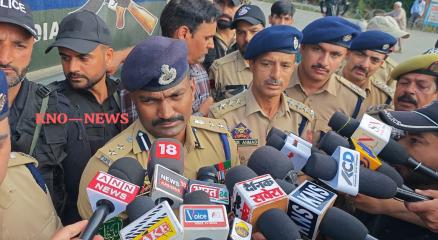
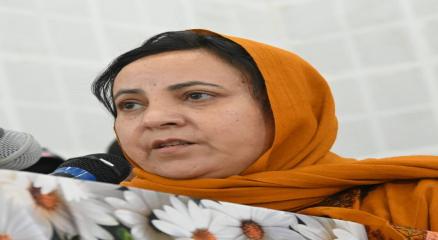
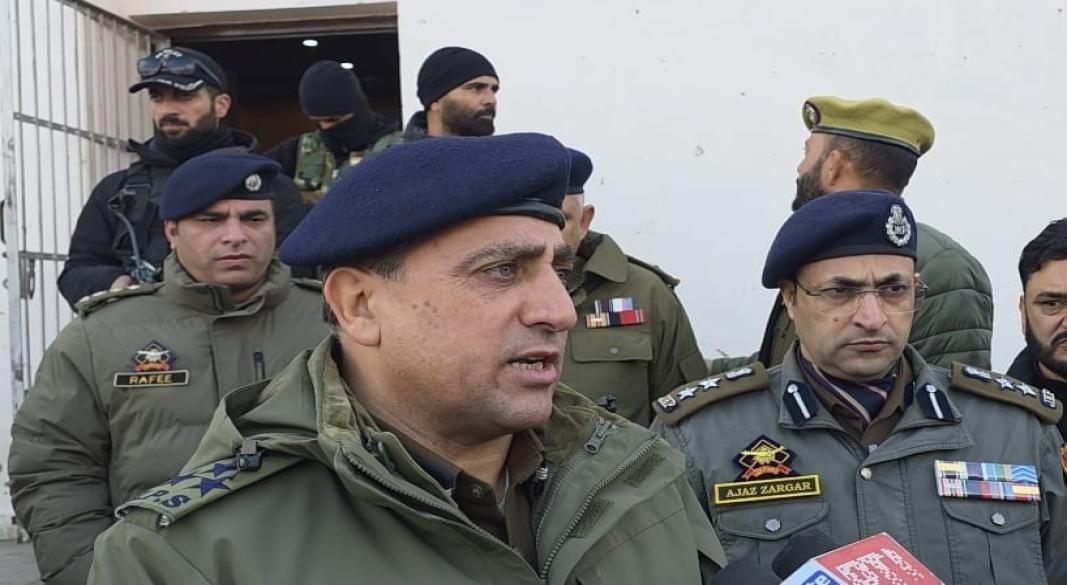
Baramulla, Jan 6: Drug abuse has emerged as the biggest challenge in Jammu and Kashmir after terrorism, Deputy Inspector General of Police, North Kashmir Range (NKR), Maqsood Ul Zamaan said on Tuesday, asserting that police are taking sustained and strong action to curb the menace.
Talking to reporters here, the DIG said police in North Kashmir have made significant progress against drug trafficking, with large quantities of narcotic substances recovered and several people arrested in recent months.
He said many of the accused involved in drug-related offences have also been detained under the Prevention of Illicit Traffic in Narcotic Drugs and Psychotropic Substances (PIT NDPS) Act.
“The J&K Police cannot fight this battle alone. Public cooperation is crucial. Without the support of common people, achieving the desired success against drugs is not possible,” Maqsood Ul Zamaan said.
The DIG said police have also begun attaching and seizing properties of drug traffickers as part of efforts to dismantle the entire network and cut off financial links.
Responding to a question on the use of virtual private networks (VPNs), Ul Zamaan said such tools are often misused to conceal illegal activities and that their misuse is being closely monitored as it could pose a threat to national security.
On infiltration attempts in North Kashmir, the DIG said the region being a border area remains sensitive, but security agencies have put robust arrangements in place. “The situation is under constant surveillance, and security forces are fully alert,” he said.
Zamaan reiterated that police would continue to intensify operations against drug trafficking while simultaneously seeking cooperation from the public to address the problem effectively. (KNS)
New Delhi, May 12: A massive protest organised by the National Students' Union of India (NSUI) broke out near the Shastri Bhawan on Tuesday, against the alleged paper leak in NEET-UG this year. The exam was held on May 3, following which allegations of paper leak surfaced, triggering investigations by the Rajasthan Special Operations Group (SOG) and central agencies. Earlier, the National Testing Agency (NTA) announced the cancellation of NEET-UG 2026, and said the examination will be re-conducted on dates to be notified separately. In a statement, the NTA said the decision was taken with the approval of the Government of India in the interest of maintaining transparency and preserving trust in the national examination system.
Srinagar, Feb 12: Jammu and Kashmir recorded over 15.48 lakh traffic violation cases in 2025, with authorities collecting more than Rs 34.17 crore as penalty under the Motor Vehicles Act, the Centre informed Parliament on Thursday. The information was shared in the Lok Sabha in response to a question raised by MP Janardan Singh Sigriwal. According to the official data, 15,48,525 challans were issued across the Union Territory in 2025, while the penalty amount recovered stood at Rs 34,17,36,740. The figures further show that in 2024, a total of 15,44,105 violations were registered with a penalty collection of around Rs 43.40 crore, while in 2023, 12,38,584 challans were issued and Rs 34.56 crore was collected. For the current year, till February 8, 2026, Jammu and Kashmir has recorded 1,63,531 traffic violation cases, with revenue collection of about Rs 2.11 crore. The Ministry of Road Transport and Highways stated that stricter penalties under the Motor Vehicles (Amendment) Act, 2019 are aimed at ensuring better compliance and deterrence. It also said that traffic enforcement falls under the jurisdiction of States and Union Territories. The government has issued a Standard Operating Procedure (SOP) for electronic monitoring and is promoting technology-driven enforcement through Automatic Number Plate Recognition (ANPR) cameras integrated with the VAHAN database. Awareness campaigns under the Sadak Suraksha Abhiyan are also being carried out to improve road safety.
New Delhi, Jan 25: The Dental Council of India (DCI) has directed all universities and dental colleges across the country to strictly ensure a minimum of 80 percent biometric attendance for Post Graduate students before allowing them to appear in examinations. The decision has been taken to curb absenteeism among postgraduate dental students. According to a circular issued by the Dental Council of India-a statutory body under the Ministry of Health and Family Welfare, Government of India, the decision has been taken after multiple complaints were received from dental colleges in Rajasthan, Haryana and Uttar Pradesh regarding non-attendance of PG students. "The matter was examined by the Grievance Sub-Committee of the DCI in its meeting held on November 24, 2025," the circular reads. It reads that after detailed discussion and deliberation, the committee recommended that all universities and dental colleges must ensure compliance with Regulation 18(a)(i) of the DCI Master of Dental Surgery Course Regulations, 2017, which mandates at least 80 per cent attendance. "The recommendation of the Grievance Sub-Committee has been approved by the Executive Committee of the Dental Council of India through circulation and has now been formally communicated for information and necessary action," the circular reads. As per the circular, all the universities and dental colleges have been directed to ensure minimum 80 per cent biometric attendance of all PG students before permitting them to appear in examinations. The order, issued by Deputy Secretary Dental Council of India Mukesh Kumar, is expected to be implemented with immediate effect across the country.
Srinagar, Jan 8: Contractual faculty members working in government degree colleges of Jammu and Kashmir Higher Education Department (HED) have expressed strong resentment over what they term as a glaring disparity in salaries, demanding revision of their pay in line with University Grants Commission (UGC) norms and regularisation of their services. The faculty, many of whom hold PhDs and are qualified through NET, SET and JRF, said they have been denied UGC-recommended pay scales despite discharging academic responsibilities equivalent to their regular counterparts. “Hundreds of highly qualified scholars have been pushed into silent suffering. For years, we have been assured that our pay revision is under consideration, but nothing has materialised so far,” said Dr Ishfaq Gowhar, a contractual faculty member. Earlier, Director Colleges J&K had acknowledged the legitimacy of the faculty’s demand, stating that while the issue was genuine, its implementation involved significant financial implications due to the large number of contractual appointments. “We are aware that they deserve salary enhancement, but the number of contractual faculty is huge and it has financial implications,” he earlier said. Dr Gowhar pointed out that contractual lecturers, who form the backbone of the higher education system, continue to work on a fixed monthly honorarium of Rs 28,000, which has remained unchanged for nearly a decade. “The irony is that a Class IV employee with a Class 10 qualification draws a salary exceeding Rs 50,000, while doctorate-holding teachers engaged in teaching, mentoring and academic research are paid a fraction of that,” he said. He added that institutions such as SKUAST-K, University of Kashmir and Islamic University of Science and Technology (IUST) have implemented revised UGC pay scales, but the Higher Education Department has failed to extend similar treatment to its contractual faculty. Dr Gowhar said the demand for “equal work, equal pay” gets prominently featured in election campaigns, raising hopes among contractual teachers. “Promises were made and slogans echoed during elections, but once the process ended, our voices were reduced to silence. Even meeting officials now feels impossible,” he said. He said contractual faculty were not seeking privileges but dignity, fairness and recognition for their service. The faculty appealed to the Jammu and Kashmir Lieutenant Governor Manoj Sinha, Chief Minister Omar Abdullah and the Education Minister to intervene and take concrete steps towards addressing their long-pending demands. “This issue is not merely about salaries. It is about survival, justice and dignity in the classrooms of Jammu and Kashmir,” he said.
Srinagar, March 6: Around 17 candidates from Jammu and Kashmir have qualified the Civil Services Examination (CSE)-2025, the result for which was declared by the Union Public Service Commission (UPSC) on Friday. The commission recommended a total of 958 candidates for appointment to the Indian Administrative Service (IAS), Indian Foreign Service (IFS), Indian Police Service (IPS) and various central services. Anuj Agnihotri, an MBBS graduate, has topped the civil services examination 2025, while Rajeshwari Suve M and Akansh Dhull have got the second and third ranks respectively. According to the official list released by the UPSC the 17 candidates from J&K who have figured in the final merit list include Suvan Sharma (Rank 148), Sugandha Gupta (207), Towseef Ganie (Rank 254), Ritika (Rank 456), Sooyash Shivam (Rank 572), Muneeb Parrah (Rank 581), Ghulam Din (Rank 683), Dwarka Gaadhi (Rank 721), Akash (Rank 747), Koh E Safa (Rank 763), Yasaar (Rank 811), Abhishek (Rank 820), Pankaj (Rank 856), Mohammad Ajaz (Rank 869), Azhar (Rank 886), Sarfraz (Rank 936), and Irfan (Rank 957). The results were declared after conducting the written examination in August 2025 followed by the personality tests (interviews) conducted between December 2025 and February 2026. As per the result notification issue by the UPSC, a total of 958 candidates have been recommended for appointment against 1087 vacancies reported by the government for the examination cycle. These include 180 vacancies in the IAS, 55 in the IFS, 150 in the IPS, 507 in Central Services Group A and 195 in Group B services. Of the total recommended candidates, 317 are from the general category, 104 from the economically weaker sections, 306 from other backward classes, 158 from scheduled castes and 73 from scheduled tribes. A consolidated reserve list of 258 candidates has also been published in accordance with the rules. The claims of recommended candidates regarding reservation categories will be subject to verification by the concerned authorities. The UPSC has stated that the candidature of 348 recommended candidates has been kept provisional, while the result of the two candidates has been kept withheld. The CSE is conducted annually in three stages- preliminary, Mains and interview by the UPSC to select officers of the Indian Administrative Service (IAS), Indian Foreign Service (IFS) and Indian Police Service (IPS) among others. The civil services (preliminary) examination 2025 was conducted on May 25 of 2025. A total of 937876 candidates applied for this examination, out of which 5,76,793 actually appeared in the test. A total of 14,161 candidates qualified for appearance in the written (Main) examination which was held in August, 2025. Of these, 2736 candidates had qualified for the personality test (interview) of the examination. Prime Minister Narendra Modi congratulated the candidates who qualified the UPSC exam. "Congratulations to all those who have successfully cleared the Civil Services Examination, 2025. Their dedication, perseverance and hard work have led to this significant milestone. Wishing them the very best as they embark on a journey of serving the nation and fulfilling the aspirations of the people," PM Modi wrote on his official X handle. "To those who may not have secured the desired outcome in the Civil Services Examination, I understand that such moments can be difficult. However, this is only one step in a larger journey. Many opportunities lie ahead, both in future examinations and in the many avenues through which you can contribute to our nation. My best wishes for the road ahead," his post on X reads. UPSC chairman Ajay Kumar announced the declaration of the result and congratulated the candidates who qualified the exam. "Congrats to all successful candidates as you begin a career of service to the nation. For those who did not make it-the learning from this journey will guide you in the paths ahead," UPSC Chairman wrote in a post on X. Among the 17 candidates from J&K who qualified UPSC exam inlcude a visually impaired candidate Irfan Ahmad Lone, a resident of Manzpora in the Naidkhai area of Bandipora.


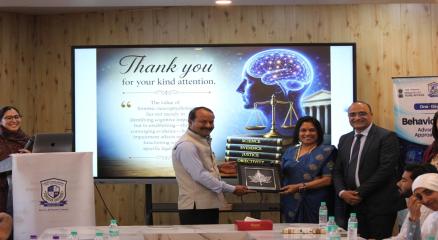
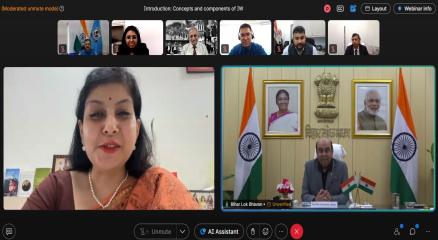
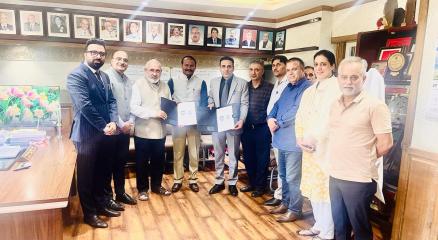
Srinagar, Sep 26: Rashtriya Raksha University (RRU), Jammu & Kashmir Campus in collaboration with the Rehabilitation Council of India (RCI) organised a Continuing Rehabilitation Education (CRE) programme on “Behavioural Forensics: Advancing Psychological Approaches to Investigation” here on Saturday. The programme marked a significant academic and professional initiative in the Union Territory of Jammu & Kashmir, being organised for the first time in the Kashmir region with a dedicated focus on behavioural forensics, forensic psychology and neuropsychology in the context of investigation and justice. The initiative provided professionals with an opportunity to engage with emerging interdisciplinary approaches and contemporary developments in the field. The programme commenced with Dr. Mohammad Akmal Shah, Assistant Director, RRU, J&K Campus, who delivered a session on “Introduction to Behavioural Forensics.” He provided participants with an overview of the fundamentals and investigative relevance of behavioural forensics. The session was followed by an interactive question and answer segment, during which Dr. Shah addressed the queries of the participants. Prof. Jamuna Rajeswaran, Professor and Former Head of Clinical Psychology Department (NIMHANS), subsequently delivered sessions on “Brain and Behaviour: A Forensic Neuropsychological Perspective” and “Mind, Brain and Law: Assessing Disability Through Forensic Neuropsychology.” She examined the interface between brain, behaviour and law, with emphasis on the application of forensic neuropsychology in assessment and justice-related contexts. The programme concluded with a valedictory function, graced by Dr. Mahesh A. Tripathi, Director, RRU, J&K Campus. Dr. Tripathi presented certificates to the participating professionals. The valedictory function formally marked the successful culmination of the CRE programme.

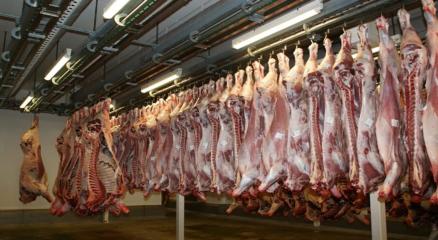
Srinagar, Aug 1: After years of administrative delays and repeated changes in the executing agency, the Srinagar Municipal Corporation (SMC) has finally taken over the construction of Jammu and Kashmir's first modern mechanised sheep and goat abattoir at Allochi Bagh, paving the way for the long-pending project to be completed within the next two years. SMC Commissioner, Fazlul Haseeb said that the civic body has floated the project on Engineering, Procurement and Construction (EPC) mode for the establishment of the "Modern Mechanized Sheep & Goat Abattoir in Srinagar City", a facility designed to process 5,000 sheep and goats daily, making it one of the largest such facilities in the Jammu and Kashmir. Haseeb said that the project aims to modernise Srinagar's meat processing infrastructure by replacing conventional slaughtering practices with a hygienic, scientific and environmentally sustainable system conforming to national standards and international best practices. The project has witnessed multiple setbacks since its inception. Initially, its execution was entrusted to the Jammu and Kashmir Projects Construction Corporation (JKPCC), which had even begun preliminary civil works several years ago. In March 2022, JKPCC had reported that the foundation work for the slaughter hall was in progress and was directed to expedite execution. However, following the financial closure and cessation of JKPCC's operations in August 2023, the project came to a standstill. Although its execution was later transferred to the R&B, officials said the project witnessed negligible physical progress. The prolonged delay had also attracted public attention. Earlier reports highlighted that the proposed modern abattoir had remained incomplete for years despite repeated assurances, leaving Srinagar without a modern slaughtering facility. Work on the project also came under judicial monitoring in a Public Interest Litigation relating to slaughterhouses in Jammu and Kashmir. Following a comprehensive review, SMC decided to execute the project directly through its own Works Division under the EPC mode, ensuring single-point responsibility for design, procurement, construction, installation, testing and commissioning. SMC said a revised Detailed Project Report (DPR) was subsequently prepared after incorporating modern technologies and additional infrastructure required to meet contemporary standards of food safety, environmental protection and operational efficiency. The Government accorded administrative approval to the revised project in March 2025. The proposed facility will include fully mechanised slaughtering and meat processing lines, scientifically designed lairage areas, mechanised slaughter halls, carcass dressing units, chilling and cold storage facilities, by-product processing units and supporting utility infrastructure. One of the key features of the project will be an advanced bio-digestion system integrated with a modern Effluent Treatment Plant (ETP), enabling scientific treatment of slaughterhouse waste and recycling of treated wastewater for non-potable uses within the premises. Officials said the system has been designed to minimise environmental pollution, promote water conservation and eliminate unhygienic disposal practices. SMC said the project would significantly improve public health and sanitation while strengthening the livestock sector by providing a modern, organised processing system for farmers, meat traders and consumers. Besides creating direct and indirect employment during construction and operation, the facility is expected to introduce internationally accepted standards in slaughterhouse management, food safety, waste disposal and hygiene, setting a benchmark for future meat processing infrastructure across Jammu and Kashmir. According to SMC, the project is expected to be completed within two years, after which the mechanised abattoir will be commissioned for public use. (KDC)

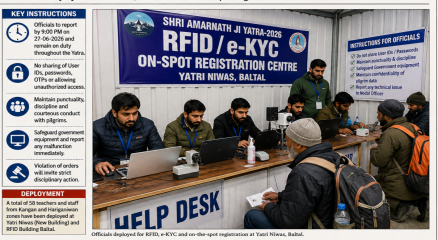
Srinagar, June 28: The Chief Education Officer (CEO), Ganderbal has deputed 62 teachers and other staff from government schools to manage RFID, e-KYC and on-the-spot registration facilities for SAJY-2026 at the Baltal base camp. As per the order issued by the CEO, Ganderbal on June 27, the officials were directed to report at Yatri Niwas Baltal and the RFID Building by 9:00 pm on the same day and remain on duty throughout the Yatra period or until further orders. The move comes in wake of the preparations underway for the annual Shri Amarnath Ji Yatra (SAJY) -2026. The deputation has been made in pursuance of an order issued by the Additional Deputy Commissioner, Ganderbal, to ensure the smooth functioning of the RFID, electronic Know Your Customer (e-KYC) and on-the-spot registration centres established for pilgrims. As per the order, a detailed code of conduct has been laid down for the deputed officials, directing them to report to designated nodal officers, maintain punctuality and discipline, safeguard government equipment and ensure courteous behaviour while dealing with pilgrims. Officials have also been instructed to maintain strict confidentiality of pilgrims' personal data and refrain from sharing login credentials, passwords or other digital access with unauthorized persons. The CEO has warned that unauthorized absence, negligence, dereliction of duty, password changes, misuse of official credentials or any activity hampering the functioning of the registration centres will invite disciplinary action under the applicable service rules. The order further reads that the salaries of the deputed officials will continue to be drawn by their respective Drawing and Disbursing Officers (DDOs) upon production of attendance certificates issued by the nodal officer of the RFID centres. All the officials have been directed to acknowledge the instructions and ensure strict compliance. The deployment list comprises 62 teachers, laboratory assistants, physical education teachers, library staff and multi-tasking staff drawn mainly from the education zones of Kangan and Hariganiwan. Most of them have been assigned to the New Building of Yatri Niwas Baltal, while others have been posted at the RFID Building and assigned supervisory and technical responsibilities.