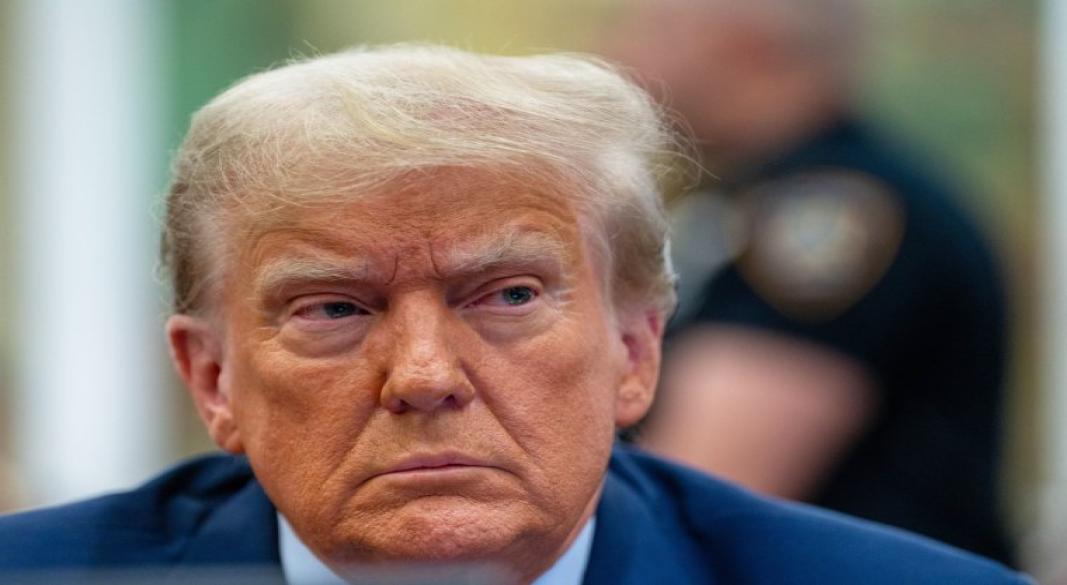
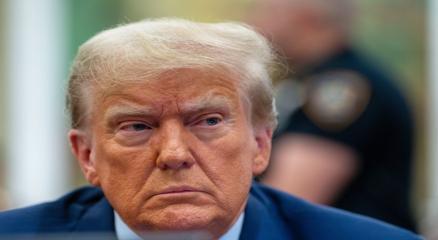
Dubai, Mar 10: US President Donald Trump said on Monday that the war against Iran could be short-lived, but he left open the possibility of an escalation in fighting if global oil supplies are disrupted by the Islamic Republic, which chose a new hard-line supreme leader.
Oil prices briefly shot to their highest level since 2022 a day after Iran selected Ayatollah Mojtaba Khamenei to succeed his late father as Iran's supreme leader. Investors saw it as a signal that Iran was digging in 10 days into the war launched by the United States and Israel.
But prices later fell and US stocks rose on hopes that the war with Iran may not last much longer.
"We took a little excursion" to the Middle East "to get rid of some evil. And, I think you will see it is going to be a short-term excursion", Trump told Republican lawmakers at his golf club near Miami.
Hours later, Trump posted on social media: "If Iran does anything that stops the flow of Oil within the Strait of Hormuz, they will be hit by the United States of America TWENTY TIMES HARDER than they have been hit thus far."
The war has choked off major supplies of oil and gas to world markets and sent fuel prices rising across the US. The fighting has also led foreigners to flee from business hubs and prompted millions to seek shelter as bombs hit military bases, government buildings, oil and water installations, hotels and at least one school.
Trump also had a call on Monday with Russian President Vladimir Putin to discuss the war and other issues. Putin's foreign affairs adviser, Yuri Ushakov, said Putin "voiced a few ideas regarding a quick political and diplomatic settlement" of the conflict following his conversations with Gulf leaders and Iranian President Masoud Pezeshkian.
Khamenei, a secretive 56-year-old cleric, is only the third supreme leader in the history of the Islamic Republic. He has close ties to the paramilitary Revolutionary Guard, which has been firing missiles and drones at Israel and Gulf Arab states since his father, Ayatollah Ali Khamenei, who had ruled since 1989, was killed during the war's opening salvo.
Multiple strikes shake Tehran
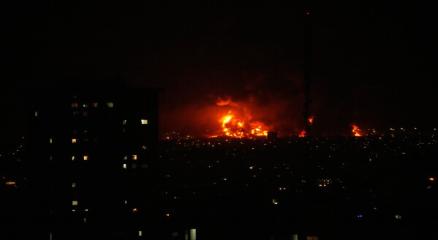
Dozens of explosions were heard in Tehran in what was considered the heaviest air raid on the capital since the war started on February 28. Iranian media did not report on damages and casualties.
Israel said on Monday that it was carrying out "a wide-scale wave of strikes" on the Iranian city of Isfahan, as well as Tehran and in southern Iran. The Israeli military said it hit dozens of infrastructure sites, including the drone headquarters of the Revolutionary Guard.
Meanwhile, Israel's military alerted the population throughout the day about incoming missiles from Iran. From Lebanon, Iran-backed Hezbollah also fired rockets into Israel on Monday.
Trump said the United States was nearing its goal to eliminate Iran's ballistic-missile stockpile and its ability to produce and launch them. The administration has offered shifting rationales and timelines since the start of the conflict.
He also talked about "building a new country", a comment that seemed to suggest the US might be engaged in the building of a new Iran.
Trump likes idea of another 'internal' candidate to lead Iran
Thousands poured into a central square in the capital, Tehran, and other locations in a show of allegiance to the new supreme leader, waving flags and shouting phrases like "Death to America" and "Death to Israel".
The younger Khamenei, who has not been seen in public since the war started, was long considered a potential successor -- even before the killing of his 86-year-old father.
Trump told reporters that he was "disappointed" that Mojtaba Khamenei was picked and that he liked "the idea" of a leader drawn from an "internal" group of candidates, saying that worked well with Venezuela.
The younger Khamenei is seen as even less compromising than his late father. As supreme leader, he has the final say on all major policies, including Tehran's disputed nuclear programme.
Though Iran's key nuclear sites are in tatters after the US bombed them during the 12-day Israel-Iran war in June, it still has highly-enriched uranium that is a technical step away from weapons-grade levels. Khamenei could choose to do what his father never did -- build a nuclear bomb.
Trump told reporters the war with Iran started because that country was working on a new site for developing material for nuclear weapons to replace one bombed last year by the US.
Israel has already described Khamenei as a potential target. Trump said on Monday it "would be inappropriate" to say whether he would be targeted.
US market seesaws over uncertainty of war
The US stock market careened through a manic Monday, going from a steep early loss to a solid gain as worries turned into hope that the war with Iran may not last that long. Oil prices whipped from nearly USD 120 per barrel, the highest since 2022, back toward USD 90.
Iran's attacks in the Strait of Hormuz have all but stopped tankers from using the shipping lane through which a fifth of the world's oil is carried, and Iranian drones and missiles have targeted oil and gas infrastructure in major producers. Attacks on merchant ships near the strait have killed at least seven mariners, according to the International Maritime Organisation.
Kamal Kharazi, foreign policy adviser to the office of the supreme leader, told CNN on Monday that Iran is prepared for a long war. (PTI)
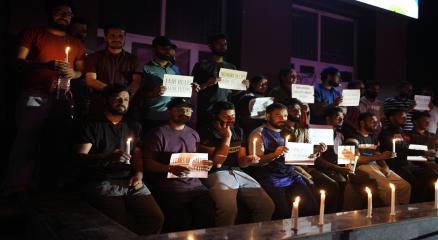
New Delhi, May 12: A massive protest organised by the National Students' Union of India (NSUI) broke out near the Shastri Bhawan on Tuesday, against the alleged paper leak in NEET-UG this year. The exam was held on May 3, following which allegations of paper leak surfaced, triggering investigations by the Rajasthan Special Operations Group (SOG) and central agencies. Earlier, the National Testing Agency (NTA) announced the cancellation of NEET-UG 2026, and said the examination will be re-conducted on dates to be notified separately. In a statement, the NTA said the decision was taken with the approval of the Government of India in the interest of maintaining transparency and preserving trust in the national examination system.
Srinagar, Feb 12: Jammu and Kashmir recorded over 15.48 lakh traffic violation cases in 2025, with authorities collecting more than Rs 34.17 crore as penalty under the Motor Vehicles Act, the Centre informed Parliament on Thursday. The information was shared in the Lok Sabha in response to a question raised by MP Janardan Singh Sigriwal. According to the official data, 15,48,525 challans were issued across the Union Territory in 2025, while the penalty amount recovered stood at Rs 34,17,36,740. The figures further show that in 2024, a total of 15,44,105 violations were registered with a penalty collection of around Rs 43.40 crore, while in 2023, 12,38,584 challans were issued and Rs 34.56 crore was collected. For the current year, till February 8, 2026, Jammu and Kashmir has recorded 1,63,531 traffic violation cases, with revenue collection of about Rs 2.11 crore. The Ministry of Road Transport and Highways stated that stricter penalties under the Motor Vehicles (Amendment) Act, 2019 are aimed at ensuring better compliance and deterrence. It also said that traffic enforcement falls under the jurisdiction of States and Union Territories. The government has issued a Standard Operating Procedure (SOP) for electronic monitoring and is promoting technology-driven enforcement through Automatic Number Plate Recognition (ANPR) cameras integrated with the VAHAN database. Awareness campaigns under the Sadak Suraksha Abhiyan are also being carried out to improve road safety.
New Delhi, Jan 25: The Dental Council of India (DCI) has directed all universities and dental colleges across the country to strictly ensure a minimum of 80 percent biometric attendance for Post Graduate students before allowing them to appear in examinations. The decision has been taken to curb absenteeism among postgraduate dental students. According to a circular issued by the Dental Council of India-a statutory body under the Ministry of Health and Family Welfare, Government of India, the decision has been taken after multiple complaints were received from dental colleges in Rajasthan, Haryana and Uttar Pradesh regarding non-attendance of PG students. "The matter was examined by the Grievance Sub-Committee of the DCI in its meeting held on November 24, 2025," the circular reads. It reads that after detailed discussion and deliberation, the committee recommended that all universities and dental colleges must ensure compliance with Regulation 18(a)(i) of the DCI Master of Dental Surgery Course Regulations, 2017, which mandates at least 80 per cent attendance. "The recommendation of the Grievance Sub-Committee has been approved by the Executive Committee of the Dental Council of India through circulation and has now been formally communicated for information and necessary action," the circular reads. As per the circular, all the universities and dental colleges have been directed to ensure minimum 80 per cent biometric attendance of all PG students before permitting them to appear in examinations. The order, issued by Deputy Secretary Dental Council of India Mukesh Kumar, is expected to be implemented with immediate effect across the country.
Srinagar, Jan 8: Contractual faculty members working in government degree colleges of Jammu and Kashmir Higher Education Department (HED) have expressed strong resentment over what they term as a glaring disparity in salaries, demanding revision of their pay in line with University Grants Commission (UGC) norms and regularisation of their services. The faculty, many of whom hold PhDs and are qualified through NET, SET and JRF, said they have been denied UGC-recommended pay scales despite discharging academic responsibilities equivalent to their regular counterparts. “Hundreds of highly qualified scholars have been pushed into silent suffering. For years, we have been assured that our pay revision is under consideration, but nothing has materialised so far,” said Dr Ishfaq Gowhar, a contractual faculty member. Earlier, Director Colleges J&K had acknowledged the legitimacy of the faculty’s demand, stating that while the issue was genuine, its implementation involved significant financial implications due to the large number of contractual appointments. “We are aware that they deserve salary enhancement, but the number of contractual faculty is huge and it has financial implications,” he earlier said. Dr Gowhar pointed out that contractual lecturers, who form the backbone of the higher education system, continue to work on a fixed monthly honorarium of Rs 28,000, which has remained unchanged for nearly a decade. “The irony is that a Class IV employee with a Class 10 qualification draws a salary exceeding Rs 50,000, while doctorate-holding teachers engaged in teaching, mentoring and academic research are paid a fraction of that,” he said. He added that institutions such as SKUAST-K, University of Kashmir and Islamic University of Science and Technology (IUST) have implemented revised UGC pay scales, but the Higher Education Department has failed to extend similar treatment to its contractual faculty. Dr Gowhar said the demand for “equal work, equal pay” gets prominently featured in election campaigns, raising hopes among contractual teachers. “Promises were made and slogans echoed during elections, but once the process ended, our voices were reduced to silence. Even meeting officials now feels impossible,” he said. He said contractual faculty were not seeking privileges but dignity, fairness and recognition for their service. The faculty appealed to the Jammu and Kashmir Lieutenant Governor Manoj Sinha, Chief Minister Omar Abdullah and the Education Minister to intervene and take concrete steps towards addressing their long-pending demands. “This issue is not merely about salaries. It is about survival, justice and dignity in the classrooms of Jammu and Kashmir,” he said.
Srinagar, March 6: Around 17 candidates from Jammu and Kashmir have qualified the Civil Services Examination (CSE)-2025, the result for which was declared by the Union Public Service Commission (UPSC) on Friday. The commission recommended a total of 958 candidates for appointment to the Indian Administrative Service (IAS), Indian Foreign Service (IFS), Indian Police Service (IPS) and various central services. Anuj Agnihotri, an MBBS graduate, has topped the civil services examination 2025, while Rajeshwari Suve M and Akansh Dhull have got the second and third ranks respectively. According to the official list released by the UPSC the 17 candidates from J&K who have figured in the final merit list include Suvan Sharma (Rank 148), Sugandha Gupta (207), Towseef Ganie (Rank 254), Ritika (Rank 456), Sooyash Shivam (Rank 572), Muneeb Parrah (Rank 581), Ghulam Din (Rank 683), Dwarka Gaadhi (Rank 721), Akash (Rank 747), Koh E Safa (Rank 763), Yasaar (Rank 811), Abhishek (Rank 820), Pankaj (Rank 856), Mohammad Ajaz (Rank 869), Azhar (Rank 886), Sarfraz (Rank 936), and Irfan (Rank 957). The results were declared after conducting the written examination in August 2025 followed by the personality tests (interviews) conducted between December 2025 and February 2026. As per the result notification issue by the UPSC, a total of 958 candidates have been recommended for appointment against 1087 vacancies reported by the government for the examination cycle. These include 180 vacancies in the IAS, 55 in the IFS, 150 in the IPS, 507 in Central Services Group A and 195 in Group B services. Of the total recommended candidates, 317 are from the general category, 104 from the economically weaker sections, 306 from other backward classes, 158 from scheduled castes and 73 from scheduled tribes. A consolidated reserve list of 258 candidates has also been published in accordance with the rules. The claims of recommended candidates regarding reservation categories will be subject to verification by the concerned authorities. The UPSC has stated that the candidature of 348 recommended candidates has been kept provisional, while the result of the two candidates has been kept withheld. The CSE is conducted annually in three stages- preliminary, Mains and interview by the UPSC to select officers of the Indian Administrative Service (IAS), Indian Foreign Service (IFS) and Indian Police Service (IPS) among others. The civil services (preliminary) examination 2025 was conducted on May 25 of 2025. A total of 937876 candidates applied for this examination, out of which 5,76,793 actually appeared in the test. A total of 14,161 candidates qualified for appearance in the written (Main) examination which was held in August, 2025. Of these, 2736 candidates had qualified for the personality test (interview) of the examination. Prime Minister Narendra Modi congratulated the candidates who qualified the UPSC exam. "Congratulations to all those who have successfully cleared the Civil Services Examination, 2025. Their dedication, perseverance and hard work have led to this significant milestone. Wishing them the very best as they embark on a journey of serving the nation and fulfilling the aspirations of the people," PM Modi wrote on his official X handle. "To those who may not have secured the desired outcome in the Civil Services Examination, I understand that such moments can be difficult. However, this is only one step in a larger journey. Many opportunities lie ahead, both in future examinations and in the many avenues through which you can contribute to our nation. My best wishes for the road ahead," his post on X reads. UPSC chairman Ajay Kumar announced the declaration of the result and congratulated the candidates who qualified the exam. "Congrats to all successful candidates as you begin a career of service to the nation. For those who did not make it-the learning from this journey will guide you in the paths ahead," UPSC Chairman wrote in a post on X. Among the 17 candidates from J&K who qualified UPSC exam inlcude a visually impaired candidate Irfan Ahmad Lone, a resident of Manzpora in the Naidkhai area of Bandipora.


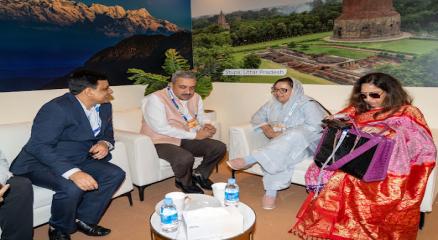
Singapore, Oct 21: Minister for Health and Medical Education, Social Welfare and Education, Sakeena Itoo led a high-level delegation of Jammu and Kashmir at ITB Asia 2026 in Singapore to showcase J&K’s diverse tourism potential and invite global travel stakeholders to explore the region’s rich tourism offerings. The Minister is accompanied by Director Tourism, Jammu Dr. Vikas Gupta, Special Secretary Tourism J&K Suraj Parkash Rukwal and Director Finance Rashim Deepika. The Minister also jointly inaugurated the India Pavilion at ITB Asia 2026 alongside Indian High Commissioner to Singapore, Dr. Shilpak Ambule, providing an important platform to promote Jammu and Kashmir as a premier destination for domestic and international tourists. During the opening day of the grand international travel trade event, the Minister and the delegation held a series of business-to-business (B2B) interactions and strategic meetings with international tour operators, travel trade associations, government representatives and other key stakeholders from the global tourism industry. The interactions focused on highlighting the diverse tourism experiences offered by Jammu and Kashmir, including its renowned leisure and pilgrimage destinations, adventure tourism circuits, winter sports, offbeat destinations and rich cultural and heritage attractions. The delegation also encouraged international travel operators and tourism partners to explore opportunities for collaboration and include Jammu and Kashmir in their travel packages and destination portfolios. Speaking on the occasion, Minister Sakeena Itoo said that Jammu and Kashmir offers an exceptional blend of natural beauty, cultural heritage, spiritual destinations and adventure experiences, making it an attractive destination for travellers with diverse interests. “Jammu and Kashmir has immense tourism potential, and our endeavour is to showcase its diversity to the world. From its breathtaking landscapes and vibrant cultural traditions to pilgrimage tourism, adventure activities and winter sports, the Union Territory offers unique experiences for visitors throughout the year," Sakina Itoo said. She further said that international tourism platforms such as ITB Asia provide valuable opportunities to connect with global stakeholders, strengthen partnerships and expand the reach of Jammu and Kashmir’s tourism sector. “Our participation at ITB Asia reflects the J&K government’s commitment to promoting Jammu and Kashmir on the international tourism map. We invite tour operators, travel agencies, investors and tourism professionals from across the world to explore the opportunities available in Jammu and Kashmir and partner with us in promoting its tourism potential," she added. The minister also emphasised the importance of strengthening tourism partnerships, improving destination visibility and encouraging sustainable tourism practices to ensure that the benefits of tourism reach local communities and contribute to economic growth and employment generation. On the occasion, the J&K delegation also highlighted the opportunities available for collaboration across various tourism segments and underscored the importance of developing customised travel experiences to cater to the evolving preferences of international visitors. Pertinently, the engagements at ITB Asia 2026 are aimed at fostering long-term partnerships with global travel companies, facilitating greater tourism exchanges and positioning Jammu and Kashmir as a preferred destination for leisure, adventure, pilgrimage and cultural tourism. The participation of the Jammu and Kashmir delegation at the international event is expected to further strengthen the Union Territory’s tourism outreach and create new avenues for collaboration with stakeholders in the global travel and hospitality industry.
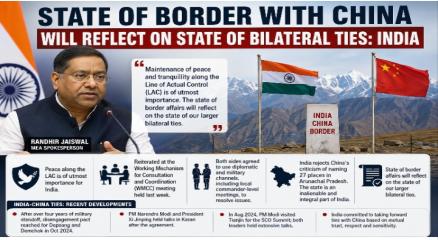
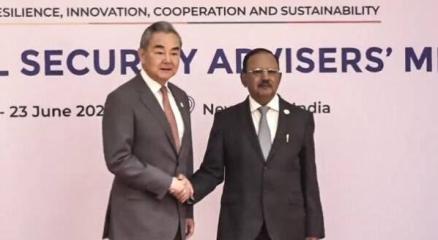
Beijing, Jun 23: Chinese Foreign Minister Wang Yi has said that it is "imperative" for India and China to respect each other's "core interests" and take concrete actions to implement the "important consensus" reached by the leaders of both countries. Wang, who is in New Delhi to attend the BRICS NSA conference, made the remarks during his meeting with National Security Advisor Ajit Doval on Monday, according to China's state-run Xinhua news agency. During their meeting, Wang and Doval discussed the bilateral relations and progress of the normalisation process. Both Wang and Doval are the Special Representatives of the India-China border issue. India is an important neighbour of China, and bilateral relations have returned to the track of recovery and improvement, said Wang, who is also a member of the Political Bureau of the ruling Communist Party of China and director of the Office of the Central Commission for Foreign Affairs. Wang noted that the leaders of the two countries agreed that China and India are partners instead of rivals, thus forming the most important strategic consensus between the two sides, providing an important impetus and strategic guarantee for the healthy and stable development of China-India relations, according to an official press release issued here on Monday night on the Doval-Wang meeting. As the two economies with the largest populations, China and India should not only view bilateral relations from a long-term perspective, but also promote cooperation between the two countries from a global perspective, Wang said. He noted that both sides should take concrete actions to implement the important consensus reached by the leaders of the two countries, promote their respective development and revitalisation through cooperation, and accelerate the modernisation process of the Global South. It is imperative to respect each other's core interests, properly handle sensitive issues, and place the China-India border issue in an appropriate position, so that it doesn't affect the overall situation of bilateral relations, Wang said. He also underlined the need to advance the restoration of dialogue mechanisms and promote exchanges in various fields, such as trade, finance, law enforcement and media, Xinhua reported, quoting the official press release. The two sides should also actively guide all sectors of society to form a correct understanding, and lay a solid public opinion and social foundation for improving bilateral relations, Wang added. Responding to a question on Doval-Wang talks, Chinese Foreign Ministry spokesperson Guo Jiakun told media here on Tuesday that the China-India border area is generally stable and the two sides maintain open communication channels on border-related issues. “Both sides are actively implementing the common understandings reached in the 24th Round of Talks Between the Special Representatives of China and India on the Boundary Question, and are working hard in preparation for the 25th round of talks,” he said. In New Delhi, External Affairs Ministry spokesman Randhir Jaiswal on Monday said that the Doval-Wang discussions were "constructive and forward-looking". "NSA Doval underlined that stable, predictable and constructive bilateral relations contribute to building of trust and better understanding between the two sides," he said. India and China rolled out a series of measures in the last over one year to rebuild their relationship after it witnessed a major downturn following the deadly Galwan Valley clashes in 2020 and the subsequent military face-off that lasted for over four years. In August last year, Doval and Wang held Special Representatives dialogue in New Delhi that produced a number of outcomes to maintain peace along the border.

Dubai, Mar 10: US President Donald Trump said on Monday that the war against Iran could be short-lived, but he left open the possibility of an escalation in fighting if global oil supplies are disrupted by the Islamic Republic, which chose a new hard-line supreme leader. Oil prices briefly shot to their highest level since 2022 a day after Iran selected Ayatollah Mojtaba Khamenei to succeed his late father as Iran's supreme leader. Investors saw it as a signal that Iran was digging in 10 days into the war launched by the United States and Israel. But prices later fell and US stocks rose on hopes that the war with Iran may not last much longer. "We took a little excursion" to the Middle East "to get rid of some evil. And, I think you will see it is going to be a short-term excursion", Trump told Republican lawmakers at his golf club near Miami. Hours later, Trump posted on social media: "If Iran does anything that stops the flow of Oil within the Strait of Hormuz, they will be hit by the United States of America TWENTY TIMES HARDER than they have been hit thus far." The war has choked off major supplies of oil and gas to world markets and sent fuel prices rising across the US. The fighting has also led foreigners to flee from business hubs and prompted millions to seek shelter as bombs hit military bases, government buildings, oil and water installations, hotels and at least one school. Trump also had a call on Monday with Russian President Vladimir Putin to discuss the war and other issues. Putin's foreign affairs adviser, Yuri Ushakov, said Putin "voiced a few ideas regarding a quick political and diplomatic settlement" of the conflict following his conversations with Gulf leaders and Iranian President Masoud Pezeshkian. Khamenei, a secretive 56-year-old cleric, is only the third supreme leader in the history of the Islamic Republic. He has close ties to the paramilitary Revolutionary Guard, which has been firing missiles and drones at Israel and Gulf Arab states since his father, Ayatollah Ali Khamenei, who had ruled since 1989, was killed during the war's opening salvo. Multiple strikes shake Tehran Dozens of explosions were heard in Tehran in what was considered the heaviest air raid on the capital since the war started on February 28. Iranian media did not report on damages and casualties. Israel said on Monday that it was carrying out "a wide-scale wave of strikes" on the Iranian city of Isfahan, as well as Tehran and in southern Iran. The Israeli military said it hit dozens of infrastructure sites, including the drone headquarters of the Revolutionary Guard. Meanwhile, Israel's military alerted the population throughout the day about incoming missiles from Iran. From Lebanon, Iran-backed Hezbollah also fired rockets into Israel on Monday. Trump said the United States was nearing its goal to eliminate Iran's ballistic-missile stockpile and its ability to produce and launch them. The administration has offered shifting rationales and timelines since the start of the conflict. He also talked about "building a new country", a comment that seemed to suggest the US might be engaged in the building of a new Iran. Trump likes idea of another 'internal' candidate to lead Iran Thousands poured into a central square in the capital, Tehran, and other locations in a show of allegiance to the new supreme leader, waving flags and shouting phrases like "Death to America" and "Death to Israel". The younger Khamenei, who has not been seen in public since the war started, was long considered a potential successor -- even before the killing of his 86-year-old father. Trump told reporters that he was "disappointed" that Mojtaba Khamenei was picked and that he liked "the idea" of a leader drawn from an "internal" group of candidates, saying that worked well with Venezuela. The younger Khamenei is seen as even less compromising than his late father. As supreme leader, he has the final say on all major policies, including Tehran's disputed nuclear programme. Though Iran's key nuclear sites are in tatters after the US bombed them during the 12-day Israel-Iran war in June, it still has highly-enriched uranium that is a technical step away from weapons-grade levels. Khamenei could choose to do what his father never did -- build a nuclear bomb. Trump told reporters the war with Iran started because that country was working on a new site for developing material for nuclear weapons to replace one bombed last year by the US. Israel has already described Khamenei as a potential target. Trump said on Monday it "would be inappropriate" to say whether he would be targeted. US market seesaws over uncertainty of war The US stock market careened through a manic Monday, going from a steep early loss to a solid gain as worries turned into hope that the war with Iran may not last that long. Oil prices whipped from nearly USD 120 per barrel, the highest since 2022, back toward USD 90. Iran's attacks in the Strait of Hormuz have all but stopped tankers from using the shipping lane through which a fifth of the world's oil is carried, and Iranian drones and missiles have targeted oil and gas infrastructure in major producers. Attacks on merchant ships near the strait have killed at least seven mariners, according to the International Maritime Organisation. Kamal Kharazi, foreign policy adviser to the office of the supreme leader, told CNN on Monday that Iran is prepared for a long war. (PTI)