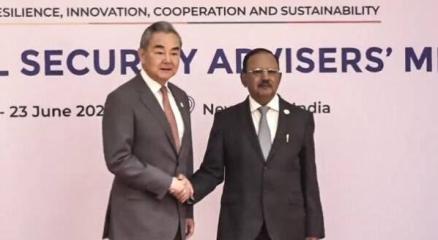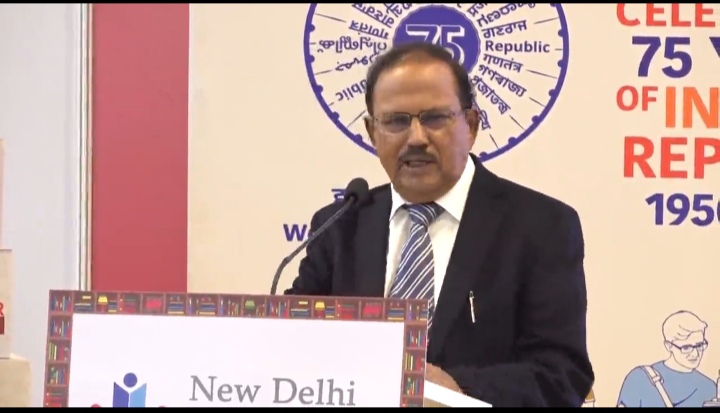
Srinagar Feb 02: National Security Advisor Ajit Doval on Sunday said that Introspection by states and societies has always been important and stressed the need to focus on conflict resolution.
He was speaking in the context of the conflict between state and religion.
In his address during the release of the Hindi version of the Turkish-American scholar-author Ahmet T Kuru s book Islam Authoritarianism: Underdevelopment- A Global and Historical Comparison published by the Khusro Foundation.
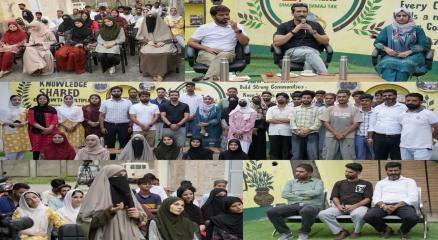
Addressing a jam packed gathering at the New Delhi World Book Fair, he said that the fidelity to religion or state should not be compromised. "We should not allow our brains to be imprisoned. If you do not introspect you lose time and direction. If done too late then you tend to lag," he said.
Doval said the phenomenon of the relationship between State and religion is not unique to Islam, although in Abbasid rule there was clarity on the role of state and clergy
"The conflict between religion and state would continue but important is if we are looking for a resolution,"
while speaking on the topic of the book in front of Dr. Kuru, who is based in the USA and had come for the release of his book.
"In Hinduism, the conflict was resolved through meditation and shastrarth debates of scholars and learned men from competitive thoughts or religions," he said.
Doval further said that religion-based conflicts are inevitable since all ideologies are competitive and if they did not compete they would stagnate and eventually perish.
"However, to avoid conflicts flaring up it is important to allow the free flow of thoughts and avoid stagnation," he said.
He said that the generations who could not think out of the box have stagnated
Resistance to adopt the printing press is one example where the resistance came from the clergy," he said while quoting from history.
"They thought with the advent of the printing press the meaning of Islam which they perceived to be real would not be interpreted properly," he said.
Speaking on the occasion M J Akbar, former minister, author and journalist said more than democracy, Muslims need to revert to a knowledge-based society as it was during the glorious period of Muslim rule.
"The fall of Muslim empires happened because they stopped sharing knowledge," he said.
In the context of Islam, Akbar said, Sufism was practical because it teaches us a relationship that is not hostile.
"The real problem of Muslims is their inability to come to terms with modernity and understand the nation-state," he said and suggested to Dr Kuru to focus on Pakistan, which he said was a classic example of how religion was used to divide a country and to generate institutionalized and generational conflict.
Speaking on the occasion, Dr Kuru said that Muslims must accept their citizenship both for their rights and to perform their duties to end their backwardness.
"The solution to Muslims backwardness could be found in democracy. Both the majority and minority communities in a country should respect citizenship," he said.
He said all sections of the society should be given equal rights and be mindful of their duties towards their country as well.
"Muslims did well when they believed in coexistence and were open-minded and accepting diversity," he said.
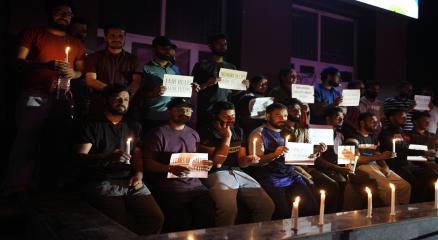
New Delhi, May 12: A massive protest organised by the National Students' Union of India (NSUI) broke out near the Shastri Bhawan on Tuesday, against the alleged paper leak in NEET-UG this year. The exam was held on May 3, following which allegations of paper leak surfaced, triggering investigations by the Rajasthan Special Operations Group (SOG) and central agencies. Earlier, the National Testing Agency (NTA) announced the cancellation of NEET-UG 2026, and said the examination will be re-conducted on dates to be notified separately. In a statement, the NTA said the decision was taken with the approval of the Government of India in the interest of maintaining transparency and preserving trust in the national examination system.
Srinagar, Feb 12: Jammu and Kashmir recorded over 15.48 lakh traffic violation cases in 2025, with authorities collecting more than Rs 34.17 crore as penalty under the Motor Vehicles Act, the Centre informed Parliament on Thursday. The information was shared in the Lok Sabha in response to a question raised by MP Janardan Singh Sigriwal. According to the official data, 15,48,525 challans were issued across the Union Territory in 2025, while the penalty amount recovered stood at Rs 34,17,36,740. The figures further show that in 2024, a total of 15,44,105 violations were registered with a penalty collection of around Rs 43.40 crore, while in 2023, 12,38,584 challans were issued and Rs 34.56 crore was collected. For the current year, till February 8, 2026, Jammu and Kashmir has recorded 1,63,531 traffic violation cases, with revenue collection of about Rs 2.11 crore. The Ministry of Road Transport and Highways stated that stricter penalties under the Motor Vehicles (Amendment) Act, 2019 are aimed at ensuring better compliance and deterrence. It also said that traffic enforcement falls under the jurisdiction of States and Union Territories. The government has issued a Standard Operating Procedure (SOP) for electronic monitoring and is promoting technology-driven enforcement through Automatic Number Plate Recognition (ANPR) cameras integrated with the VAHAN database. Awareness campaigns under the Sadak Suraksha Abhiyan are also being carried out to improve road safety.
New Delhi, Jan 25: The Dental Council of India (DCI) has directed all universities and dental colleges across the country to strictly ensure a minimum of 80 percent biometric attendance for Post Graduate students before allowing them to appear in examinations. The decision has been taken to curb absenteeism among postgraduate dental students. According to a circular issued by the Dental Council of India-a statutory body under the Ministry of Health and Family Welfare, Government of India, the decision has been taken after multiple complaints were received from dental colleges in Rajasthan, Haryana and Uttar Pradesh regarding non-attendance of PG students. "The matter was examined by the Grievance Sub-Committee of the DCI in its meeting held on November 24, 2025," the circular reads. It reads that after detailed discussion and deliberation, the committee recommended that all universities and dental colleges must ensure compliance with Regulation 18(a)(i) of the DCI Master of Dental Surgery Course Regulations, 2017, which mandates at least 80 per cent attendance. "The recommendation of the Grievance Sub-Committee has been approved by the Executive Committee of the Dental Council of India through circulation and has now been formally communicated for information and necessary action," the circular reads. As per the circular, all the universities and dental colleges have been directed to ensure minimum 80 per cent biometric attendance of all PG students before permitting them to appear in examinations. The order, issued by Deputy Secretary Dental Council of India Mukesh Kumar, is expected to be implemented with immediate effect across the country.
Srinagar, Jan 8: Contractual faculty members working in government degree colleges of Jammu and Kashmir Higher Education Department (HED) have expressed strong resentment over what they term as a glaring disparity in salaries, demanding revision of their pay in line with University Grants Commission (UGC) norms and regularisation of their services. The faculty, many of whom hold PhDs and are qualified through NET, SET and JRF, said they have been denied UGC-recommended pay scales despite discharging academic responsibilities equivalent to their regular counterparts. “Hundreds of highly qualified scholars have been pushed into silent suffering. For years, we have been assured that our pay revision is under consideration, but nothing has materialised so far,” said Dr Ishfaq Gowhar, a contractual faculty member. Earlier, Director Colleges J&K had acknowledged the legitimacy of the faculty’s demand, stating that while the issue was genuine, its implementation involved significant financial implications due to the large number of contractual appointments. “We are aware that they deserve salary enhancement, but the number of contractual faculty is huge and it has financial implications,” he earlier said. Dr Gowhar pointed out that contractual lecturers, who form the backbone of the higher education system, continue to work on a fixed monthly honorarium of Rs 28,000, which has remained unchanged for nearly a decade. “The irony is that a Class IV employee with a Class 10 qualification draws a salary exceeding Rs 50,000, while doctorate-holding teachers engaged in teaching, mentoring and academic research are paid a fraction of that,” he said. He added that institutions such as SKUAST-K, University of Kashmir and Islamic University of Science and Technology (IUST) have implemented revised UGC pay scales, but the Higher Education Department has failed to extend similar treatment to its contractual faculty. Dr Gowhar said the demand for “equal work, equal pay” gets prominently featured in election campaigns, raising hopes among contractual teachers. “Promises were made and slogans echoed during elections, but once the process ended, our voices were reduced to silence. Even meeting officials now feels impossible,” he said. He said contractual faculty were not seeking privileges but dignity, fairness and recognition for their service. The faculty appealed to the Jammu and Kashmir Lieutenant Governor Manoj Sinha, Chief Minister Omar Abdullah and the Education Minister to intervene and take concrete steps towards addressing their long-pending demands. “This issue is not merely about salaries. It is about survival, justice and dignity in the classrooms of Jammu and Kashmir,” he said.
Srinagar, March 6: Around 17 candidates from Jammu and Kashmir have qualified the Civil Services Examination (CSE)-2025, the result for which was declared by the Union Public Service Commission (UPSC) on Friday. The commission recommended a total of 958 candidates for appointment to the Indian Administrative Service (IAS), Indian Foreign Service (IFS), Indian Police Service (IPS) and various central services. Anuj Agnihotri, an MBBS graduate, has topped the civil services examination 2025, while Rajeshwari Suve M and Akansh Dhull have got the second and third ranks respectively. According to the official list released by the UPSC the 17 candidates from J&K who have figured in the final merit list include Suvan Sharma (Rank 148), Sugandha Gupta (207), Towseef Ganie (Rank 254), Ritika (Rank 456), Sooyash Shivam (Rank 572), Muneeb Parrah (Rank 581), Ghulam Din (Rank 683), Dwarka Gaadhi (Rank 721), Akash (Rank 747), Koh E Safa (Rank 763), Yasaar (Rank 811), Abhishek (Rank 820), Pankaj (Rank 856), Mohammad Ajaz (Rank 869), Azhar (Rank 886), Sarfraz (Rank 936), and Irfan (Rank 957). The results were declared after conducting the written examination in August 2025 followed by the personality tests (interviews) conducted between December 2025 and February 2026. As per the result notification issue by the UPSC, a total of 958 candidates have been recommended for appointment against 1087 vacancies reported by the government for the examination cycle. These include 180 vacancies in the IAS, 55 in the IFS, 150 in the IPS, 507 in Central Services Group A and 195 in Group B services. Of the total recommended candidates, 317 are from the general category, 104 from the economically weaker sections, 306 from other backward classes, 158 from scheduled castes and 73 from scheduled tribes. A consolidated reserve list of 258 candidates has also been published in accordance with the rules. The claims of recommended candidates regarding reservation categories will be subject to verification by the concerned authorities. The UPSC has stated that the candidature of 348 recommended candidates has been kept provisional, while the result of the two candidates has been kept withheld. The CSE is conducted annually in three stages- preliminary, Mains and interview by the UPSC to select officers of the Indian Administrative Service (IAS), Indian Foreign Service (IFS) and Indian Police Service (IPS) among others. The civil services (preliminary) examination 2025 was conducted on May 25 of 2025. A total of 937876 candidates applied for this examination, out of which 5,76,793 actually appeared in the test. A total of 14,161 candidates qualified for appearance in the written (Main) examination which was held in August, 2025. Of these, 2736 candidates had qualified for the personality test (interview) of the examination. Prime Minister Narendra Modi congratulated the candidates who qualified the UPSC exam. "Congratulations to all those who have successfully cleared the Civil Services Examination, 2025. Their dedication, perseverance and hard work have led to this significant milestone. Wishing them the very best as they embark on a journey of serving the nation and fulfilling the aspirations of the people," PM Modi wrote on his official X handle. "To those who may not have secured the desired outcome in the Civil Services Examination, I understand that such moments can be difficult. However, this is only one step in a larger journey. Many opportunities lie ahead, both in future examinations and in the many avenues through which you can contribute to our nation. My best wishes for the road ahead," his post on X reads. UPSC chairman Ajay Kumar announced the declaration of the result and congratulated the candidates who qualified the exam. "Congrats to all successful candidates as you begin a career of service to the nation. For those who did not make it-the learning from this journey will guide you in the paths ahead," UPSC Chairman wrote in a post on X. Among the 17 candidates from J&K who qualified UPSC exam inlcude a visually impaired candidate Irfan Ahmad Lone, a resident of Manzpora in the Naidkhai area of Bandipora.


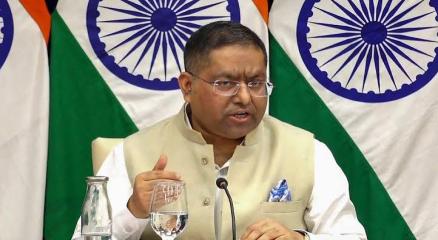
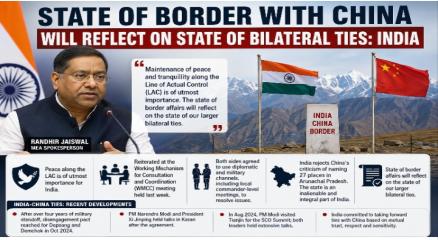
New Delhi, Aug 18: India on Tuesday condemned cross-border terrorism and said its fight against terrorism would continue and New Delhi would take “whatever action is required” to defeat the menace. Addressing media persons in New Delhi, Ministry of External Affairs spokesperson Randhir Jaiswal said that India wanted the global community to understand that the country was being targeted by global terrorism and had made sustained efforts over the years to build international action against cross-border terrorism. “Our fight against terrorism will continue further and we will take whatever action is required to defeat terrorism,” the MEA spokesperson said. On the unrest in Pakistan-occupied Kashmir (PoK), Jaiswal said a large number of people were killed by Pakistani forces and many others injured. He alleged that the Pakistan government had also restricted the supply of essential commodities in the region. India, he said, urged Pakistan to ensure the provision of basic amenities to the people of PoK, while calling for international support and sympathy for those affected by the situation. On ties with Bangladesh, Jaiswal said India continued to have energy cooperation with the neighbouring country and was examining its requirements, refinery capacity and availability in connection with Dhaka’s request for additional energy supplies. He said India desired a “positive, constructive and forward-looking” relationship with Bangladesh based on mutual interests. On Bangladesh’s request for the extradition of former Prime Minister Sheikh Hasina, Jaiswal reiterated India’s consistent position that the request was being examined through established processes between the two countries. Meanwhile, on India-Afghanistan relations, the MEA spokesperson said deep-rooted ties between the two countries continued to drive their historic relationship and were helping strengthen bilateral ties further. Jaiswal also conveyed India’s condolences over the loss of lives in the earthquakes in Indonesia. He said a large number of people had been killed and many others injured, expressing India’s solidarity with Indonesia during the difficult hour.

New Delhi, June 23: Google restored instant messaging app Telegram on Tuesday morning as a temporary ban imposed by the government ended in the midnight of June 22. The platform was accessible to some existing users before Google restored it. The app continued to remain delisted on Apple's Appstore till around 10 am. An emailed query sent to Apple did not elicit an immediate response in this regard. The government had temporarily imposed a blanket ban on Telegram until June 22 and sources indicated that there is no change or extension of timelines in the order. The government had ordered the ban on Telegram following its failure to prevent the circulation of fake examination papers of NEET, dissemination of misleading information and other fraudulent activities that impacted the examination process. Before imposing the ban, government officials met Telegram representatives on June 3 where these concerns were flagged. Thereafter, the Centre decided to block the app and its associated web links, including the web version, till June 22. Telegram has also been directed to block its message editing feature till June 30. The NEET re-examination was conducted on June 21 and so far there has been no report of any fraudulent activity. Telegram Founder and CEO Pavel Durov had criticised India's IT ministry for banning Telegram for one week because some users shared leaked exam questions. He alleged that Reliance, in which Meta has a partial stake, may have lobbied, along with its competitor WhatsApp, to impose the ban on the company's app in the country.
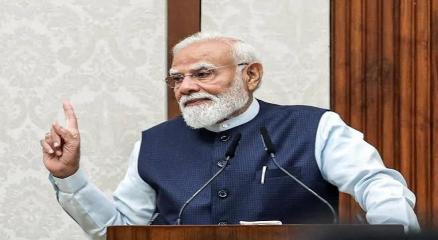
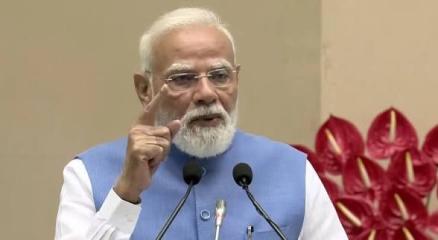
New Delhi, Jun 22: Prime Minister Narendra Modi launched a scathing attack on the Congress on Monday for decades of unabated Maoist violence in the country and said the hands of those who are waving the Constitution now were trembling then. Addressing the "Republic Summit 2026" here, Modi also said Bharat is not only a fast-growing economy, but also a credible and reliable global power and the country is scripting the future of the next 1,000 years. He said the previous Congress governments had labelled Naxal-affected areas as backward regions but the NDA government undertook the challenge of transforming those areas, helping the people there rise above despair and igniting their aspirations for progress. To reflect this new approach, Modi said his government renamed those areas as aspirational districts and blocks and today, these aspirational districts and blocks are driving the growth of those regions. He said a significant proportion of the population in these regions lived in poverty but over the last few years, 25 crore people have overcome poverty, with aspirational districts playing a crucial role in this achievement and those areas that were once affected by Naxalism are seeing new rays of development now. The prime minister said even in the 21st century, terrorists had prevented any facility from being established in the tribal areas. He added that even a government vehicle could not pass through as it would be riddled with bullets. Governments came and went, generations came and went and it seemed that this misfortune of violence would persist just like that, Modi said. "Between 2004 and 2014, more than 17,000 violent incidents occurred due to Maoist terrorism and nearly 7,000 lives were lost. After 2014, we moved forward with the resolve of Nation First to change the situation. "Today, Maoist terrorism in the country is counting its final breaths. This became possible because it required total dedication. Today, those who are waving the Constitution, their hands were trembling to even show the Constitution then," he said. Congress leader Rahul Gandhi has been seen carrying a copy of the Constitution for different occasions, including while taking oath as an MP after the 2024 Lok Sabha polls.