New Delhi, Jan 12: The National Human Rights Commission (NHRC) on Monday said that the report submitted by the Indian Railways on the issue of serving halal-certified food in trains is “incomplete” and also “lacks transparency”.
The NHRC had issued a notice to the Railway Board following a complaint alleging that Indian Railways serves only halal-processed meat in non-vegetarian meals, which, according to the complainant, creates unfair discrimination and results in violations of human rights.
In response, the Railway Board informed the Commission that there is no official provision for selling or serving halal-certified food in trains.
“Indian Railways and IRCTC follow the Food Safety and Standards Authority of India (FSSAI) guidelines for their food products,” a senior Railway Board official said, adding, “There is no official provision for serving halal-certified food on Indian Railways.”
Railway officials also pointed out that a similar issue had recently been raised before the Chief Information Commission (CIC) by an applicant seeking information under the Right to Information Act on whether halal-processed meat is served in non-vegetarian meals on trains.
The Railway Board had taken the stand before the CIC that no halal-certified food is served by Indian Railways.
The CIC, in its order, recorded the Railways’ submission and noted that the Chief Principal Information Officer had clearly and consistently stated that no records or documents exist within IRCTC regarding any policy on halal-certified food, its approval process, or any explicit consent taken from passengers in this regard.
However, the NHRC observed that the report submitted by the Railways appears to be “incomplete” and “lacks transparency”, particularly as it affects the “freedom of choice of passengers”, which is a fundamental right that allows individuals to know what they are consuming.
The Commission further noted that for any meat to be qualified as ‘halal’, it must be slaughtered by a Muslim, as per the interpretation of Darul Uloom Deoband.
It said that if such meat is being served on trains or on platforms managed by IRCTC, it raises concerns related to discrimination in employment and restriction of opportunities for people belonging to other religions.
While acknowledging that IRCTC complies with food standards and quality norms prescribed under the FSSAI, the NHRC said that, considering the mandates of the ‘Sikh Reht Maryada’ and keeping in view IRCTC’s role as a major public service provider, clear and specific information regarding the method of slaughter used for non-vegetarian food must be disclosed to the public.
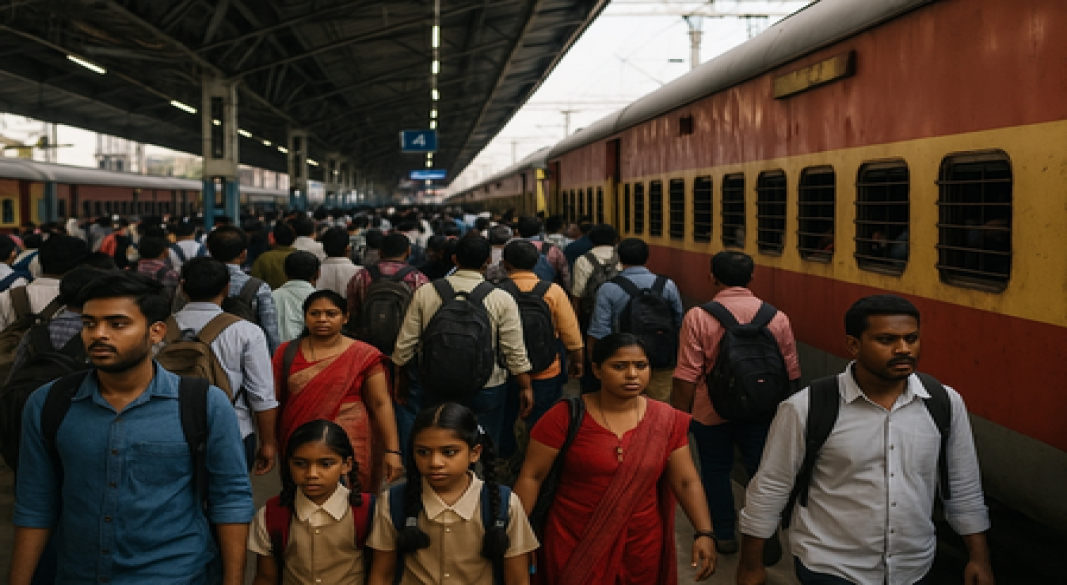
The Commission further noted that IRCTC works with a wide network of food vendors and contractors under various categories to provide meals to passengers at railway stations, on trains, as well as in hotels and restaurants.
However, the report submitted by the Railways does not provide details of vendors or contractors serving halal food, jhatka food, or both types of non-vegetarian food.
In view of these observations, the NHRC directed IRCTC to submit a fresh Action Taken Report.
The report must include a comprehensive list of all food contractors and vendors engaged by IRCTC for providing meals across all platforms, including railway stations, trains, hotels and restaurants.
Against each contractor or vendor, the report must clearly specify whether the non-vegetarian food served is halal, jhatka, or both, along with details of the locations or services where such food is supplied.
The Commission also asked the Railway Board to take note of these observations and submit an Action Taken Report on how these concerns will be incorporated into its quality and standards framework.
Additionally, the NHRC pointed out that the Ministry of Tourism issues guidelines for the classification and star ranking of hotels across the country.
However, it found that none of these guidelines contain any provision requiring hotels to disclose the method of slaughter used for non-vegetarian food served on their premises.
Accordingly, the Commission directed the Secretary, Ministry of Tourism, Government of India, to take note of its observations and submit an Action Taken Report on the incorporation of these aspects into the hotel classification and star ranking system.
The NHRC has sought responses from all the concerned authorities within four weeks. (IANS)
New Delhi, May 12: A massive protest organised by the National Students' Union of India (NSUI) broke out near the Shastri Bhawan on Tuesday, against the alleged paper leak in NEET-UG this year. The exam was held on May 3, following which allegations of paper leak surfaced, triggering investigations by the Rajasthan Special Operations Group (SOG) and central agencies. Earlier, the National Testing Agency (NTA) announced the cancellation of NEET-UG 2026, and said the examination will be re-conducted on dates to be notified separately. In a statement, the NTA said the decision was taken with the approval of the Government of India in the interest of maintaining transparency and preserving trust in the national examination system.
Srinagar, Feb 12: Jammu and Kashmir recorded over 15.48 lakh traffic violation cases in 2025, with authorities collecting more than Rs 34.17 crore as penalty under the Motor Vehicles Act, the Centre informed Parliament on Thursday. The information was shared in the Lok Sabha in response to a question raised by MP Janardan Singh Sigriwal. According to the official data, 15,48,525 challans were issued across the Union Territory in 2025, while the penalty amount recovered stood at Rs 34,17,36,740. The figures further show that in 2024, a total of 15,44,105 violations were registered with a penalty collection of around Rs 43.40 crore, while in 2023, 12,38,584 challans were issued and Rs 34.56 crore was collected. For the current year, till February 8, 2026, Jammu and Kashmir has recorded 1,63,531 traffic violation cases, with revenue collection of about Rs 2.11 crore. The Ministry of Road Transport and Highways stated that stricter penalties under the Motor Vehicles (Amendment) Act, 2019 are aimed at ensuring better compliance and deterrence. It also said that traffic enforcement falls under the jurisdiction of States and Union Territories. The government has issued a Standard Operating Procedure (SOP) for electronic monitoring and is promoting technology-driven enforcement through Automatic Number Plate Recognition (ANPR) cameras integrated with the VAHAN database. Awareness campaigns under the Sadak Suraksha Abhiyan are also being carried out to improve road safety.
New Delhi, Jan 25: The Dental Council of India (DCI) has directed all universities and dental colleges across the country to strictly ensure a minimum of 80 percent biometric attendance for Post Graduate students before allowing them to appear in examinations. The decision has been taken to curb absenteeism among postgraduate dental students. According to a circular issued by the Dental Council of India-a statutory body under the Ministry of Health and Family Welfare, Government of India, the decision has been taken after multiple complaints were received from dental colleges in Rajasthan, Haryana and Uttar Pradesh regarding non-attendance of PG students. "The matter was examined by the Grievance Sub-Committee of the DCI in its meeting held on November 24, 2025," the circular reads. It reads that after detailed discussion and deliberation, the committee recommended that all universities and dental colleges must ensure compliance with Regulation 18(a)(i) of the DCI Master of Dental Surgery Course Regulations, 2017, which mandates at least 80 per cent attendance. "The recommendation of the Grievance Sub-Committee has been approved by the Executive Committee of the Dental Council of India through circulation and has now been formally communicated for information and necessary action," the circular reads. As per the circular, all the universities and dental colleges have been directed to ensure minimum 80 per cent biometric attendance of all PG students before permitting them to appear in examinations. The order, issued by Deputy Secretary Dental Council of India Mukesh Kumar, is expected to be implemented with immediate effect across the country.
Srinagar, Jan 8: Contractual faculty members working in government degree colleges of Jammu and Kashmir Higher Education Department (HED) have expressed strong resentment over what they term as a glaring disparity in salaries, demanding revision of their pay in line with University Grants Commission (UGC) norms and regularisation of their services. The faculty, many of whom hold PhDs and are qualified through NET, SET and JRF, said they have been denied UGC-recommended pay scales despite discharging academic responsibilities equivalent to their regular counterparts. “Hundreds of highly qualified scholars have been pushed into silent suffering. For years, we have been assured that our pay revision is under consideration, but nothing has materialised so far,” said Dr Ishfaq Gowhar, a contractual faculty member. Earlier, Director Colleges J&K had acknowledged the legitimacy of the faculty’s demand, stating that while the issue was genuine, its implementation involved significant financial implications due to the large number of contractual appointments. “We are aware that they deserve salary enhancement, but the number of contractual faculty is huge and it has financial implications,” he earlier said. Dr Gowhar pointed out that contractual lecturers, who form the backbone of the higher education system, continue to work on a fixed monthly honorarium of Rs 28,000, which has remained unchanged for nearly a decade. “The irony is that a Class IV employee with a Class 10 qualification draws a salary exceeding Rs 50,000, while doctorate-holding teachers engaged in teaching, mentoring and academic research are paid a fraction of that,” he said. He added that institutions such as SKUAST-K, University of Kashmir and Islamic University of Science and Technology (IUST) have implemented revised UGC pay scales, but the Higher Education Department has failed to extend similar treatment to its contractual faculty. Dr Gowhar said the demand for “equal work, equal pay” gets prominently featured in election campaigns, raising hopes among contractual teachers. “Promises were made and slogans echoed during elections, but once the process ended, our voices were reduced to silence. Even meeting officials now feels impossible,” he said. He said contractual faculty were not seeking privileges but dignity, fairness and recognition for their service. The faculty appealed to the Jammu and Kashmir Lieutenant Governor Manoj Sinha, Chief Minister Omar Abdullah and the Education Minister to intervene and take concrete steps towards addressing their long-pending demands. “This issue is not merely about salaries. It is about survival, justice and dignity in the classrooms of Jammu and Kashmir,” he said.
Srinagar, March 6: Around 17 candidates from Jammu and Kashmir have qualified the Civil Services Examination (CSE)-2025, the result for which was declared by the Union Public Service Commission (UPSC) on Friday. The commission recommended a total of 958 candidates for appointment to the Indian Administrative Service (IAS), Indian Foreign Service (IFS), Indian Police Service (IPS) and various central services. Anuj Agnihotri, an MBBS graduate, has topped the civil services examination 2025, while Rajeshwari Suve M and Akansh Dhull have got the second and third ranks respectively. According to the official list released by the UPSC the 17 candidates from J&K who have figured in the final merit list include Suvan Sharma (Rank 148), Sugandha Gupta (207), Towseef Ganie (Rank 254), Ritika (Rank 456), Sooyash Shivam (Rank 572), Muneeb Parrah (Rank 581), Ghulam Din (Rank 683), Dwarka Gaadhi (Rank 721), Akash (Rank 747), Koh E Safa (Rank 763), Yasaar (Rank 811), Abhishek (Rank 820), Pankaj (Rank 856), Mohammad Ajaz (Rank 869), Azhar (Rank 886), Sarfraz (Rank 936), and Irfan (Rank 957). The results were declared after conducting the written examination in August 2025 followed by the personality tests (interviews) conducted between December 2025 and February 2026. As per the result notification issue by the UPSC, a total of 958 candidates have been recommended for appointment against 1087 vacancies reported by the government for the examination cycle. These include 180 vacancies in the IAS, 55 in the IFS, 150 in the IPS, 507 in Central Services Group A and 195 in Group B services. Of the total recommended candidates, 317 are from the general category, 104 from the economically weaker sections, 306 from other backward classes, 158 from scheduled castes and 73 from scheduled tribes. A consolidated reserve list of 258 candidates has also been published in accordance with the rules. The claims of recommended candidates regarding reservation categories will be subject to verification by the concerned authorities. The UPSC has stated that the candidature of 348 recommended candidates has been kept provisional, while the result of the two candidates has been kept withheld. The CSE is conducted annually in three stages- preliminary, Mains and interview by the UPSC to select officers of the Indian Administrative Service (IAS), Indian Foreign Service (IFS) and Indian Police Service (IPS) among others. The civil services (preliminary) examination 2025 was conducted on May 25 of 2025. A total of 937876 candidates applied for this examination, out of which 5,76,793 actually appeared in the test. A total of 14,161 candidates qualified for appearance in the written (Main) examination which was held in August, 2025. Of these, 2736 candidates had qualified for the personality test (interview) of the examination. Prime Minister Narendra Modi congratulated the candidates who qualified the UPSC exam. "Congratulations to all those who have successfully cleared the Civil Services Examination, 2025. Their dedication, perseverance and hard work have led to this significant milestone. Wishing them the very best as they embark on a journey of serving the nation and fulfilling the aspirations of the people," PM Modi wrote on his official X handle. "To those who may not have secured the desired outcome in the Civil Services Examination, I understand that such moments can be difficult. However, this is only one step in a larger journey. Many opportunities lie ahead, both in future examinations and in the many avenues through which you can contribute to our nation. My best wishes for the road ahead," his post on X reads. UPSC chairman Ajay Kumar announced the declaration of the result and congratulated the candidates who qualified the exam. "Congrats to all successful candidates as you begin a career of service to the nation. For those who did not make it-the learning from this journey will guide you in the paths ahead," UPSC Chairman wrote in a post on X. Among the 17 candidates from J&K who qualified UPSC exam inlcude a visually impaired candidate Irfan Ahmad Lone, a resident of Manzpora in the Naidkhai area of Bandipora.


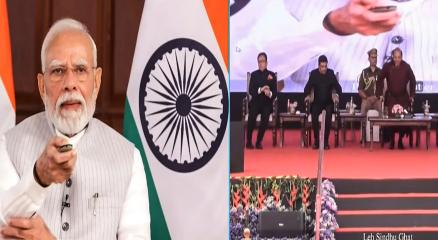
New Delhi, Oct 15: Prime Minister Narendra Modi on Thursday virtually inaugurated five development projects covering airport infrastructure and strategic road connectivity in Ladakh worth around Rs 3,350 crore. The projects include a new passenger terminal at the Kushok Bakula Rimpochee Airport in Leh, built for Rs 640 crore. Spread over 23,800 square metres, the modern terminal is designed to handle 35 lakh passengers annually, officials said. It incorporates geothermal energy to enhance energy efficiency and reduce its carbon footprint, reflecting the importance of sustainable infrastructure in Ladakh’s ecologically sensitive environment. Blending modern passenger amenities with elements of Ladakh's rich cultural heritage, the terminal will improve passenger convenience and strengthen air connectivity with the rest of the country, the officials said. Modi also dedicated to the nation the 298-km-long Nimmu-Padum-Darcha Road, constructed by the Border Roads Organisation (BRO). Connecting Nimmu in Leh with Darcha in Himachal Pradesh through the remote Zanskar Valley, the road provides an alternative connectivity corridor to Ladakh, supplementing the Srinagar-Leh and Manali-Leh highways, an official statement said. Traversing the challenging Himalayan terrain, including the high-altitude Shinkun La Pass, the road marks a significant engineering achievement. Its strategic importance lies in enhancing operational mobility and strengthening logistical support for the armed forces, the statement said. It will also benefit the residents of Zanskar by improving access to healthcare, education, markets and essential services, it said. “Today, another chapter is being added to Ladakh’s progress and development. I am happy to be part of this occasion through technology. Several important development projects have been inaugurated in Ladakh today. “These projects will make travel easier for many people, improve electricity facilities in some areas, increase water availability in others, and strengthen the preservation of our ancient heritage,” Modi said. As part of the efforts to strengthen energy security and harness Ladakh’s renewable energy potential, the prime minister inaugurated the 9 MW Hanu small hydroelectric project and the 66 kV double-circuit Dah-Hanu-Khaltsi transmission line. The projects will strengthen power evacuation infrastructure and improve the reliability of Ladakh’s electricity network, marking a step towards harnessing the region’s hydropower resources. Recognising the importance of preserving Ladakh’s ancient archaeological heritage, the prime minister also inaugurated India's first Petroglyph Conservation Park at Sindhu Ghat in Leh. Ladakh is home to hundreds of prehistoric rock art sites featuring carvings of wildlife, human figures and symbolic representations that offer valuable insights into thousands of years of human history. The prime minister also inaugurated 40 water bodies developed across 40 villages under Project Him Sarovar, an initiative aimed at addressing Ladakh's unique geographical and climatic challenges through water conservation, in line with the objectives of Mission Amrit Sarovar. Agriculture in Ladakh faces a seasonal imbalance between water availability and demand. Farmers often experience water scarcity during the crucial sowing season, even as snowmelt and glacial runoff provide substantial water resources during other periods. Project Him Sarovar seeks to address this challenge by conserving water when it is available and ensuring its availability when required, thereby supporting irrigation, sustaining agricultural livelihoods and strengthening long-term water security in the region, the statement said. (PTI)
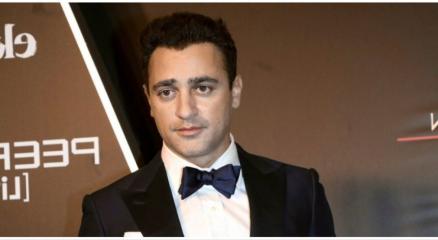
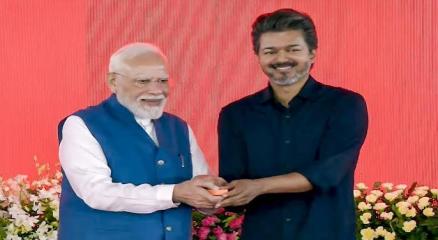
Chennai, Oct 11: Prime Minister Narendra Modi on Sunday said he has taken development as his 'mantra,' and reaffirmed his commitment to serve the people of Tamil Nadu and ensuring the state's progress by working with Chief Minister C Joseph Vijay. He listed the rapid strides made in various sectors in the last 12 years, including the significant jump in defence exports. In his address after inaugurating and laying the foundation stone for railway, road and petroleum-related projects worth about Rs 13,000 crore with Vijay, the PM underscored his commitment to ensure development. During the inauguration, the prime minister invited Vijay with a gesture to jointly flag off the Chennai Metro Phase-2 network, marking a milestone event carrying immense political and administrative significance for the centre-state ties. He held Vijay’s hand and jointly flagged off the service. The Chennai Metro Phase 2 network has been executed as a joint venture between the Central and Tamil Nadu state governments. Later, at the launch of infrastructure projects too, the PM held CM Vijay's hand to jointly inaugurate the initiatives. During his subsequent address, Prime Minister Modi said, "I have always taken the country's development as my mantra". "As chief minister, I understood the expectations of a state. After becoming PM, not only did I try to fulfil the aspirations but also made efforts so that the states meet their aspiration goals," he said. Referring to Tamil Nadu, he said when he was CM, he got the opportunity to interact with late leaders M Karunanidhi and J Jayalalithaa when they headed Tamil Nadu. And, after becoming prime minister, he could work with former CMs O Panneerselvam, Edappadi K Palaniswami and M K Stalin. "Governments may change, but my resolve for Tamil Nadu's development, serving its people remains steadfast. With this determination to serve people, together with CM Vijay, we are taking forward the development of the state," he said. TVK founder Vijay had ushered in his maiden government by winning the April Assembly elections in Tamil Nadu. Referring to his completion of 25 years as PM and CM, Modi said, "As head of government, my trust in people and cooperative federalism has grown strong". "A few days ago, with the blessings of the people, I completed 25 years of public service as a head of government - an important milestone. In October 2001, I took the oath as the chief minister of Gujarat. From there onwards, the people allowed me to serve them, first as chief minister and later as prime minister. Over these 25 years, my faith in two great strengths of our democracy has grown even stronger. First, the people of the country; and second, cooperative federalism," the PM said. He said Tamil Nadu has played a significant role in the journey of strengthening port infrastructure to take the shipping sector to new heights. With an investment of around Rs 17,000 crore, V O Chidambaranar Port in Thoothukudi is being developed into a world-class mega container and green energy hub. Once completed, the port will be able to accommodate the world’s ultra-large container vessels. "This will help transform Tamil Nadu into a global hub for industry and transportation," he said. He noted that since 2014, India’s electronics exports increased 11-fold, while defence exports have grown 50-fold. Engineering exports have also reached new records. The growth in manufacturing has created lakhs of jobs for the youth, and the people of Tamil Nadu have played an important role in driving this manufacturing growth. "I have always believed that urbanisation is not a challenge but an opportunity, and public transportation plays a crucial role in realising that opportunity. Good public transport improves the ease of living for people. However, better transportation requires more than just widening roads. Modern cities need holistic infrastructure. That is why, over the last decade, we have focused on expanding metro connectivity across the country," he said. In 2014, metro services were available in only five cities, but today, they are operational in 25 cities across the country. From mandir to metro, these experiences of Tamil Nadu reflected the spirit of India, which draws strength and inspiration from its cultural heritage, he said and noted that the Rs 13,000 crore worth of projects that he inaugurated and laid foundations for new ones would make daily travel easier; others will strengthen industry and trade. "Together, they will create jobs for young people across Tamil Nadu," Modi said. Following the inauguration, PM Modi took a ride on the Chennai Metro from Porur Bypass Station to Poonamallee Bypass Station and back, accompanied by Chief Minister Vijay and senior officials. (PTI)
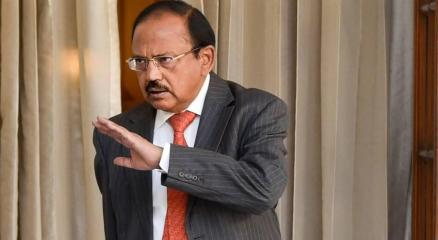
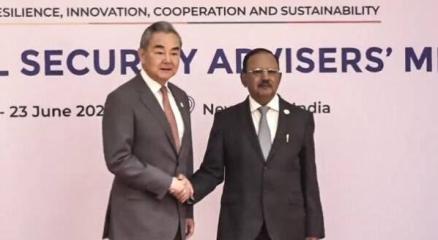
Roorkee, Sep 19: National Security Advisor (NSA) Ajit Doval said on Saturday that India's GDP would increase from the current USD 4.015 trillion to USD 38 trillion in the next 20 years. Addressing the convocation ceremony of the Indian Institute of Technology (IIT) Roorkee as the chief guest, Doval said that the students are fortunate to be living in a transformative era where their future holds great promise. Citing the example of Lord Ram, the NSA urged students to be courageous in their lives. He said that sage Vishwamitra chose Lord Ram to annihilate demons because of his courageous nature. "Massive changes are taking place in India, and the country is moving towards a magnificent future," the NSA said. "As the prime minister has termed the period leading up to 2047 as 'Amrit Kaal', it is truly a wonderful Amrit Kaal. India's current GDP stands at USD 4.015 trillion, and it will reach USD 38 trillion in the next 20 years," Doval added. "The Current generation is the luckiest with abundant opportunities, unlike past struggles. This is the age of technology, engineering, and innovation, which drives societal growth, with the youth having decades for progress," he said. The NSA further said that decision-making and building one's own doctrine are critical to becoming a leader. “You will never become a leader if you are not a decision maker. You have got to make a decision… you have got to build your own doctrine," he said. Doval also shared an anecdote from his early career days while posted in Sikkim, recounting how he learned three mantras for success in life from a Sherpa. Doval explained that the first mantra is knowing where one stands on the map; the second is knowing where one needs to go; and the third is knowing the path to get there and come back.