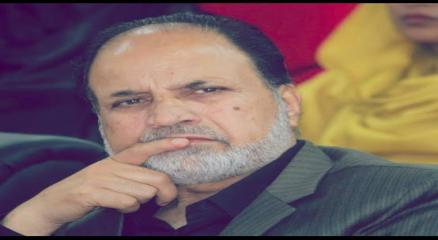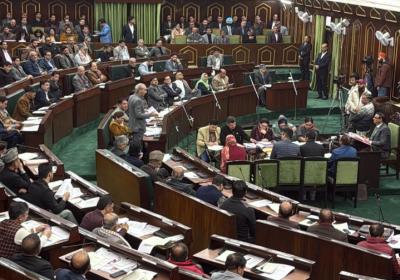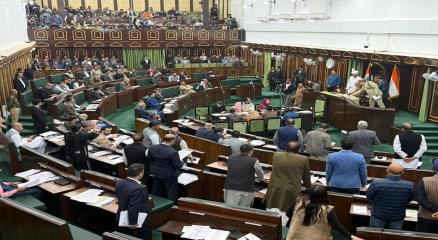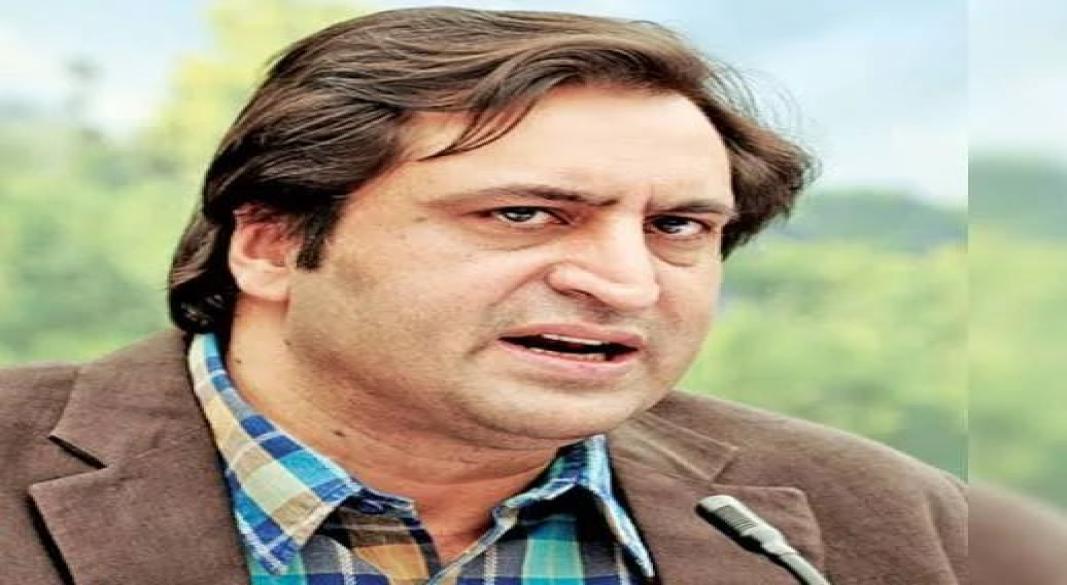
Srinagar, Feb 10: JK Peoples Conference President and MLA Handwara Sajad Lone on Tuesday delivered a critical assessment of the recently introduced Jammu and Kashmir budget during his address to the Assembly.
He called it the first budget under complete political oversight since 2018.
He characterised it as a typical bureaucratic budget lacking the distinctive political imprint that usually accompanies an elected government's fiscal proposals.
"When politicians come, when there is an elected government, there is a mark of politics on the budget. That mark is not visible," Lone said.
He questioned why the ruling party's manifesto promises had not been translated into concrete budgetary allocations.
He suggested this disconnect would become a recurring point of contention from the opposition over the next five years.
"So if the mark of the manifesto is there, why is it not in the budget? This is a question that the opposition will ask you repeatedly, for the next five years," he said.
Lone pointed to weak execution of previous budgetary assurances, highlighting a significant gap of 13,000 crores between budget estimates and revised estimates. He observed that capital investment had decreased substantially.
"In the whole world, people have a problem with money; here, it seems there is a problem with spending. We don't seem to have the capacity to spend money," Sajad Lone said.
The budget's composition troubled Lone, with 70 percent allocated to revenue expenditure and only 30 percent to capital expenditure.
"This means that long-term assets will not be built, and this reflects a weak internal revenue base," he said.
He detailed the territory's financial dependence, noting that of the total receipts of 1,27,000 crores, only 31,800 came from internal tax and non-tax sources while central assistance amounted to approximately 42,000 crores, centrally sponsored schemes 13,000 crores, and borrowing 14,000 crores.
"So this limits our fiscal autonomy. When all the money is coming from outside," Lone said.
The legislator reserved his sharpest criticism for what he termed the "great rebate grab" surrounding the six cylinder announcement.
He methodically broke down the mathematics, explaining that the manifesto had promised 12 cylinders for economically weaker sections.
"The exact words in your manifesto are 12 cylinders for economically weaker sections. So, no, thank you will not last long. I think you will have to change it," he said.
Lone said there are two lakh AAY families and 14 lakh BPL, now called priority households.
"So since when did the poor BPL become economically strong? I didn't understand this. They are also economically weak," he said.
He calculated that the manifesto promise would have cost 1,680 crores annually or 8,500 crores over five years, but the government was delivering only 120 to 130 crores annually.
"So against a promise of 8,500 crores for five years, what you are paying is 360 crores. Sir, this is pure mathematics, no theory, no history. If I am wrong, I would love to be corrected," Lone added.
JKPC President described the funding mechanism as taking from one set of poor to pay another.
"Where did this money come from? The money came from reducing the rebate on diesel, which is normally used in public vehicles, in public transport. That will bring in about 250 crores from there. So you took 150 from the pocket of the poor, gave 150 or 120 to other poor people, and 130 still stayed with the government," he said,
He called it "a new kind of justice and lamented that no government had ever levied taxes on the top 5 percent of earners in Jammu and Kashmir.
Similarly, the promise of free education up to graduation was diluted, with 14 lakh families excluded from the benefit.
"So it is a very diluted version of what you promised. Sir, CM Sahab, if you think that instead of 100 you are happy with 5, then fine," Lone said.
On employment, Lone challenged the claim of 7,500 jobs created last year, estimating that hardly 2,000 went to Kashmir.
He defended his past work on the 3 percent reservation bill.
"I am proud of it. I passed the 3% reservation bill in this very hall."
He clarified that when he spoke of 60 percent of the population including Pahari brothers, Gujjar brothers, and Kashmiri Pandit brothers having only 25 percent of jobs, this included all these communities.
"When I say district and divisional recruitment, I mean it for Pahari and Gujjar brothers living in Kashmir Valley. If you think they want to compete in the general category, it would be better if you ask them," Lone said.
The outsourcing of 24,000 jobs drew particularly fierce criticism.
"Sir, you didn't do this, to be very honest with you. This was done by the Babus. The system of Babus is centralised, outsourced. May God outsource their jobs too, those who outsourced these jobs, then they would know what it's like to outsource a poor person's job," Lone said.
He questioned why the current administration continued this policy.
"If you were against everything in the Governor's rule for the last five years, then why are you doing the same today?"
Lone warned that outsourcing cannot work in places without Western-style social security nets. "Where it works in the West, there is a social security net.
"The government even provides money for children's diapers and milk. This is a societal disaster," he said.
He traced a troubling progression from permanent jobs to contractual positions to outsourcing, questioning how private companies could be trusted with quality recruitment when government institutions themselves had suffered major scandals.
"The government is about learning curves. It is hire and fire; they can keep anyone, how will the government run?" he said.
"Where you said you would create one lakh jobs, forgive me, you converted 24000 government jobs into private ones. So, sir, don't give us 1 lakh, but at least don't make them private. Stop converting government jobs into private ones. This is an economic disaster and a societal disaster. It will wreak havoc in society," Lone said.
While not expecting the Chief Minister to produce funds overnight, Lone emphasized that budgets should set an economic tone.
"One thing that should attract investors—let's go to J&K, it's the next investment destination. Sir, we are one of the most regulated economies in the country. It's like the Soviet Union. NOC culture," he said.
He explained that these permissions had become channels for corruption.
"The problem is that our CM Sahab, with due respect, has never applied for permission. He doesn't know that this NOC is money. Even if all the papers are there, you still have to give; if not, you have to give four times more," Lone said.
He said that this centralization intensified over the last five years as bureaucrats sought to maintain control.
"They have done IAS and they think they are the most intelligent, nothing will happen without them. Ask us first."
Lone urged the government to review and dilute orders from the past six years that centralized NOCs. He questioned government involvement in homestays.
"Why do you have to see? What does the government have to do with homestays? Is the government a housekeeper? Is the government going to see if the room is clean or not? Market forces will decide that if the homestay is good, the person will come again," he said.
Despite acknowledging some positive developments like e-office implementation, he said that the tendency toward centralization and high regulation would deter investors.
"We are a highly over-regulated economy; that was my assessment that they would fix it, but it didn't happen," he said.
The legislator identified tourism and horticulture as potential gold mines if properly recognized. He also made a plea to correct economic misstatements made in the house, noting, "When you want to check a traditional economic theory of whether a country is backward or developed, you look at how many people are in agriculture.
The more there are, the more backward it is. The fewer there are, the more it is a high-income country."
Throughout his speech, Lone maintained that Jammu and Kashmir desperately needs reform.
"I would appeal to all of you that we desperately need to deregulate and decentralize our economy, because otherwise, no investors would be coming here," he said.
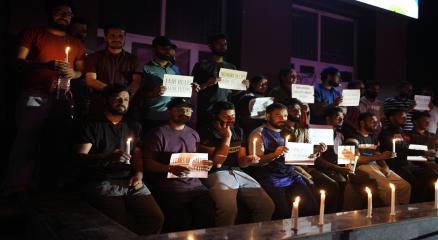
New Delhi, May 12: A massive protest organised by the National Students' Union of India (NSUI) broke out near the Shastri Bhawan on Tuesday, against the alleged paper leak in NEET-UG this year. The exam was held on May 3, following which allegations of paper leak surfaced, triggering investigations by the Rajasthan Special Operations Group (SOG) and central agencies. Earlier, the National Testing Agency (NTA) announced the cancellation of NEET-UG 2026, and said the examination will be re-conducted on dates to be notified separately. In a statement, the NTA said the decision was taken with the approval of the Government of India in the interest of maintaining transparency and preserving trust in the national examination system.
Srinagar, Feb 12: Jammu and Kashmir recorded over 15.48 lakh traffic violation cases in 2025, with authorities collecting more than Rs 34.17 crore as penalty under the Motor Vehicles Act, the Centre informed Parliament on Thursday. The information was shared in the Lok Sabha in response to a question raised by MP Janardan Singh Sigriwal. According to the official data, 15,48,525 challans were issued across the Union Territory in 2025, while the penalty amount recovered stood at Rs 34,17,36,740. The figures further show that in 2024, a total of 15,44,105 violations were registered with a penalty collection of around Rs 43.40 crore, while in 2023, 12,38,584 challans were issued and Rs 34.56 crore was collected. For the current year, till February 8, 2026, Jammu and Kashmir has recorded 1,63,531 traffic violation cases, with revenue collection of about Rs 2.11 crore. The Ministry of Road Transport and Highways stated that stricter penalties under the Motor Vehicles (Amendment) Act, 2019 are aimed at ensuring better compliance and deterrence. It also said that traffic enforcement falls under the jurisdiction of States and Union Territories. The government has issued a Standard Operating Procedure (SOP) for electronic monitoring and is promoting technology-driven enforcement through Automatic Number Plate Recognition (ANPR) cameras integrated with the VAHAN database. Awareness campaigns under the Sadak Suraksha Abhiyan are also being carried out to improve road safety.
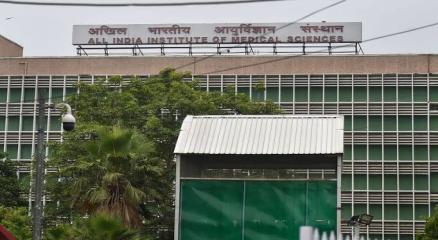
New Delhi, Jan 25: The Dental Council of India (DCI) has directed all universities and dental colleges across the country to strictly ensure a minimum of 80 percent biometric attendance for Post Graduate students before allowing them to appear in examinations. The decision has been taken to curb absenteeism among postgraduate dental students. According to a circular issued by the Dental Council of India-a statutory body under the Ministry of Health and Family Welfare, Government of India, the decision has been taken after multiple complaints were received from dental colleges in Rajasthan, Haryana and Uttar Pradesh regarding non-attendance of PG students. "The matter was examined by the Grievance Sub-Committee of the DCI in its meeting held on November 24, 2025," the circular reads. It reads that after detailed discussion and deliberation, the committee recommended that all universities and dental colleges must ensure compliance with Regulation 18(a)(i) of the DCI Master of Dental Surgery Course Regulations, 2017, which mandates at least 80 per cent attendance. "The recommendation of the Grievance Sub-Committee has been approved by the Executive Committee of the Dental Council of India through circulation and has now been formally communicated for information and necessary action," the circular reads. As per the circular, all the universities and dental colleges have been directed to ensure minimum 80 per cent biometric attendance of all PG students before permitting them to appear in examinations. The order, issued by Deputy Secretary Dental Council of India Mukesh Kumar, is expected to be implemented with immediate effect across the country.
Srinagar, Jan 8: Contractual faculty members working in government degree colleges of Jammu and Kashmir Higher Education Department (HED) have expressed strong resentment over what they term as a glaring disparity in salaries, demanding revision of their pay in line with University Grants Commission (UGC) norms and regularisation of their services. The faculty, many of whom hold PhDs and are qualified through NET, SET and JRF, said they have been denied UGC-recommended pay scales despite discharging academic responsibilities equivalent to their regular counterparts. “Hundreds of highly qualified scholars have been pushed into silent suffering. For years, we have been assured that our pay revision is under consideration, but nothing has materialised so far,” said Dr Ishfaq Gowhar, a contractual faculty member. Earlier, Director Colleges J&K had acknowledged the legitimacy of the faculty’s demand, stating that while the issue was genuine, its implementation involved significant financial implications due to the large number of contractual appointments. “We are aware that they deserve salary enhancement, but the number of contractual faculty is huge and it has financial implications,” he earlier said. Dr Gowhar pointed out that contractual lecturers, who form the backbone of the higher education system, continue to work on a fixed monthly honorarium of Rs 28,000, which has remained unchanged for nearly a decade. “The irony is that a Class IV employee with a Class 10 qualification draws a salary exceeding Rs 50,000, while doctorate-holding teachers engaged in teaching, mentoring and academic research are paid a fraction of that,” he said. He added that institutions such as SKUAST-K, University of Kashmir and Islamic University of Science and Technology (IUST) have implemented revised UGC pay scales, but the Higher Education Department has failed to extend similar treatment to its contractual faculty. Dr Gowhar said the demand for “equal work, equal pay” gets prominently featured in election campaigns, raising hopes among contractual teachers. “Promises were made and slogans echoed during elections, but once the process ended, our voices were reduced to silence. Even meeting officials now feels impossible,” he said. He said contractual faculty were not seeking privileges but dignity, fairness and recognition for their service. The faculty appealed to the Jammu and Kashmir Lieutenant Governor Manoj Sinha, Chief Minister Omar Abdullah and the Education Minister to intervene and take concrete steps towards addressing their long-pending demands. “This issue is not merely about salaries. It is about survival, justice and dignity in the classrooms of Jammu and Kashmir,” he said.
Srinagar, March 6: Around 17 candidates from Jammu and Kashmir have qualified the Civil Services Examination (CSE)-2025, the result for which was declared by the Union Public Service Commission (UPSC) on Friday. The commission recommended a total of 958 candidates for appointment to the Indian Administrative Service (IAS), Indian Foreign Service (IFS), Indian Police Service (IPS) and various central services. Anuj Agnihotri, an MBBS graduate, has topped the civil services examination 2025, while Rajeshwari Suve M and Akansh Dhull have got the second and third ranks respectively. According to the official list released by the UPSC the 17 candidates from J&K who have figured in the final merit list include Suvan Sharma (Rank 148), Sugandha Gupta (207), Towseef Ganie (Rank 254), Ritika (Rank 456), Sooyash Shivam (Rank 572), Muneeb Parrah (Rank 581), Ghulam Din (Rank 683), Dwarka Gaadhi (Rank 721), Akash (Rank 747), Koh E Safa (Rank 763), Yasaar (Rank 811), Abhishek (Rank 820), Pankaj (Rank 856), Mohammad Ajaz (Rank 869), Azhar (Rank 886), Sarfraz (Rank 936), and Irfan (Rank 957). The results were declared after conducting the written examination in August 2025 followed by the personality tests (interviews) conducted between December 2025 and February 2026. As per the result notification issue by the UPSC, a total of 958 candidates have been recommended for appointment against 1087 vacancies reported by the government for the examination cycle. These include 180 vacancies in the IAS, 55 in the IFS, 150 in the IPS, 507 in Central Services Group A and 195 in Group B services. Of the total recommended candidates, 317 are from the general category, 104 from the economically weaker sections, 306 from other backward classes, 158 from scheduled castes and 73 from scheduled tribes. A consolidated reserve list of 258 candidates has also been published in accordance with the rules. The claims of recommended candidates regarding reservation categories will be subject to verification by the concerned authorities. The UPSC has stated that the candidature of 348 recommended candidates has been kept provisional, while the result of the two candidates has been kept withheld. The CSE is conducted annually in three stages- preliminary, Mains and interview by the UPSC to select officers of the Indian Administrative Service (IAS), Indian Foreign Service (IFS) and Indian Police Service (IPS) among others. The civil services (preliminary) examination 2025 was conducted on May 25 of 2025. A total of 937876 candidates applied for this examination, out of which 5,76,793 actually appeared in the test. A total of 14,161 candidates qualified for appearance in the written (Main) examination which was held in August, 2025. Of these, 2736 candidates had qualified for the personality test (interview) of the examination. Prime Minister Narendra Modi congratulated the candidates who qualified the UPSC exam. "Congratulations to all those who have successfully cleared the Civil Services Examination, 2025. Their dedication, perseverance and hard work have led to this significant milestone. Wishing them the very best as they embark on a journey of serving the nation and fulfilling the aspirations of the people," PM Modi wrote on his official X handle. "To those who may not have secured the desired outcome in the Civil Services Examination, I understand that such moments can be difficult. However, this is only one step in a larger journey. Many opportunities lie ahead, both in future examinations and in the many avenues through which you can contribute to our nation. My best wishes for the road ahead," his post on X reads. UPSC chairman Ajay Kumar announced the declaration of the result and congratulated the candidates who qualified the exam. "Congrats to all successful candidates as you begin a career of service to the nation. For those who did not make it-the learning from this journey will guide you in the paths ahead," UPSC Chairman wrote in a post on X. Among the 17 candidates from J&K who qualified UPSC exam inlcude a visually impaired candidate Irfan Ahmad Lone, a resident of Manzpora in the Naidkhai area of Bandipora.


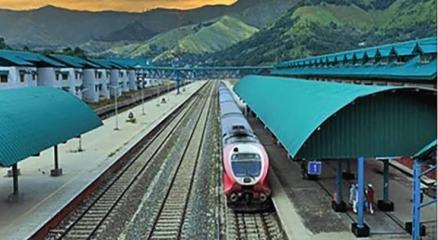
Qazigund, Sep 26: The Ministry of Railways has withdrawn two proposed projects in Jammu and Kashmir — the Baramulla-Uri new rail line and Qazigund-Srinagar-Budgam railway doubling project. In a communication addressed to the General Manager, Northern Railway, the Ministry of Railways, according to the news agency—Kashmir News Observer (KNO) stated that the two projects “have been returned by Cabinet Secretariat and are no longer under consideration.” The ministry had earlier proposed a 46-km Baramulla-Uri new rail line and a 118-km Qazigund-Srinagar-Budgam doubling project to strengthen rail connectivity in the region. The survey for the Baramulla-Uri new line and the doubling project had been completed and Detailed Project Reports (DPRs) prepared. However, the ministry has clarified that preparation of DPRs did not amount to final sanction of the projects. As per the ministry, final approval of such projects requires consultations with stakeholders and clearances, including appraisal by NITI Aayog and the Ministry of Finance. The proposed Baramulla-Uri line was planned as an extension of the Udhampur-Srinagar-Baramulla Rail Link from the existing terminus at Baramulla towards Uri, close to the Line of Control (LoC). A senior Railway official told KNO that the projects could have been returned due to issues related to utility or availability of funds. “The DPR preparation does not mean final approval. There are several other requirements and clearances before a project receives final approval,” the official added. He, however, said that the projects could be considered again in the future, subject to the required approvals and other factors. (KNO)
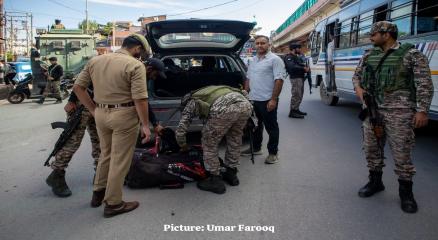
Jammu/Srinagar, Aug 14: Security was intensified across Jammu and Kashmir on Friday, a day ahead of Independence Day celebrations, with police and security forces mounting extensive checks, patrols and surveillance across border districts, highways and other vulnerable locations. Vehicles were subjected to checking at multiple points while security personnel maintained heightened vigil around major roads, sensitive installations and venues where Independence Day functions are scheduled. Quick Response Teams (QRTs) have also been deployed at strategic locations. Security has been reinforced along the Jammu-Srinagar and Jammu-Pathankot national highways, while border roads and other vital approaches are under close surveillance through CCTV and other monitoring mechanisms. A multi-tier security grid comprising the Army, BSF and Jammu and Kashmir Police has been established along the Line of Control and International Border. In Jammu, the main Independence Day function will be held at Maulana Azad Stadium, where Deputy Chief Minister Surinder Choudhary will unfurl the national flag and take the salute. In Srinagar, Chief Minister Omar Abdullah will preside over the main function at Bakshi Stadium. Police and paramilitary personnel have been positioned at strategic points, with access control, frisking and vehicle checks intensified around the venues. Security agencies are maintaining surveillance over approaches to the celebration sites and other sensitive locations. Inspector General of Police, Jammu Zone, Bhim Sen Tuti, along with Deputy Inspectors General, has chaired a series of security review meetings across the Jammu region during the past week. Officers were directed to ensure foolproof security around celebration venues and adequate deployment of forces at all flag-hoisting locations. The heightened security comes as the region witnesses a surge in patriotic activities, including Tiranga Yatras, Har Ghar Tiranga campaigns and Independence Day programmes. The Tricolour has been prominently displayed atop houses and public buildings across towns and villages.
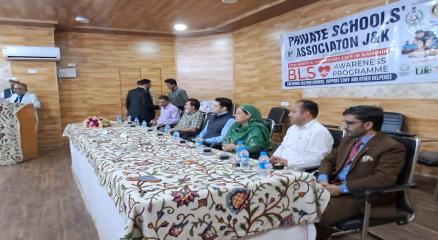
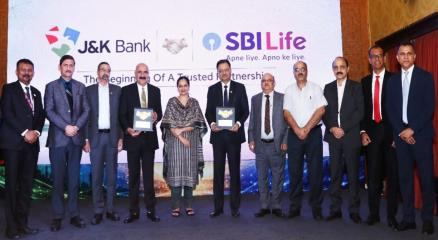
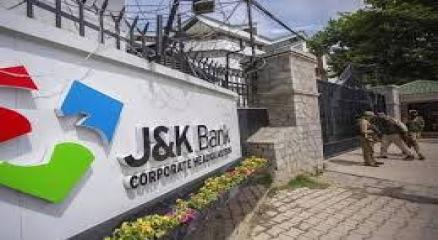
Srinagar, Aug 6: Strengthening its commitment to financial security across the nation, SBI Life Insurance will enable families across Jammu & Kashmir and Ladakh to take a step closer towards securing their financial future. SBI Life Insurance, one of India’s leading life insurers, today announced a strategic corporate agency tie-up with J&K Bank (Jammu & Kashmir Bank), a Scheduled Commercial Bank and one of the oldest private sector banks in India. "Now, customers can walk into any of J&K Bank's 1,000-plus branches across the region and access SBI Life's full range of life insurance solutions, from protection and savings plans to retirement and child plans, tailored to suit their evolving financial needs and life stage," an official handout reads. For many households in the region, this means trusted financial protection is now available at the same branch they already bank with. The corporate agency agreement was signed by Budhaditya Banerjee Regional Manager- Institutional Alliances, Chandigarh Region and Masood Ahmad Lankar, DGM Cross Selling, J&K Bank in the presence of Santosh Chacko, President – Business Strategy, SBI Life Insurance, Anita Nehru , GM DAC & Cross Selling, J&K Bank. At a time when financial security and long-term planning are becoming increasingly critical for households across India, this alliance combines SBI Life's expertise with J&K Bank's deep roots and relationships across the region, to make life insurance simpler to understand, easier to access, and more relevant to everyday financial planning, helping families plan with greater confidence for whatever lies ahead. The partnership advances financial inclusion in line with the IRDAI’s vision of 'Insurance for All by 2047', extending long-term financial security to communities that have historically had limited access to it. Speaking on the partnership, Amit Jhingran, MD & CEO, SBI Life Insurance, said, “At SBI Life, our purpose is rooted in helping individuals and families build financial resilience and approach the future with greater confidence." He said their partnership with J&K Bank reflects a shared commitment to deepening insurance awareness and strengthening the culture of financial protection for households across the nation. "Life insurance plays a critical role in ensuring financial continuity and safeguarding family aspirations," he said. He added this collaboration will further reinforce its importance in everyday financial planning. "We are proud to support the national vision of ‘Insurance for All by 2047’ and contribute meaningfully to building a financially secure society," he said. Commenting on the collaboration, MD & CEO, J&K Bank Amitava Chatterjee said, "Guided by our philosophy of 'socially empowering banking', we remain committed to catalyzing economic and social transformation across the communities we serve. The addition of SBI Life to our portfolio of insurance partners enhances our ability to offer customers a wider range of competitive, need-based life insurance solutions, enabling them to choose products best suited to their unique financial needs. He further added that by bringing together the strengths of two trusted institutions, this collaboration further reinforces our customer-centric approach and enhances our ability to deliver greater value through the Bank's extensive network across the country. "It also builds upon the enduring trust that J&K Bank has nurtured over decades, beginning in its core geographies of Jammu & Kashmir and Ladakh and extending across its operational footprint nationwide," he added. Commenting on the tie-up, Santosh Chacko, President – Business Strategy, SBI Life Insurance, said insurance is fundamentally about building financial dignity and ensuring that families remain protected through life’s uncertainties. "Through this partnership, we want life insurance to be seen not merely as a product, but as an essential pillar of responsible financial well-being, which aligns with our philosophy of ‘Apne Liye, Apno Ke Liye’, where securing one’s future goes hand in hand with protecting the aspirations of loved ones," he said. Through this association, SBI Life Insurance and J&K Bank aim to enhance insurance penetration across Jammu & Kashmir and Ladakh, promote financial literacy and awareness, and help more households across the region feel prepared and protected for the future.