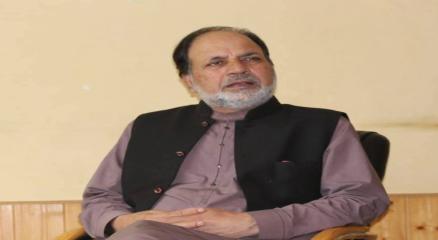
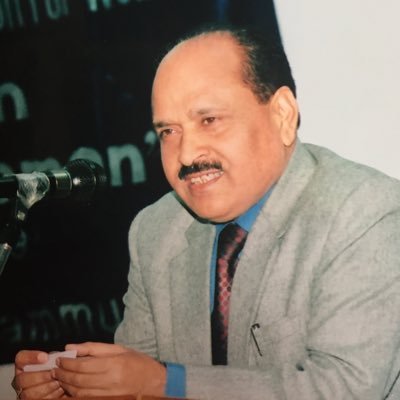
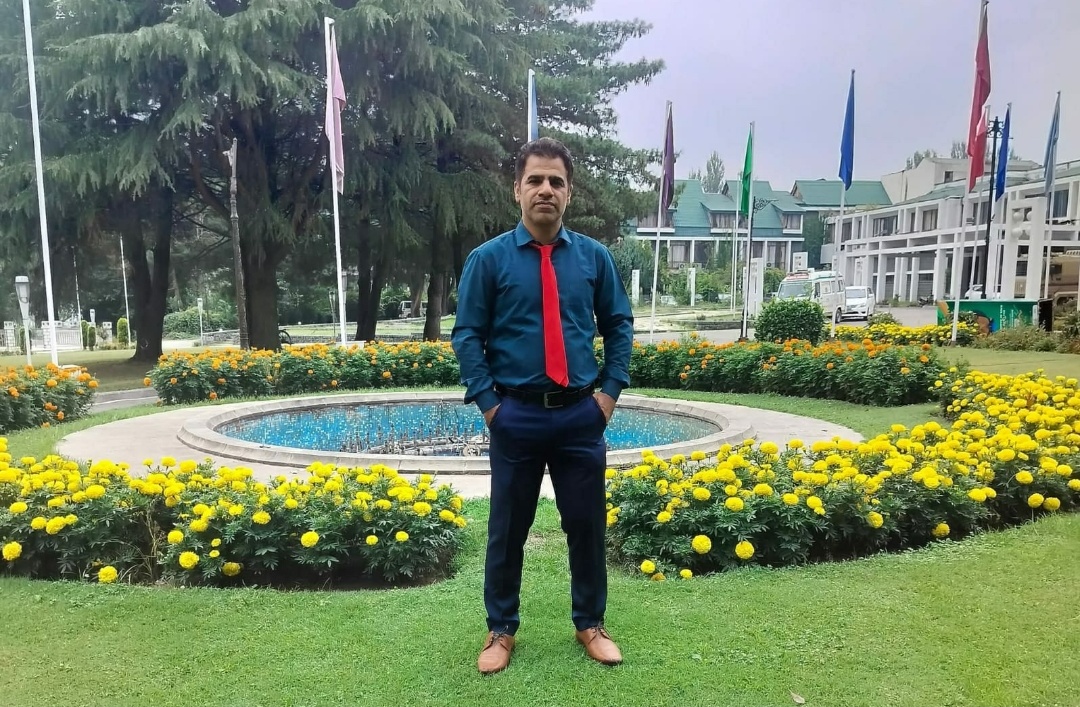
Srinagar, Oct 27: Hours after four new ministers were inducted into the Jammu and Kashmir Cabinet on Tuesday, National Conference MLA from Baramulla Javid Hassan Baig shared a lengthy emotional post on social media, recalling how he had once travelled to Jammu expecting a ministerial berth in the then PDP-led government, only to be told hours later that his induction would not take place. In a post, MLA Baramulla said, “Not Every Morsel Is Meant to Go Down Your Throat”, the post recounts the incident from 2017, when Baig was associated with the Peoples Democratic Party (PDP). "It also reflects on political ambitions, family expectations and the need to accept decisions without resentment." Baig recalled that he was attending condolence prayers at the residence of senior PDP leader Abdul Haq Khan in Lolab when he received a call from the office of the then chief minister. He was informed that a Cabinet expansion was scheduled for the following day and that he had been directed to reach Jammu the same day. He was asked to carry clothes for the ceremony, bring five close relatives, friends or associates, and keep the information confidential until further instructions. With travel and accommodation arrangements also being made, Baig said he believed he was likely to be inducted into the Cabinet. “I had been working as a dedicated worker of the PDP since 1998,” he wrote, adding that although he had lost the 2005 election, the time, youth and hard work he had devoted to the party remained a source of personal satisfaction. As rumours of his possible induction spread through local markets, his colleagues began celebrating the prospect. One of his personal security officers, Javid Khan, even called his wife, Nissa, to congratulate her, saying that Baig would take the oath of office the next day. Baig said the memory of his wife’s reaction remained particularly significant. She was suffering from a back problem and was advised complete bed rest, but had begun hoping that her husband would become a minister. He recalled calling her to arrange his clothes and money for the journey to Jammu. When she congratulated him on the expected appointment, he cautioned her against raising her hopes too high. The legislator said he was surprised when she stepped out of the vehicle at Sangrama despite her medical condition. “I still do not know whether those tears were tears of joy, an expression of her faith in me, or the anxiety of a heart wondering whether the dream she had begun to cherish would actually come true,” he wrote. The anticipation ended in Jammu at around 7.30 pm, when Baig received a call from the party office. The message was brief: “We regret to inform you…” Baig said he responded simply, “No problem.” He added that he had never considered his induction certain, having received similar indications on earlier occasions that however didn't get materialise. Reflecting on the episode, Baig said political leaderships often faced organisational, administrative and political compulsions, and that disappointment should not automatically be interpreted as personal injustice. “Today, when I recall that incident, I have no complaint against anyone. I had none then, and I have none now,” he wrote. His post comes hours after the Cabinet expansion of the Omar Abdullah-led government, which saw four new ministers inducted on Tuesday. Congratulating the new ministers, Baig said a ministerial position was not merely an office but a responsibility that demanded integrity, sound judgement and accountability. He also called for sensitivity towards colleagues who had been left out, particularly senior leaders who had spent years working for their party. Baig said becoming an MLA was itself a significant achievement and that elected representatives should focus on addressing people’s problems rather than allowing the pursuit of higher positions to overshadow their existing responsibilities. “Human nature is strange. We often fail to appreciate what we already possess. In our desire for more, we sometimes lose the very peace and contentment that we already have,” he wrote. Acknowledging the constitutional limits on the size of the Council of Ministers in Jammu and Kashmir, a Union Territory, Baig said not every aspiration could be fulfilled at a given time. He said political maturity required understanding the leadership’s constraints, respecting collective interests and continuing to work for the party. Baig also sought to dispel any suggestion that he was disappointed at being left out of the Cabinet, pointing out that he had been associated with the National Conference for only three years, while several colleagues had contested elections six, seven or even eight times and remained with the party for decades. “I have no complaint against my leadership, nor do I hold any grudge against any colleague,” he wrote. He said his present position was a blessing rather than an entitlement. Baig however urged his colleagues to value the responsibilities they already held and not allow unfulfilled ambitions to become a burden. “Not every morsel is meant to go down your throat. Whatever goes down is yours; whatever does not, is beyond your control,” he wrote. He said peace of mind came not from having every wish fulfilled but from accepting what one had received and carrying out one’s responsibilities sincerely.
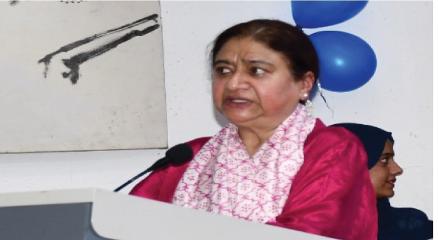
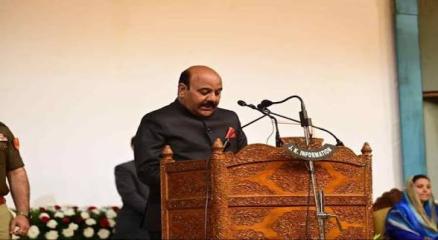
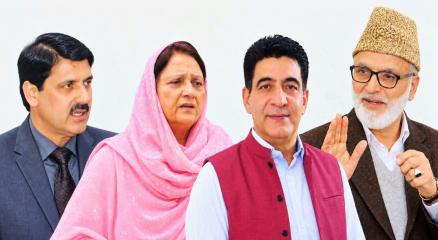
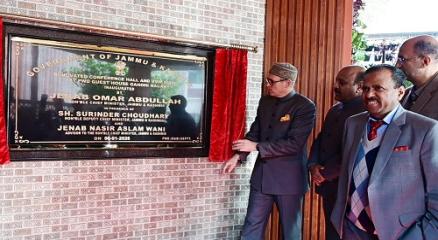
Srinagar, Oct 27: The suspense over the National Conference’s (NC) cabinet reshuffle ended on Tuesday as four legislators of National Congress (NC), Ali Mohammad Sagar, Shamima Firdous, Mir Saifullah and Altaf Ahmad Kaloo, took oath as ministers in the Omar Abdullah-led government at Lok Bhawan in Srinagar. As per the details, J&K Lieutenant Governor Manoj Sinha administered the oath of office and secrecy to the newly inducted ministers at the swearing-in ceremony attended by senior political leaders and officials. The induction will bring a fresh change to the council of ministers even as senior NC leader Mubarak Gul expressed disappointment over being left out of the reshuffle. “I have attended 30 oath-taking ceremonies till now. Every time I was dropped, and today as well, I am being dropped,” Gul told reporters outside Lok Bhawan. Meanwhile, Shamima Firdous expressed happiness over the opportunities given to her by the party and said she would continue to work harder. Mir Saifullah, ahead of his induction, thanked the party leadership and Almighty Allah for the opportunity. “I am really thankful to Dr Farooq Abdullah-led National Conference leadership and Almighty Allah for this opportunity,” he said. As reported earlier, four legislators were expected to join the council of ministers, with Ali Mohammad Sagar and Altaf Ahmad Kaloo among the frontrunners. The induction also comes amid speculation over changes in the existing ministerial lineup. Meanwhile, Shamima Firdous emerged as a surprise inclusion in the cabinet, having not figured prominently among the frontrunners ahead of the reshuffle. Her induction adds a notable turn to the ministerial rejig, as the party finalised its choices for the four vacancies in the Omar Abdullah-led government. (KNO)
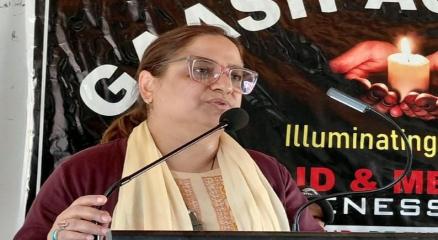
Baramulla, Oct 26: President of the Jammu and Kashmir Employees Social Welfare Association (JKESWA) Asiya Iqbal Monday has expressed deep anguish and strongly condemned the horrific incident involving the death of a Class 11th student in Gaighata, West Bengal. Asiya Iqbal who is a well known Social Worker and Educator called for a fair, time-bound investigation and strict legal action against anyone found responsible. She expressed profound grief over the tragic loss of a young life and said that the incident raises serious concerns about the safety and security of girls and the urgent need to ensure that women and children can live without fear. “The loss of a young girl's life under such disturbing circumstances is deeply painful and unacceptable. Every daughter deserves to live with dignity, security and freedom. If the allegations of sexual assault and murder are established, the perpetrators must face the strictest punishment prescribed by law. Justice must be delivered without delay,” she said. Iqbal stressed that the investigating authorities must examine every aspect of the case thoroughly, collect all relevant forensic evidence, and ensure that no individual responsible for the crime escapes accountability. She also urged the authorities to protect the dignity and privacy of the victim and her family throughout the investigation. She further highlighted the broader issue of women's safety saying that protecting girls cannot remain limited to statements of concern after a tragedy. "It requires effective law enforcement, public awareness, institutional accountability and a collective commitment to preventing violence against women and children," she added.
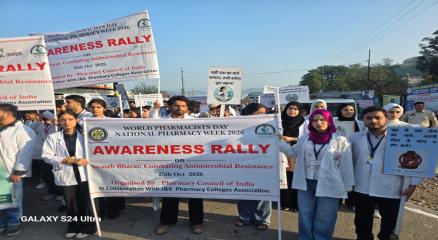
Jammu, Oct 25: The Pharmacy Council of India (PCI), New Delhi, in association with the Jammu and Kashmir Pharmacy Colleges Association, organised a programme to mark World Pharmacists Day and National Pharmacy Week 2026 on 25 October at SVNS Educational Charitable Trust, Sunderbani, District Rajouri, Jammu and Kashmir. The programme was conducted under the theme “Swasth Bharat: Combating Antimicrobial Resistance”, highlighting the importance of responsible antibiotic use and the role of pharmacists in strengthening public health. The programme brought together pharmacy educators, students, institutional representatives and members of the pharmacy fraternity to discuss the development of pharmacy education and the need to strengthen awareness about antimicrobial resistance (AMR). An AMR awareness rally was organised from Sunderbani Chowk to SVNS Charitable Trust to encourage responsible medicine use and educate the public about the risks associated with the misuse and overuse of antibiotics. Dr. Montu Kumar M. Patel, President of the Pharmacy Council of India, emphasised the importance of spreading awareness about antibiotics and antimicrobial resistance. He highlighted the need to promote the rational use of medicines and strengthen the role of pharmacists in educating communities about the dangers of taking antibiotics without appropriate medical advice. Discussions also focused on exploring opportunities for introducing additional pharmacy courses in Jammu and Kashmir to expand educational opportunities and support the professional development of students. Sushil Sudan, Central Council Member (Jammu and Kashmir), PCI, highlighted the need for reforms in pharmacy colleges across the Union Territory. Discussions centred on improving pharmacy education, addressing institutional challenges and strengthening the academic framework to support quality education and professional standards. The need to discuss and clarify matters concerning the examining authority for pharmacy institutions in Jammu and Kashmir was also highlighted as an important aspect of strengthening the education system. The programme featured an inaugural function, panel discussion, expert talks, student presentations, a poster presentation and a pharmacy quiz competition, providing a platform for knowledge-sharing and student engagement. Through this initiative, the Pharmacy Council of India reaffirmed the importance of quality pharmacy education, responsible antibiotic use and public awareness in building a healthier India. The programme aimed to encourage collaboration among pharmacy institutions and stakeholders to strengthen pharmacy education and promote the responsible use of medicines across Jammu and Kashmir.
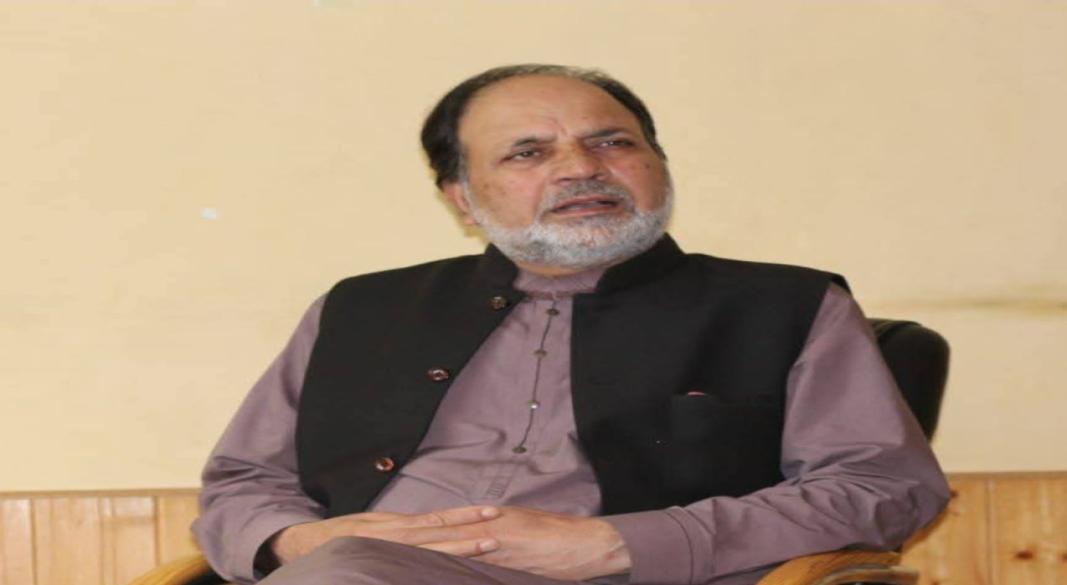
Srinagar, Oct 27: Hours after four new ministers were inducted into the Jammu and Kashmir Cabinet on Tuesday, National Conference MLA from Baramulla Javid Hassan Baig shared a lengthy emotional post on social media, recalling how he had once travelled to Jammu expecting a ministerial berth in the then PDP-led government, only to be told hours later that his induction would not take place. In a post, MLA Baramulla said, “Not Every Morsel Is Meant to Go Down Your Throat”, the post recounts the incident from 2017, when Baig was associated with the Peoples Democratic Party (PDP). "It also reflects on political ambitions, family expectations and the need to accept decisions without resentment." Baig recalled that he was attending condolence prayers at the residence of senior PDP leader Abdul Haq Khan in Lolab when he received a call from the office of the then chief minister. He was informed that a Cabinet expansion was scheduled for the following day and that he had been directed to reach Jammu the same day. He was asked to carry clothes for the ceremony, bring five close relatives, friends or associates, and keep the information confidential until further instructions. With travel and accommodation arrangements also being made, Baig said he believed he was likely to be inducted into the Cabinet. “I had been working as a dedicated worker of the PDP since 1998,” he wrote, adding that although he had lost the 2005 election, the time, youth and hard work he had devoted to the party remained a source of personal satisfaction. As rumours of his possible induction spread through local markets, his colleagues began celebrating the prospect. One of his personal security officers, Javid Khan, even called his wife, Nissa, to congratulate her, saying that Baig would take the oath of office the next day. Baig said the memory of his wife’s reaction remained particularly significant. She was suffering from a back problem and was advised complete bed rest, but had begun hoping that her husband would become a minister. He recalled calling her to arrange his clothes and money for the journey to Jammu. When she congratulated him on the expected appointment, he cautioned her against raising her hopes too high. The legislator said he was surprised when she stepped out of the vehicle at Sangrama despite her medical condition. “I still do not know whether those tears were tears of joy, an expression of her faith in me, or the anxiety of a heart wondering whether the dream she had begun to cherish would actually come true,” he wrote. The anticipation ended in Jammu at around 7.30 pm, when Baig received a call from the party office. The message was brief: “We regret to inform you…” Baig said he responded simply, “No problem.” He added that he had never considered his induction certain, having received similar indications on earlier occasions that however didn't get materialise. Reflecting on the episode, Baig said political leaderships often faced organisational, administrative and political compulsions, and that disappointment should not automatically be interpreted as personal injustice. “Today, when I recall that incident, I have no complaint against anyone. I had none then, and I have none now,” he wrote. His post comes hours after the Cabinet expansion of the Omar Abdullah-led government, which saw four new ministers inducted on Tuesday. Congratulating the new ministers, Baig said a ministerial position was not merely an office but a responsibility that demanded integrity, sound judgement and accountability. He also called for sensitivity towards colleagues who had been left out, particularly senior leaders who had spent years working for their party. Baig said becoming an MLA was itself a significant achievement and that elected representatives should focus on addressing people’s problems rather than allowing the pursuit of higher positions to overshadow their existing responsibilities. “Human nature is strange. We often fail to appreciate what we already possess. In our desire for more, we sometimes lose the very peace and contentment that we already have,” he wrote. Acknowledging the constitutional limits on the size of the Council of Ministers in Jammu and Kashmir, a Union Territory, Baig said not every aspiration could be fulfilled at a given time. He said political maturity required understanding the leadership’s constraints, respecting collective interests and continuing to work for the party. Baig also sought to dispel any suggestion that he was disappointed at being left out of the Cabinet, pointing out that he had been associated with the National Conference for only three years, while several colleagues had contested elections six, seven or even eight times and remained with the party for decades. “I have no complaint against my leadership, nor do I hold any grudge against any colleague,” he wrote. He said his present position was a blessing rather than an entitlement. Baig however urged his colleagues to value the responsibilities they already held and not allow unfulfilled ambitions to become a burden. “Not every morsel is meant to go down your throat. Whatever goes down is yours; whatever does not, is beyond your control,” he wrote. He said peace of mind came not from having every wish fulfilled but from accepting what one had received and carrying out one’s responsibilities sincerely.
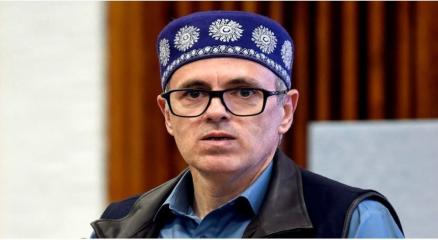
Ganderbal, Oct 15: Chief Minister Omar Abdullah on Thursday said the government was preparing a project to strengthen tourism infrastructure in Sonamarg and introduce adventure and winter sports activities to attract visitors throughout the year. During his visit to Ganderbal, the Chief Minister said the opening of the Z-Morh tunnel had changed Sonamarg's tourism prospects by making the destination accessible during winter, creating opportunities for year-round tourism. “Earlier, Sonamarg would remain closed during winters and people could not reach there. There was little scope for developing winter tourism infrastructure. Now that the tunnel has been built and Sonamarg is accessible throughout the year, we are preparing a project for its development,” he said. CM Omar said the government was looking at introducing rafting during summer and skiing and skating during winter to make Sonamarg a major destination for adventure tourism. He said efforts would be made in coordination with local MLA Mehar Ali to develop new tourist attractions and improve facilities for visitors. Referring to the proposed development of Tragbal and Mohanmarg as tourist destinations, the Chief Minister said the projects had earlier received approval and funds had also been released. However, he said the projects could not move forward because of delays in obtaining necessary clearances and were subsequently cancelled. “Sometimes we face difficulties in getting forest, environmental and wildlife clearances. But we will follow the required procedures and work towards developing new tourist destinations,” he said. The Chief Minister also spoke about development works in Ganderbal, saying projects worth nearly Rs 60 crore had been inaugurated or taken up, including a major bridge across the Jhelum costing around Rs 40 crore. He said work on the bridge was progressing and the government was targeting completion by December next year. Omar said road projects, a new school building and infrastructure at the fruit and vegetable market had also been taken up. He said traders at the fruit market had raised demands for expansion and construction of a grade separator, which would be discussed with the National Highways Authority of India. On concerns over deaths in the power canal in Ganderbal, Omar said the government would approach the Power Development Corporation to seek funds for fencing along the canal. He also acknowledged traffic congestion and other infrastructure problems in the district, saying development needs and environmental protection would have to be balanced. The Chief Minister said the government remained committed to addressing public concerns and carrying forward development projects across Ganderbal. (KNS)
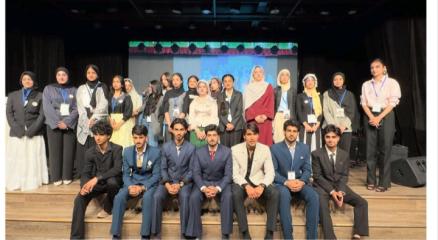
Srinagar, Sep 20: The 5th edition of the Green Valley Model United Nations (GVMUN) concluded at Green Valley Educational Institute (GVEI) after three days of intensive debate, diplomatic deliberations and discussions on pressing global issues. More than 200 delegates from schools across the Valley participated in the three-day event. The conference was jointly inaugurated by advisor to J&K CM Nasir Aslam Wani and MLA Hazratbal Salman Ali Sagar. The valedictory ceremony was attended by social activist Roma Wani as the chief guest and was accompanied by Chairman GVEI, Mohammad Yousuf Wani, Director GVEI Prof. (Dr) Fayaz Ahmad Nika, Principal GVEI, Reyaz Ahmad Kathjoo, faculty members, delegates, staff and students. The three-day conference featured six committees, with delegates taking on the roles of diplomats, policymakers and international representatives to deliberate on complex issues including the Gulf Crisis, international shipping and energy security, and global drug policies. The conference showcased not only public speaking and debating skills but also the ability to develop well-researched policy implications and practical diplomatic solutions, with award-winning papers reflecting diverse approaches to some of the most challenging international questions. Discussions on global drug policies moved beyond conventional debates on prohibition and enforcement, with one position paper advocating a dual-pillar approach combining universal public health, harm reduction and treatment with targeted intervention against transnational criminal networks. The other committees namely Historical Crisis Committee, UNWC, UNSC witnessed thought provoking debates. The Director GVEI Prof. (Dr) Fayaz Ahmad Nikka welcomed the guests and talked about the efforts of this institution in providing the best possible education to its students. The Chief Guest, Roma Wani personally visited the various houses during the last session and interacted with the delegates. She enquired from the delegates about how their interactions and debates can bring changes in the real world. "It is important to take some life lessons from these debates and discussions," she said. While addressing the delegates she said such conferences are very important in nurturing our future generation. "I appreciate the intellect, energy and grit of our students. Our future seems to be in secure hands.” She added. She further said that youth has a greater responsibility to discuss, debate and help in creating a drug free society. The highlight of the valedictory ceremony was the felicitation and prize distribution, where outstanding delegates were recognized for their performance across the various committees, with awards acknowledging excellence in research, diplomacy, articulation, negotiation and committee participation. The vote of thanks was proposed by the Principal GVEI Riyaz Ahmad Kathjoo who expressed gratitude to the chief guest, delegates, other dignitaries and also acknowledged the efforts of the GVMUN Core Team, Executive Board, organising committee, faculty coordinators and participating schools, whose collective efforts contributed to the successful conduct of the conference. The students also presented some cultural performances during the event.
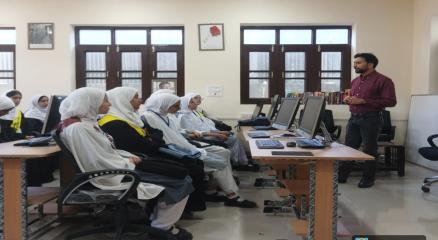
Baramulla, Sep 20: A day-long Science outreach programme was organised by the IQAC and UGC & Research committee in collaboration with Science Department of Government Degree College (GDC) Sopore. As pe the handout issued here, the programme was organised under the supervision of Principal GDC Sopore Prof. (Dr.) Syed Muzaffar Ahmad. The event was organised for higher Secondary School Students of Sopore with the objective of strengthening scientific awareness, encouraging curiosity and inquiry among students, and providing participants with meaningful exposure to science through interaction, inspiration and departmental learning activities. The programme combined formal addresses, inspirational talks besides practical and academic departmental visits. It was followed by feedback and the distribution of participation certificates. Around 56 students from Government Boys Higher Secondary School and Government Girls Higher Secondary School Sopore participated in the event. The programme commenced with the introduction of the Science Outreach Programme by moderator Dr. Nowsheen Hameed, Assistant Professor Department of Biotechnology. Dr. Javeed Ahmad Sheikh Coordinator, IQAC delivered the Welcome Address and welcomed the participants and highlighted the objectives of the outreach programme. Principal, Prof. (Dr.) Syed Muzaffar Ahmad, delivered the Presidential Address in which he provided institutional context to the outreach initiative and emphasised the importance of scientific awareness, academic engagement and meaningful learning opportunities for students. He also encouraged the participants to make constructive use of the opportunities provided through the programme. Invited resource persons delivered inspirational talks and shared real-life experiences. This segment was designed to connect scientific learning with practical experiences and to motivate students to develop curiosity, perseverance and an interest in science. Interaction with resource persons provided participants with an opportunity to appreciate the role of scientific knowledge and learning beyond the classroom. The first resource person Zeeshan, a neuroscience researcher at the University of California, San Francisco (UCSF), shared his academic and research journey with the students. The second resource person, Dr. Adil Majeed Rather, DST INSPIRE Faculty, NIT Srinagar, shared his personal academic journey and experiences in research, inspiring students to pursue their aspirations with determination and perseverance. The third resource person, Dr. Rahila Nazir, a researcher with postdoctoral research experience at reputed institutions in India and the United States delivered an inspiring message to the students about the importance of ambition, perseverance and self-belief. The fourth resource person, Dr. Javeed Rasool, Postdoctoral Research Associate at Boston University, USA emphasised that academic marks alone do not determine success in life.
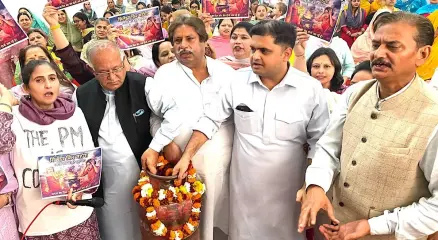
Jammu, Mar 8: The Jammu and Kashmir Congress protested against the LPG price hike here on Sunday, saying this "anti-poor" decision by the government will add to the financial burden on the common man. Led by PCC president Tariq Hamid Karra and working president Raman Bhalla, the protesters also criticised the Indo-US trade deal, alleging that it will adversely impact the country's economy, according to a party spokesperson. The protesters gathered in Model Town, Digiana, near here, raised slogans against the ruling BJP and criticised what they described as the government's "surrender" in the Indo-US trade negotiations. The price of domestic cooking gas LPG was hiked on Saturday by a steep Rs 60 per cylinder, the second increase in less than a year, as the spike in global energy rates following the West Asia crisis weighed on the world's third largest energy consumer. Non-subsidised LPG -- the one that common households use in kitchens -- will now cost Rs 913 per 14.2 kg cylinder in Delhi as against Rs 853 previously, according to the Indian Oil Corporation (IOC) website. The protesters said the continued rise in the prices of essential commodities, particularly cooking gas, has added to the financial burden on ordinary households. Addressing the protesters, Karra termed the LPG price hike "cruel". Many rural households still do not have access to piped gas supply and rely entirely on LPG cylinders. This will force them to plan their monthly budgets more carefully, he said. He demanded an immediate rollback of the price hike. The Congress leader described the Indo-US trade deal as a "major blow" to the country's economic interests. Instead of safeguarding the nation's economic and strategic priorities, the Centre "bowed to pressure" from the United States, he charged. He also expressed concern over the possible implications of the trade deal on India's agriculture and dairy sectors, and claimed that orchardists and dairy farmers in Jammu and Kashmir will be severely affected if safeguards are not put in place. "Our apple growers, walnut producers and small dairy farmers could face serious challenges if cheap imports enter the market without minimum support guarantees," Karra said. He demanded that the government present a white paper on the trade deal in Parliament. PCC working president Bhalla also strongly condemned the "unprecedented" hike in LPG prices and said poor and middle-class families will be badly affected by this decision of the Union government. He called for an LPG relief package for families belonging to the BPL (below poverty line) category, along with a special subsidy buffer for Jammu and Kashmir, citing the higher transportation and logistics costs in hilly regions. (PTI)

Srinagar, Jan 15: After the Jammu and Kashmir Board of School Education (BOSE) declared the result of the class 10th and 12th annual (regular) examinations, the whole focus shifted to the achievers, particularly the toppers. Amidst the appreciation and celebrations for the successful candidates, a stark reality has emerged in society that none of the stakeholders talk about those students who could not pass the examination. This emerging trend has become dangerous for the young students particularly the average performers or those who do not pass the exam in their first attempt. Amid this, a government school teacher has put forth a clear message for the parents of those children who could not qualify the JKBOSE exams. Aasima Jan, a government school teacher from Baramulla district said that expectations of the parents should not make the students victim of depression. She believes that the parents must stand by their children who could not qualify the JKBOSE exams or qualified it with average grades. After the announcement of the results, some students qualified the exams with good marks in class 10th and 12th exams while qualified with average grades while some could not qualify the exams. "Those parents whose children either took less marks or could not qualify for the exam, must be a little upset with their children. As a parent, it is natural to feel disappointed when your child does not come up to your expectations," Aasima Jan said. She however said that the high expectations of parents should not make the child a victim of depression. "Class 10th exam is just a first step in the educational journey of these children. This is not the end of life. Life will provide more opportunities, with more chances and more ways to excel," Aasima Jan said. She said the parents must support their child at this time deal with this setback. "If parents support their child at this time, their kids will bounce back more stronger in future. Parents must tell their children that failures are not opposite to success but are actually part of success," she said. She said there were many people who did not qualify normal exams but proved their worth in life after facing setbacks. "Parents must put in their efforts. Embrace their child, support them instead of letting them down," she said. As the JKBOSE declared the result of class 10th and 12th class examination, the stakeholders and society at large pour praise and attention on the top performers while there was a deafening silence surrounding those who do not pass the examination. The move raised a serious concern, particularly about the way children are being brought up. It raised big question that: “Are we preparing our students to be strong enough to cope with the failure?”




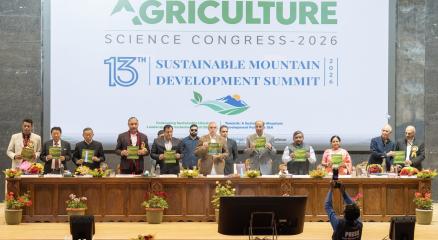
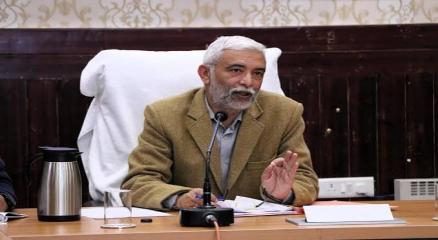

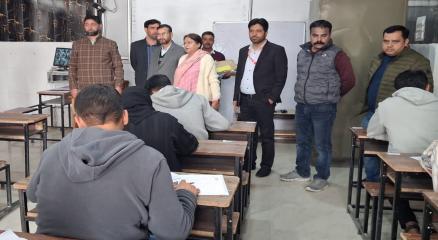
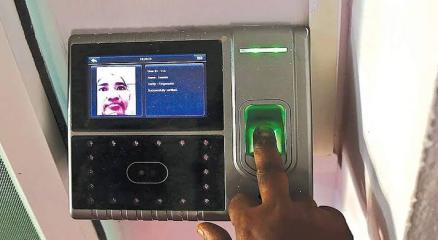
Srinagar, Oct 25: The Directorate of Information Technology and Support Systems (IT&SS), University of Kashmir (KU) successfully developed and implemented an AI-powered facial biometric recognition and verification mobile application for the JKSET/LASET examination conducted on Sunday across J&K and Ladakh. As per the official figures, out 16821 registered candidates, including 8,342 from the Jammu Division, 7,722 from the Kashmir Division and 757 from Ladakh, 13252 appeared for the examination. "The mobile application facilitated technology-assisted identity verification through more than 700 invigilators and examination personnel deployed across examination centres," the handout reads. The application enabled examination personnel to capture candidates’ live photographs along with the geolocation of the verification site. "Using facial recognition algorithms, the captured photographs were automatically compared with the photographs submitted by candidates during the application process, generating matched or unmatched verification results to support reliable candidate identification," it reads. The solution integrates pre-trained facial recognition models to analyse and compare facial features, enabling efficient, AI-assisted biometric identity verification at examination centres. "Its mobile-based implementation streamlined the verification process and reduced dependence on manual identity checks," the handout reads. Deployed on the University of Kashmir’s Data Centre infrastructure, the application was designed to support concurrent access by examination personnel across multiple centres, facilitating responsive and smooth operation during the examination. "Deploying the solution on the University’s local infrastructure also enabled greater institutional control over data processing and the handling of examination-related information," it reads. Data privacy and information security were integral considerations in the implementation. Encryption safeguards were employed to protect sensitive candidate information and secure data transmission, helping maintain the confidentiality and integrity of examination-related data. "This initiative underscores varsity's continued commitment to leveraging indigenous technological innovation, artificial intelligence and digital transformation to strengthen examination management, improve operational efficiency, and promote transparent, reliable and secure examination processes across Jammu and Kashmir and Ladakh," the handout reads. The successful implementation demonstrates the potential of AI-powered facial biometric verification to support the integrity and efficiency of large-scale examinations through technology-driven identity authentication. In the Jammu Division, examination centres were located at five main centres in Jammu, Kathua, Rajouri, Udhampur and Bhaderwah. In Kashmir division, three main centres were established at Srinagar, Anantnag and Baramulla, while Leh and Kargil served as the main centres in Ladakh. The centres were spread across the regions to facilitate candidates’ access to the examination. Vice-Chancellor KU Prof. Nilofer Khan visited examination centres across Srinagar to review the arrangements and oversee the smooth conduct of the examination. She was accompanied by a team of University officials and faculty members. Prof. Khan thanked the civil and police administrations of Srinagar, Anantnag and Baramulla, for their support and cooperation in ensuring the smooth conduct of the examination. “The smooth conduct of JKSET/LASET reflects the coordinated efforts of the University team and the support extended by the district and police administrations. We remain committed to ensuring a fair, transparent and well-organised examination process for all candidates,” she said. Prof. Khan, along with Member Secretary JKSET/LASET Agency, Prof. Aijaz Ahmad, and the team, visited several examination centres within and outside the main campus to take stock of the arrangements. To facilitate the movement of candidates, the University also made special transport arrangements, deploying buses along designated routes to ensure convenient access to examination centres.

Baramulla, Oct 24: Former chief minister of Jammu and Kashmir and National Conference president Dr Farooq Abdullah on Saturday asked people to show courage and stand together to defend their rights, warning that they risked perishing if they failed to confront challenges. Addressing a workers’ convention in Baramulla, Dr Farooq said Jammu and Kashmir is going through difficult times and people needed to stand together to bring about change. “If you have the courage, we will fight them; if you don’t, you will perish,” Dr Farooq said. He urged people to speak the truth and stand firmly for their rights. “We would have vanished, but having courage and fighting back will help us persist,” he said. He said people should not expect change to come on its own, stressing that collective efforts were necessary to secure their rights. “We do not want to go against the country, but we want to tell them (our neighbours) to change themselves,” he said. The NC president said the Centre had promised to restore statehood after delimitation and elections, but the commitment remained unfulfilled. “We are going through tough times. In Delhi, we were promised statehood after delimitation and elections, but that is nowhere,” he said. Dr Farooq further urged people to rise above religious and sectarian differences and raise a united voice, saying unity was essential to address the challenges facing Jammu and Kashmir. “Rulers come and go. They oppress, but that doesn’t last,” he said. He also expressed concern over the lack of awareness among young people about Jammu and Kashmir’s history, urging them to understand the region’s past and the circumstances that shaped its political journey. “We never said we are not Indians, but we keep on reiterating that we have joined Gandhi’s India, Nehru’s India,” he said. Dr Farooq also criticised the Peoples Democratic Party, alleging that its alliance with the BJP had contributed to the loss of Jammu and Kashmir’s special status in 2019. (KNO)
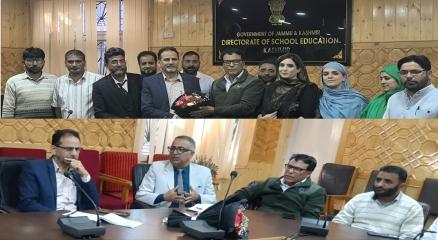
Srinagar, Oct 21: An executive delegation of the Private Schools Association Jammu & Kashmir (PSAJK), District Anantnag Chapter, Wednesday met Director School Education Kashmir (DSEK) Naseer Ahmad Wani. The delegation was led by Vice President South Kashmir Dr. Zulfiqar Ahmad who was accompanied by President PSAJK Dr. Baba Nazrul Islam. During the meeting, the delegation apprised DSEK of the key bottlenecks faced by private schools and emphasized the need for holistic academic development, streamlined administrative procedures, digitalisation, and capacity-building initiatives to strengthen the educational ecosystem of J&K. The delegation highlighted the need for PARAKH dashboard training and systematic upskilling of private school teachers in accordance with educational zone-wise requirements. It urged the Directorate to facilitate teacher training through DIETs, Resource Centres (RCs), and Cluster Resource Centres (CRCs), enabling private school teachers to benefit from the same capacity-building opportunities available to their government-sector counterparts. The initiative, the delegation stressed, would contribute significantly towards improving foundational literacy and numeracy outcomes in line with the objectives of the National Education Policy (NEP) 2020. The delegation also raised concerns over the repetitive collection and submission of data and documents by private schools, despite the availability of institutional information on the U-DISE portal. It advocated greater reliance on existing digital databases and the elimination of redundant paperwork. The delegation proposed that, wherever necessary, data verification and collection should be undertaken at the zonal level at intervals of six months, ensuring that administrative requirements do not disrupt academic schedules or classroom activities. DSEK Naseer Ahmad Wani appreciated the concerns and constructive suggestions put forward by the PSAJK delegation and assured that appropriate steps would be considered to do away with outdated, unproductive, and cumbersome administrative practices. He encouraged school leaders to remain passionate and committed to the welfare of students and the parent community, reiterating that both government and private institutions share the common responsibility of imparting quality education to the younger generation. The delegation expressed its gratitude to the DSEK and the Government of Jammu & Kashmir for recognising the private education sector as an important knowledge partner in the educational ecosystem. It appreciated the DSEK's to engage with stakeholders and acknowledge the contribution of private schools towards expanding educational opportunities and strengthening academic outcomes across the Union Territory. The delegation further reiterated that effective coordination between government and private schools, supported by systematic teacher training, digital governance, and reduced administrative duplication, would help realise the goals of NEP 2020 and improve Jammu & Kashmir's overall educational performance, particularly in foundational literacy and numeracy. The PSAJK delegation commended the efforts of the Education Department and the UT Government in advancing educational opportunities and working towards fulfilling the aspirations of millions of students, parents, and other stakeholders. The Director appreciated the proactive engagement and keen interest demonstrated by the PSAJK Anantnag executive body and assured the delegation of continued support and cooperation in addressing genuine concerns and advancing the shared mission of quality education for the younger generation of Jammu & Kashmir. The delegation also included District President Ishfaq Ahmad, District General Secretary Suhail Ahmad, Hilal Ahmed Bhat ( Zonal President Dooru), Shahista Muzaffar (Zonal President Anantnag), Saima( Executive Member) Libni Latoo( Executive Body Member cum spokespersonAnantnag), Fayaz Ahmed ( Zonal President Shangus) Farooq Ahmed ( Executive Body Meber) Mohammad Shafi ( Advisor PSAJK Anantnag).
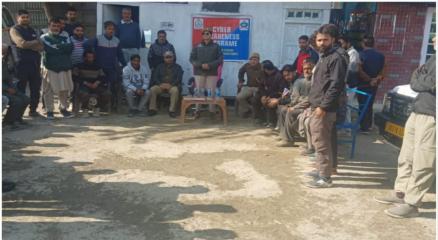
Awantipora, Oct 20: Police district Awantipora Tuesday organised cyber awareness programmes at Awantipora and Khrew to sensitise participants about cybercrime, online frauds, digital safety and the responsible use of social media. During the programmes, participants were educated about common cyber threats, phishing scams, online financial frauds, the importance of safeguarding personal information and precautionary measures to be adopted while using digital platforms. As per the official handout, participants were also encouraged to report cybercrime incidents promptly through appropriate channels. The programmes aimed to enhance public awareness about emerging cyber threats and promote safe and responsible digital practices among citizens. Awantipora Police reiterated its commitment to public outreach, cyber safety and creating a secure digital environment for the community.
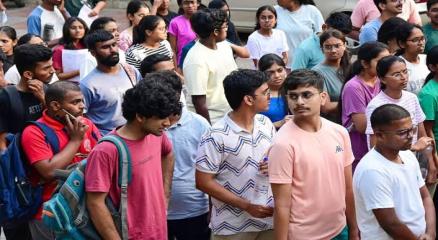
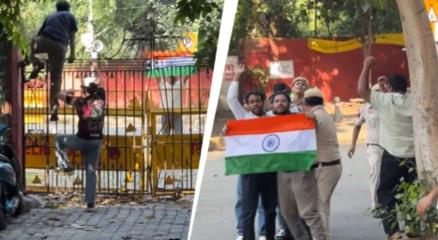
New Delhi, May 12: A massive protest organised by the National Students' Union of India (NSUI) broke out near the Shastri Bhawan on Tuesday, against the alleged paper leak in NEET-UG this year. The exam was held on May 3, following which allegations of paper leak surfaced, triggering investigations by the Rajasthan Special Operations Group (SOG) and central agencies. Earlier, the National Testing Agency (NTA) announced the cancellation of NEET-UG 2026, and said the examination will be re-conducted on dates to be notified separately. In a statement, the NTA said the decision was taken with the approval of the Government of India in the interest of maintaining transparency and preserving trust in the national examination system.